
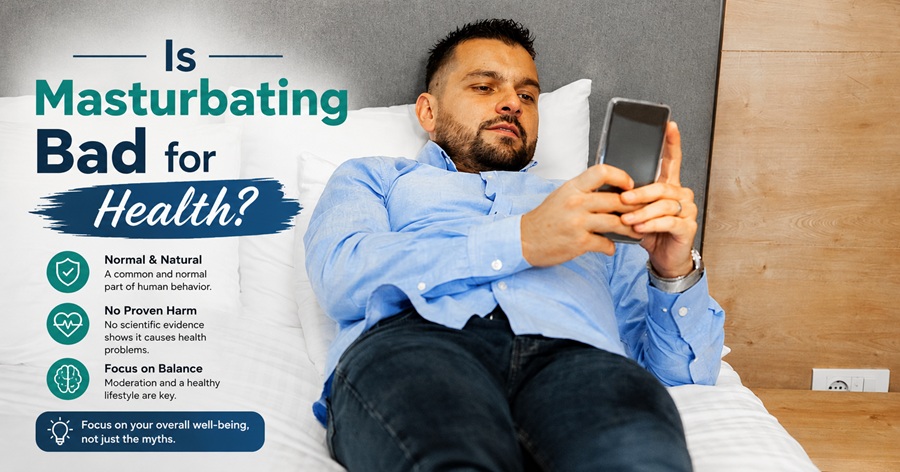
No. The scientific consensus is clear: masturbation is not bad for your health. Decades of research across sexual medicine, psychology, and public health have found no evidence that it causes physical harm in healthy individuals. The vast majority of concerns people carry about it are rooted in cultural stigma, religious tradition, or persistent myths — not medical reality.
What the research actually shows is that masturbation is a normal, common human behavior with several documented health benefits, a small number of genuine but minor risks when practiced excessively, and psychological concerns that arise from shame and compulsivity rather than the act itself.
How Common Is Masturbation?
Masturbation is one of the most universal human sexual behaviors. Research shows approximately 95% of males and 78% of females under 30 masturbate. Even among adults aged 70 to 79, 57% of males and 41% of females continue to engage in it. These figures make masturbation statistically normal by any clinical standard, spanning cultures, age groups, and backgrounds.
The gap between prevalence and open discussion is one of the primary reasons misconceptions persist so widely.
Physical Health Effects
Masturbation triggers the same physiological responses as partnered sexual activity — the brain’s pleasure-reward pathways activate, dopamine and endorphins are released, heart rate and blood flow increase temporarily, and muscle tension resolves through orgasm. None of these responses are harmful.
The minor physical risks that do exist are related to excessive frequency or aggressive technique — skin irritation, temporary soreness — both of which are self-limiting and resolve quickly with rest. They are not injuries in any clinically meaningful sense.
Several well-documented benefits exist. The neurochemical release following orgasm reduces stress, elevates mood, and promotes post-orgasm relaxation through parasympathetic nervous system activation — making it an effective stress management tool for many people. It also improves sleep onset through the same mechanism. For women, masturbation can help with menstrual cramps through endorphin release and increased pelvic blood flow. A 2024 study found that women who used vibrators for three months experienced improved sexual function, improved pelvic floor function, and lower rates of depression compared to their baseline.
Does Masturbation Affect Prostate Cancer Risk?
This is one of the more actively researched questions in sexual medicine. A 2023 study found that men who ejaculated less frequently had a higher risk of prostate cancer, with men who had urinary symptoms and low ejaculation frequency carrying the highest risk. Broader research has consistently found that men who ejaculate 21 or more times per month have approximately a 20% lower prostate cancer risk than those who ejaculate less frequently.
The association is plausible and supported by multiple studies, though researchers note that study designs vary and a definitive conclusion is not yet established. The evidence leans toward regular ejaculation being potentially protective, but prostate cancer has many contributing factors and ejaculation frequency alone should not be treated as a clinical recommendation.
Testosterone, Fertility, and Athletic Performance
Three of the most common fitness-related concerns about masturbation — that it reduces testosterone, impairs muscle growth, or lowers fertility — are not supported by evidence.
Short-term studies measuring testosterone before and after masturbation show no significant sustained reduction. Any minor fluctuations normalize within minutes. No research has demonstrated that masturbation meaningfully affects the testosterone levels relevant to long-term muscle development or athletic recovery.
Male fertility — measured by sperm count, motility, and morphology — is not meaningfully affected by masturbation frequency within normal ranges. Female fertility is unaffected entirely. The clinical advice to abstain from ejaculation before a semen analysis is practical for standardizing the sample, not a reflection of underlying harm.
Mental Health and Psychological Effects
Masturbation itself does not harm mental health. What affects mental health is the psychological relationship a person has with it, heavily shaped by cultural, religious, and personal belief systems.
People who believe masturbation is morally wrong experience genuine psychological distress when they engage in it — guilt, anxiety, lowered self-esteem. This distress is real and clinically significant, but it is caused by the belief system and associated shame, not by any direct neurological effect of the act.
On the positive side, masturbation is associated with reduced anxiety, improved mood, and in partnered relationships, higher sexual satisfaction and more open communication about sexual preferences.
Is Masturbating Too Much Bad for You?
There is no medically established frequency beyond which masturbation becomes inherently harmful. The concept of “too much” is about context and consequence rather than any fixed number.
What does create genuine clinical concern is compulsive masturbation that interferes with daily life — missing work, withdrawing from relationships, or experiencing significant distress about an inability to stop. Compulsive sexual behavior disorder is recognized in the ICD-11 as a condition characterized by persistent failure to control intense, repetitive sexual impulses despite negative consequences. This is distinct from having a high sexual frequency, which in the absence of distress or disruption is not a clinical problem.
Common Myths Debunked
The following claims have been studied and consistently refuted:
Masturbation does not cause blindness, infertility, acne, or hair loss. It does not damage the brain, reduce intelligence, or deplete physical strength. These myths have no supporting biological mechanism and no clinical evidence behind them. Their persistence reflects cultural transmission, not science.
One nuanced point worth separating: some research has explored pornography-associated sexual dysfunction, where hyper-stimulating pornography content conditions arousal in ways that can create difficulties in partnered sex. This concern is specific to pornography use patterns alongside masturbation — it is not caused by masturbation itself.
When to Speak With a Doctor
Masturbation rarely requires medical discussion. Reasons to speak with a healthcare provider include physical discomfort that does not resolve with rest, compulsive patterns causing real-world disruption, or significant ongoing distress from shame or guilt that is affecting quality of life. Sexual health is a legitimate component of overall health and primary care providers are appropriate resources for these conversations. The American Sexual Health Association at ashasexualhealth.org provides clinically reviewed patient information on sexual health topics.
Frequently Asked Questions
Is masturbation normal during a relationship?
Yes. Research consistently shows masturbation is common among people in committed relationships and does not indicate dissatisfaction with a partner. It only becomes a relationship concern if it consistently replaces partnered intimacy in ways that leave the other partner feeling rejected.
Is masturbation safe during pregnancy?
For most uncomplicated pregnancies, yes. Women with specific complications including placenta previa, a history of preterm labor, or cervical incompetence should follow their obstetrician’s guidance.
Is masturbation normal for teenagers?
Yes. It is developmentally normal during adolescence. The more important consideration is ensuring young people have access to accurate sexual health information and are not forming shame-based attitudes toward their own sexuality