
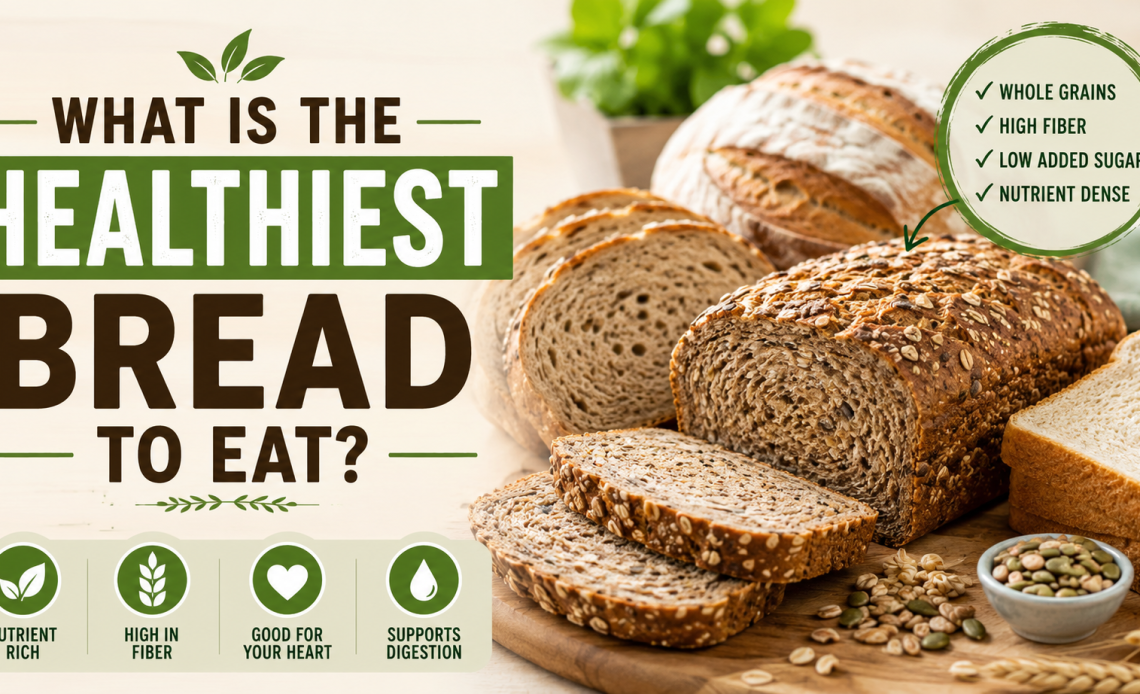
The Problem With the Question Itself
‘Healthiest bread’ is a question that sounds simple, but actually depends on what you are optimizing for. If you are asking what is the healthiest bread to eat, the answer may look different depending on whether you are managing blood sugar, supporting gut health, fueling athletic performance, or simply trying to eat more fiber. And the same loaf that earns a spot in one person’s daily diet might not be the right fit for another.
That said, some general nutritional principles do apply broadly, and understanding them makes it a lot easier to navigate a bread aisle confidently rather than defaulting to whatever says ‘whole grain’ on the front of the package.
This article is for general nutritional guidance. Anyone with a specific health condition, such as celiac disease, diabetes, or irritable bowel syndrome, should get personalized dietary advice from a registered dietitian or doctor.
By the Numbers: Bread Types Compared
| Bread Type | Fiber | Protein | Best For |
| 100% whole wheat | High | Moderate | Everyday nutrition, fiber intake |
| Sourdough (traditional) | Moderate | Moderate | Digestive health, lower glycemic response |
| Sprouted grain (e.g. Ezekiel) | High | High | Nutrient density, blood sugar management |
| Rye bread (dense/whole) | Very high | Moderate | Sustained energy, digestive health |
| White bread | Very low | Low | Not a strong nutritional choice for most goals |
| Gluten-free bread | Varies widely | Varies | Celiac or gluten sensitivity only |
What Actually Makes a Bread Healthy
- Whole grains as the first ingredient, not just listed somewhere on the label.
- At least 2 to 3 grams of fiber per slice.
- Minimal added sugar, ideally under 2 grams per slice.
- A short, recognizable ingredient list without numerous additives or preservatives.
- Reasonable sodium, since some breads are surprisingly high in salt per serving.
Why the ‘Whole Grain’ Label Is Not Enough on Its Own
What the Label Can and Can’t Tell You
A loaf can legally be labeled ‘made with whole grains’ even if whole grains make up only a small percentage of the total flour used. The first ingredient listed tells a more accurate story: if it says ‘enriched flour’ or ‘wheat flour’ rather than ‘whole wheat flour,’ the bread is primarily made from refined grain regardless of what the front of the package suggests.
The Color Trick
Brown bread isn’t automatically healthier than white bread. Some brown-colored loaves get their color from added molasses or caramel coloring rather than from whole grain content. Checking the ingredient list is always more reliable than going by color or appearance.
‘Multigrain’ Is Not ‘Whole Grain’
Multigrain means multiple types of grain were used. It says nothing about whether those grains were refined or whole. A multigrain loaf can still have very little fiber or nutritional benefit compared to a true 100 percent whole wheat loaf.
Why This Topic Gets Confusing
Bread labeling in most markets is loosely regulated when it comes to terms like ‘natural,’ ‘healthy,’ ‘hearty,’ and even ‘whole grain.’ Food manufacturers know these terms sell products, so they appear widely on packaging regardless of actual nutritional value. Add in the volume of conflicting advice online, from low-carb advocates avoiding bread entirely to dietitians recommending whole grains as part of a balanced diet, and it’s easy to see why so many people feel uncertain about what to actually put in their cart.
A Closer Look at Each Major Bread Type
100% Whole Wheat Bread
When the label genuinely says 100 percent whole wheat and the first ingredient is whole wheat flour, this is one of the most straightforward, nutritionally solid choices available. It retains the bran, germ, and endosperm of the wheat kernel, delivering fiber, B vitamins, iron, and other nutrients that are stripped away in refined flour.
Sourdough Bread
Traditional sourdough is made through a long fermentation process using wild yeast and bacteria. This process partially breaks down gluten and phytic acid, which can make nutrients more bioavailable and may produce a lower glycemic response compared to regular white or wheat bread. Mass-produced sourdough sold in many supermarkets often uses added vinegar to mimic the sour flavor without the fermentation benefits, so checking for genuine long-fermented sourdough matters if this is part of your reasoning.
Sprouted Grain Bread
Sprouted grain breads, such as those made from Ezekiel-style recipes, are made from whole grains that have been allowed to germinate before being ground or used in dough. Sprouting increases protein content, improves amino acid profile, and further reduces phytic acid, making minerals more absorbable. These breads tend to be denser and are usually found refrigerated rather than on the shelf.
Rye Bread
Dense, traditional rye bread is one of the highest-fiber options available and has a lower glycemic index than wheat bread due to its fiber and resistant starch content. Lighter rye breads that are mostly wheat flour with a small amount of rye don’t carry the same benefits, so looking for a dark, dense rye with rye flour as the primary ingredient is important.
White Bread
Refined white bread is made from flour that has had the bran and germ removed, leaving mostly starch. It digests quickly, causes a faster blood sugar spike, and provides significantly less fiber, vitamins, and minerals than whole grain alternatives. It isn’t dangerous in moderation for most people, but it’s hard to make a nutritional case for it over whole grain options.
Gluten-Free Bread
Gluten-free breads are necessary for people with celiac disease or non-celiac gluten sensitivity, but they are not inherently healthier for people without those conditions. Many gluten-free breads are made from refined rice or tapioca flour, which can actually be lower in fiber and nutrients than standard whole wheat. For people who don’t need to avoid gluten, there’s no nutritional reason to choose gluten-free over whole grain bread.
What Different Health Goals Call For
| Your Priority | Best Bread Choice |
| More fiber and digestive regularity | Dense whole rye or 100% whole wheat |
| Managing blood sugar or diabetes | Sprouted grain or traditional sourdough |
| Higher protein intake | Sprouted grain or protein-enriched whole grain |
| Gut health and microbiome support | Traditional long-fermented sourdough |
| Weight management | High-fiber whole grain with minimal added sugar |
| Celiac disease or gluten sensitivity | Certified gluten-free bread |
How to Read a Bread Label in Under 60 Seconds
- First Ingredient Check — It should say ‘whole wheat flour,’ ‘whole grain rye,’ or another whole grain. If it says ‘enriched flour’ first, put it back.
- Fiber Check — Aim for at least 2 grams per slice, with 3 or more being a good target.
- Sugar Check — Under 2 grams per slice is ideal; some breads have 3 to 4 grams or more per slice.
- Sodium Check — Under 150 to 200 mg per slice is reasonable; above 250 mg per slice adds up quickly.
- Ingredient Count — Shorter lists with recognizable ingredients generally indicate less processing.
- Serving Size Reality Check — Many nutrition labels are per one slice; double-check what a serving actually is for the bread you’re looking at.
The ingredient list is always more informative than the front-of-package claims. Marketing words like ‘hearty,’ ‘natural,’ and ‘artisan’ have no regulatory meaning and tell you nothing about nutritional quality.
Short-Term and Long-Term Effects of Bread Choices
Day-to-Day Impact
Higher-fiber breads digest more slowly, keeping you fuller for longer and causing a more gradual rise in blood sugar compared to refined white bread. This can influence energy levels, appetite, and how much you eat later in the day.
Over Months and Years
Consistent consumption of whole grain breads over time has been associated in research with reduced risk of type 2 diabetes, cardiovascular disease, and certain digestive conditions. Refined grain consumption, when it makes up a large share of carbohydrate intake, is associated with less favorable outcomes for several of the same conditions.
For People With Specific Conditions
For those with diabetes or prediabetes, bread choice has a direct effect on post-meal blood sugar levels. For those with IBS, certain high-fiber breads may trigger symptoms due to FODMAP content, and working with a dietitian to find suitable options is worth the effort.
Whole Wheat vs Sourdough: The Most Searched Comparison
| Feature | 100% Whole Wheat | Traditional Sourdough |
| Fiber content | High (3+ g per slice typically) | Moderate (1 to 2 g per slice) |
| Glycemic response | Moderate | Lower than most breads when traditionally made |
| Digestibility | Good for most people | Often easier to digest due to fermentation |
| Nutrient profile | Strong, retains bran and germ | Good, with improved mineral absorption |
| Gut health benefit | Fiber supports gut bacteria | Fermentation adds some probiotic-like benefit |
| Best choice if | Fiber and everyday nutrition are the priority | Digestive comfort and blood sugar are the priority |
Clearing Up the Most Common Bread Myths
| Claim | A More Accurate Picture |
| Bread is bad for you and should be avoided | Whole grain bread as part of a balanced diet is supported by nutritional evidence; it’s refined bread in excess that carries more concern |
| Gluten-free bread is healthier for everyone | It’s necessary for celiac disease but not nutritionally superior for most people; many varieties are lower in fiber |
| Brown bread is always healthier than white | Color alone isn’t reliable; always check the ingredient list for whole grain as the first item |
| Bread causes weight gain | No single food causes weight gain; total calorie intake and diet quality matter more than bread specifically |
What Nutrition Researchers and Dietitians Generally Recommend
The Dietary Guidelines for Americans recommend that at least half of all grains consumed be whole grains, with refined grains replaced by whole grain options wherever possible. The Harvard T.H. Chan School of Public Health similarly identifies whole grains as one of the most consistently beneficial food groups in long-term health research, citing reduced risk of heart disease, type 2 diabetes, and digestive conditions with higher whole grain intake.
When to Speak With a Nutrition Professional
Consider consulting a registered dietitian if you have diabetes or prediabetes and want specific guidance on bread choices and carbohydrate management, if you have IBS or other digestive conditions and are unsure which bread types are suitable for you, if you suspect celiac disease or non-celiac gluten sensitivity, or if you’re following a therapeutic diet and want to make sure your bread choices align with your overall nutritional goals.
Practical Tips for Smarter Bread Choices
- Make whole grain the first ingredient non-negotiable when choosing a loaf
- Compare fiber content between options on the shelf; it varies significantly even within ‘healthy’ bread brands
- Try dense whole rye or sprouted grain if you find regular whole wheat raises your blood sugar more than you’d like
- If you enjoy sourdough, look for a local bakery making genuine long-fermented sourdough rather than supermarket versions flavored with vinegar
- Don’t assume ‘healthy’ branding equates to nutritional quality; always check the label
- Portion size matters too; two thick slices of even the healthiest bread still add up calorically
The Takeaway
There’s no single healthiest bread for every person, but there are clear, research-backed principles that narrow down the best choices. Look for 100 percent whole grain as the first ingredient, prioritize fiber content, and be skeptical of front-of-package health claims. For most people, 100 percent whole wheat, sprouted grain, dense rye, or traditionally fermented sourdough are the strongest contenders, with the best choice depending on your personal health goals.
Frequently Asked Questions
Is whole wheat bread the same as whole grain bread?
Not always. Whole wheat refers specifically to wheat, while whole grain is a broader term covering any grain in its whole form. Both can be good choices; the key is checking that the whole grain or whole wheat flour is the first ingredient listed.
How many slices of bread per day is reasonable?
For most adults eating a balanced diet, two to three slices of whole grain bread per day is a reasonable amount, though individual needs vary based on overall carbohydrate intake and health goals.
Is sourdough bread good for gut health?
Traditional, long-fermented sourdough contains beneficial bacteria and partially broken-down compounds that may support digestion. Mass-produced supermarket sourdough flavored with vinegar doesn’t carry the same benefits.
Can people with diabetes eat bread?
Yes, though bread type and portion size matter significantly. Sprouted grain, dense rye, and traditionally fermented sourdough tend to produce a lower blood sugar response than white or standard whole wheat bread.
Is Ezekiel bread actually healthier?
Sprouted grain breads like Ezekiel tend to have higher protein, better amino acid profiles, and improved mineral absorption compared to standard whole wheat. They are among the most nutrient-dense bread options available.
Does toasting bread change its nutritional value?
Toasting slightly reduces some B vitamins but also lowers the glycemic index of bread slightly by altering the starch structure. The overall nutritional difference is minor.
Is rye bread better than whole wheat?
Dense whole rye bread often has more fiber and a lower glycemic index than whole wheat, making it a strong choice for blood sugar management and digestive health. Lighter rye breads with mostly wheat flour don’t carry the same advantages.
Are high-protein breads worth buying?
Some protein-enriched breads are genuinely higher in protein and can support satiety. Check the ingredient list; protein from whole food sources like seeds and legumes is preferable to protein added through supplements or isolates.