
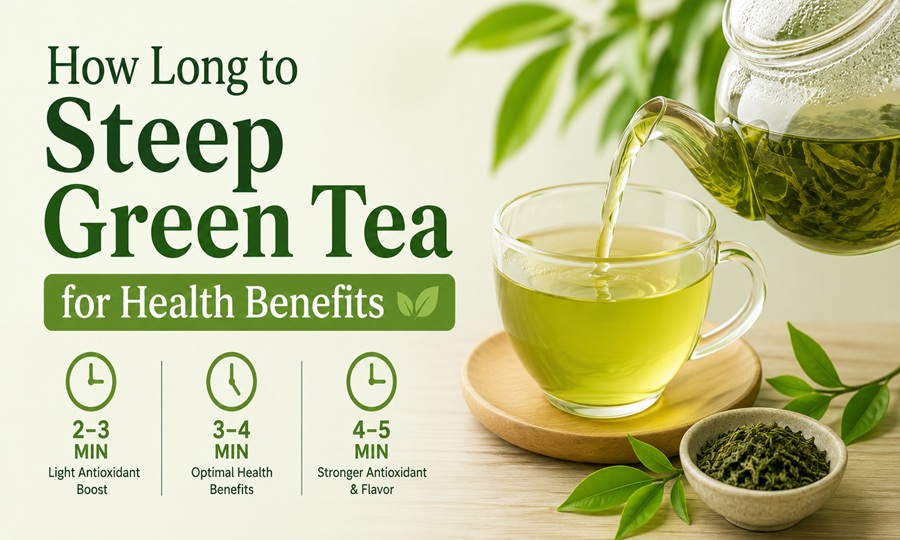
The answer most people want upfront: steep green tea for 2 to 5 minutes in water heated to 175–185°F (80–85°C). That window extracts the highest concentration of catechins — the antioxidants responsible for green tea’s most studied health benefits — without pushing the brew into excessive bitterness or degrading the very compounds you are trying to capture.
But the real answer is a little more nuanced than a single number. Steep time, water temperature, leaf quality, and even what you add to your cup all affect how much of green tea’s active compounds actually end up in your body. Here is the full science.
What Makes Green Tea Healthy in the First Place
Before discussing how to brew it, it helps to understand what you are actually trying to extract.
Green tea’s health benefits come primarily from a group of plant compounds called catechins — a type of polyphenol antioxidant found in the leaves of Camellia sinensis, the tea plant. Green tea has garnered increasing scientific attention due to its numerous health benefits, largely attributed to epigallocatechin-3-gallate (EGCG), its key polyphenol. EGCG exhibits a wide spectrum of biological activities, including antioxidant, anti-inflammatory, antibacterial, anticancer, and neuroprotective properties, as well as benefits for cardiovascular and oral health.
There are four major types of catechins in tea: EGCG, gallocatechin gallate (GCG), epigallocatechin (EGC), epicatechin gallate (ECG), and epicatechin (EC) — with EGCG being the most abundant and most studied. As EGCG contains eight hydroxyl groups, it can remove multiple free radicals, which allows it to become one of the more potent antioxidants.
Beyond catechins, green tea also contains L-theanine — an amino acid that promotes calm alertness — and a moderate amount of caffeine, which together create what many users describe as a cleaner, steadier energy than coffee.
| Active Compound | Function | Best Extracted By |
|---|---|---|
| EGCG (epigallocatechin-3-gallate) | Primary antioxidant, anti-inflammatory | Hot water, 80–85°C, 3–5 min |
| EGC (epigallocatechin) | Immune-enhancing, antioxidant | Both hot and cold water |
| L-theanine | Calm focus, stress reduction | Cold water extracts well |
| Caffeine | Alertness, metabolism | Hot water extracts more |
| Tannins | Astringency, bitterness | Extracted more with longer steep/hotter water |
The Optimal Steep Time: What Research Says
The optimal steeping duration for green tea is between three and five minutes. Steeping for too short a time does not allow the compounds to fully dissolve, while steeping beyond five minutes provides diminishing returns relative to the rapid increase in bitterness.
Research found that brewing for 3 minutes at 85°C infused the maximum amount of catechins into green tea, while low brewing temperatures of 75°C reduced polyphenol content. The same study also found that at higher brewing temperatures of 85 to 95°C, catechin concentrations did not increase with brewing time — meaning that once you hit the right temperature, extending the steep does not give you more health benefit, it just makes your tea more bitter.
In order to reap the most benefits of green tea, as measured by maximum catechin levels, steep it for three to five minutes, and aim to drink about three cups of tea a day.
The practical sweet spot: 2–3 minutes for a lighter cup; 3–5 minutes for maximum catechin extraction.
Water Temperature Matters as Much as Steep Time
Steep time and water temperature are inseparable variables. You cannot optimize one without accounting for the other.
The ideal water temperature for health-optimized brewing is between 175°F and 185°F (80°C to 85°C). Using water hotter than this range can cause the rapid release of astringent compounds and may lead to catechin degradation. Conversely, cooler water results in a significantly lower yield of antioxidants, meaning the tea will have less of the intended health benefit.
For any green tea, do not use boiling water (212°F). It overpowers the flavor and reduces health benefits. Over-steeping or using water above 194°F reduces catechin levels, so set a timer.
A simple way to hit the right temperature without a thermometer: boil your water, then let it sit uncovered for 2–3 minutes before pouring it over your tea leaves or bag. That drop from boiling (212°F) to roughly 175–185°F happens naturally in about two minutes in a standard mug.
| Green Tea Variety | Recommended Temperature | Steep Time |
|---|---|---|
| Japanese Gyokuro | 140–158°F (60–70°C) | 1.5–2 minutes |
| Japanese Sencha | 158–167°F (70–75°C) | 2–3 minutes |
| Chinese Dragonwell (Longjing) | 167–176°F (75–80°C) | 2–3 minutes |
| Standard bagged green tea | 175–185°F (80–85°C) | 2–3 minutes |
| Matcha (whisked, not steeped) | 167–176°F (75–80°C) | N/A — whisk 30 seconds |
The 6 Health Benefits That Depend on Proper Brewing
Getting the steep right matters because the health benefits below are tied to catechin concentration in your brewed cup — and that concentration swings significantly based on how you brew.
1. Heart Health
Multiple meta-analyses of clinical trials found that drinking green tea reduced blood pressure, total cholesterol, and LDL cholesterol. In two studies of over 350,000 Japanese elderly people, drinking more than three cups of green tea per day was associated with lower rates of death from all causes, heart disease, stroke, and respiratory diseases in both genders, and from cancer in women.
Clinical studies show that EGCG helps reduce LDL cholesterol, improve vascular endothelial function, and lower blood pressure — key factors in preventing atherosclerosis and heart disease.
2. Brain Function and Neuroprotection
Research suggests that drinking green tea may benefit cognition, mood, and brain function, possibly due to compounds in green tea like caffeine and L-theanine.
Thanks to its ability to cross the blood-brain barrier, EGCG positively affects the hippocampus — the memory center — and has the potential to slow down neurodegeneration, supporting research into Alzheimer’s and Parkinson’s disease. A 2020 study linked green tea consumption to a 64% lower chance of certain Alzheimer’s-related biomarkers in people without current cognitive issues.
3. Cancer Risk Reduction
Research suggests the anti-inflammatory properties of green tea may lower the risk of certain cancers and of cancer returning, including breast cancer, colon cancer, esophageal cancer, liver cancer, lung cancer, prostate cancer, and stomach cancer.
It is important to note that a 2020 review found that while experimental research shows a modest beneficial effect, scientists could not conclude any consistent effects of green tea on overall cancer likelihood, and additional high-quality research is needed.
4. Weight Management and Metabolism
EGCG promotes thermogenesis and lipid oxidation, which is especially effective when combined with caffeine. Its effect on the AMPK enzyme helps increase energy expenditure even at rest. Green tea is not a weight loss solution on its own, but as part of a balanced diet, evidence supports a modest metabolic benefit.
5. Blood Sugar Regulation
Clinical studies focused on catechin interventions found benefits in anti-inflammatory and antioxidant properties, and in obesity and metabolism, with findings suggesting that the health benefits of green tea catechins outweigh the potential risks. EGCG has also been shown to increase insulin sensitivity and support blood sugar control, which may reduce the risk of type 2 diabetes.
6. Oral Health
A 2021 review of studies found that drinking green tea or using green tea extract may be linked to better oral health, though most of the research on this subject did not examine human subjects. Green tea’s antimicrobial and anti-inflammatory catechins may help suppress harmful oral bacteria.
Does Loose Leaf or a Tea Bag Make a Difference?
Both work. The more meaningful variable is quality, not format.
Use high-quality whole-leaf tea — loose leaf or high-grade sachets. More intact leaves preserve catechins and aromas compared with fannings. Fannings are the small, broken fragments of tea leaf found in many standard supermarket tea bags. They steep faster because of their larger surface area, but may have lower catechin content than whole-leaf loose tea.
If you use tea bags, look for brands that use whole-leaf pyramid sachets rather than flat paper bags filled with dust-grade tea.
The leaf-to-water ratio directly controls the final concentration of the tea. A standard guideline for a strong, health-focused brew is to use approximately one teaspoon of loose-leaf tea per six to eight ounces of water. Increasing this ratio slightly is a better strategy for a stronger cup than extending the steeping time, which increases the likelihood of an unpleasantly bitter taste.
Cold Brew Green Tea: A Different (and Valid) Option
Cold brewing — steeping tea leaves in cold water in the refrigerator for 6–12 hours — produces a noticeably smoother, less bitter cup. But does it deliver the same health benefits?
Cold brew retains slightly more catechins, especially EGCG, because heat degrades some antioxidants. However, hot brew extracts catechins faster and more completely. A 2025 study on cold brew extraction found that cold water extracts only about 53% of the EGCG that hot water does. However, cold brew extracts more of other catechins like EGC and EC.
Cold-brewed tea infusion was found to have equal or higher antioxidant activity than hot-water brewed green tea despite lower total catechin content, because the catechin profile differs. In particular, EGC — which has immune-enhancing effects — and L-theanine extract more efficiently in cold water.
Hot water at 75–80°C extracts EGCG efficiently. Optimal hot brewing can pull nearly all available EGCG from tea leaves within three minutes. Cold brewing prevents thermal degradation entirely, preserving whatever compounds do extract.
Bottom line on cold brew: If you want maximum EGCG — the most researched catechin for heart and brain health — brew hot and then chill. If you prefer a gentler cup or are sensitive to caffeine (cold brewing also extracts significantly less caffeine), cold brewing is a genuinely healthy and scientifically supported option.
The Lemon Trick: A Simple Upgrade With Real Science Behind It
Adding a squeeze of lemon to your green tea is one of the easiest and most effective evidence-based upgrades you can make.
Research from Purdue University, published in the Journal of Nutrition, found that adding citrus juices like lemon, rich in vitamin C, can significantly increase the absorption of catechins including EGCG in a simulated digestive system — by up to 13 times. Vitamin C helps to stabilize EGCG in the less acidic environment of the gut.
In digestion models, less than 20% of total catechins remained from plain green tea, but adding vitamin C or citrus juices raised recovery — EGC 81–98%, EGCG 56–76%.
Lemon also helps offset the natural bitterness of a well-steeped cup, making it easier to drink without adding sugar, which would diminish some of the metabolic benefits.
What not to add: Some research suggests that the protein and possibly the fat in milk may reduce the antioxidant benefits of tea. Try to enjoy green tea without milk.
What to Avoid: Common Mistakes That Reduce Health Benefits
Using boiling water. As noted above, water above 194°F degrades catechins and makes tea unpleasantly bitter. Always let boiled water cool slightly before steeping.
Steeping too long. Beyond five minutes, you are not adding more health benefit — just more bitterness from tannins. Set a timer.
Using low-quality tea bags. Standard flat tea bags often contain fannings or tea dust with lower catechin content than loose-leaf or pyramid sachets.
Drinking bottled or instant green tea. Freshly brewed tea confers the most benefits. Bottled, instant, or decaffeinated tea does not contain near the amount of catechins as fresh brewed tea.
Using plastic tea bags. Some tea bags are made of plastic, which can release micro- and nano-plastics during steeping. Choose paper or cotton tea bags, or use loose-leaf with a stainless steel infuser.
Drinking on an empty stomach (high-dose extracts only). Brewed green tea is generally safe on an empty stomach. However, taking concentrated catechin supplements on an empty stomach may increase liver stress, according to the European Food Safety Authority. This does not apply to ordinary brewed tea.
How Many Cups Per Day?
Aim to drink about three cups of tea a day for meaningful catechin intake. Most clinical research showing cardiovascular and cognitive benefits has used a consumption level of 3–5 cups per day.
Clinical data show that EGCG at 200 mg twice daily for one year is safe, whereas 800 mg daily was associated with elevated liver enzymes. A standard properly brewed 8-oz cup of green tea contains approximately 50–150 mg of EGCG, meaning three to four cups per day falls well within the safe range for most healthy adults.
People who are pregnant, taking blood thinners (particularly warfarin), or on statins like atorvastatin should consult their healthcare provider before significantly increasing green tea intake, as catechins can interact with certain medications.
Complete Brewing Guide: Quick Reference
| Variable | Optimal Setting |
|---|---|
| Water temperature | 175–185°F (80–85°C) |
| Steep time | 2–3 min (lighter cup) / 3–5 min (max catechins) |
| Leaf-to-water ratio | 1 tsp loose leaf per 6–8 oz water |
| Tea quality | Whole-leaf loose tea or pyramid sachets |
| Additions | Lemon / vitamin C (boosts EGCG absorption up to 13x) |
| Avoid | Boiling water, milk, plastic tea bags, bottled tea |
| Cold brew option | 6–12 hours in refrigerator; lower EGCG, higher EGC/L-theanine |
| Daily cups | 3–5 cups for meaningful health benefit |
| Freshness | Drink within 1 hour of brewing for maximum antioxidant activity |
(Sources: Food Chemistry 2025; Republic of Tea)
Frequently Asked Questions
Can I re-steep green tea leaves for a second cup?
Yes. High-quality whole-leaf green teas can be steeped 2–3 times. Reduce your steep time by 30–60 seconds for the second infusion. Each subsequent steep extracts fewer catechins, so the first steep is always the most potent.
Does adding honey or sugar affect the health benefits?
Honey and sugar do not directly reduce catechin content in your cup, but added sugars offset some of the metabolic and weight management benefits associated with green tea consumption. If you need sweetness, a small amount of honey is a better choice than refined sugar.
Is green tea safe for everyone?
For most healthy adults, yes. People who are pregnant are generally advised to limit caffeine intake, which applies to green tea. Those on blood thinners, cholesterol medications, or who have liver conditions should consult a physician, as high-dose EGCG can interact with these conditions and medications.
Does matcha count?
Matcha is a powdered whole-leaf green tea — when you drink matcha, you consume the entire leaf, not just the steeped extract. This means matcha delivers significantly higher catechin levels per serving than standard steeped green tea, along with higher L-theanine content. It is the most concentrated form of the health compounds found in green tea.