

The Short Version
Many pet owners ask can dogs have cottage cheese, and in most cases, the answer is yes when it is served in small amounts. Cottage cheese is generally considered a safe, low-risk treat for dogs. It is even a fairly common recommendation from vets for dogs with upset stomachs, since it is gentle and easy to digest compared to many other dairy products. That said, not every dog tolerates dairy the same way, and portion size matters.
Many dog owners ask about cottage cheese specifically because it shows up in homemade dog food recipes, bland diet recommendations after a stomach bug, or simply as a protein-rich snack option. Below is a closer look at when it helps, when it does not, and how to feed it safely.
Always check with your veterinarian before making changes to your dog’s diet, especially if your dog has a known health condition.
Fast Facts
| Question | Answer |
| Can dogs eat cottage cheese? | Yes, in moderation, for most healthy dogs |
| Is it good for upset stomachs? | Often recommended as part of a bland diet |
| Can it cause issues? | Yes, in dogs that are lactose intolerant or overweight |
| How much is safe? | A spoonful or two, a few times a week, depending on dog size |
Key Points to Remember
- Plain, low-fat, unsalted cottage cheese is the safest choice for dogs.
- It can be a useful source of protein and calcium in small amounts.
- Some dogs are lactose intolerant and may react poorly even to small servings.
- Flavored, sweetened, or high-sodium varieties should be avoided entirely.
- It should only ever be a treat or topper, not a meal replacement.
What Exactly Is Cottage Cheese?
A Quick Description
Cottage cheese is a fresh, mild-tasting dairy product made from curdled milk. Unlike harder, aged cheeses, it retains small curds and a relatively high moisture content, along with a notably lower fat content than many other cheeses, especially in low-fat or fat-free varieties.
Why It’s Often Considered ‘Dog-Friendly’
Compared to other dairy products, cottage cheese tends to be lower in lactose because of the way it’s processed, which is one reason it’s often better tolerated by dogs than milk or ice cream.
Why Some Owners Avoid It
Despite being relatively gentle, cottage cheese is still a dairy product, and any dog with a dairy sensitivity, even a mild one, may experience digestive discomfort after eating it.
Why This Question Comes Up So Often
Cottage cheese sits in a gray area for a lot of pet owners: it’s a human food, but one that’s frequently recommended in pet-related contexts, such as homemade diet recipes or bland-diet advice after vomiting or diarrhea. That mixed messaging is exactly why so many people search to confirm whether it’s actually safe, and under what conditions.
Reasons Cottage Cheese May Cause Problems for Some Dogs
Lactose Sensitivity
Many adult dogs naturally produce less lactase, the enzyme needed to digest lactose, which can lead to gas, bloating, or loose stools after eating dairy.
Added Sodium
Some commercial cottage cheese brands contain notable amounts of added salt, which isn’t ideal for dogs in larger quantities.
Added Sugar or Flavoring
Flavored cottage cheese, including fruit-blended varieties, may contain added sugar or, in rare cases, artificial sweeteners that can be harmful to dogs.
Existing Health Conditions
Dogs with pancreatitis, kidney disease, or certain digestive conditions may need to avoid dairy altogether, depending on their vet’s guidance.
Overfeeding
Even plain cottage cheese, given in large amounts, can contribute to excess calories and digestive upset.
Signs Your Dog Didn’t Tolerate It Well
- Loose stool or diarrhea within a few hours of eating it
- Excessive gas or a bloated-looking belly
- Vomiting
- Visible discomfort, restlessness, or whining
If symptoms are severe, persistent, or include repeated vomiting, contact your veterinarian rather than waiting it out.
How Cottage Cheese Affects a Dog’s Body
In the Short Term
Most dogs that tolerate dairy well will simply digest a small serving without any noticeable effect, aside from enjoying the taste.
In Dogs With Sensitivities
Lactose-sensitive dogs may experience digestive upset, typically resolving on its own within a day once the dairy is out of their system.
With Regular, Moderate Use
Used occasionally as a topper or training treat, cottage cheese can contribute a modest amount of protein and calcium without major downsides for most healthy dogs.
Potential Benefits of Feeding Cottage Cheese
A Source of Protein
Cottage cheese contains a meaningful amount of protein relative to its calorie count, which can support muscle maintenance when used as a treat or topper.
Calcium and Bone-Supporting Nutrients
Like most dairy products, it provides calcium, which plays a role in bone health.
Gentle on Sensitive Stomachs
Its mild flavor and texture make it a commonly suggested addition to bland diets (often paired with boiled chicken and rice) for dogs recovering from minor stomach upset.
Useful as a Training Treat or Picky-Eater Topper
A small spoonful mixed into kibble can encourage dogs who are reluctant eaters, particularly puppies or dogs recovering from illness.
How Much Cottage Cheese Is Safe for a Dog?
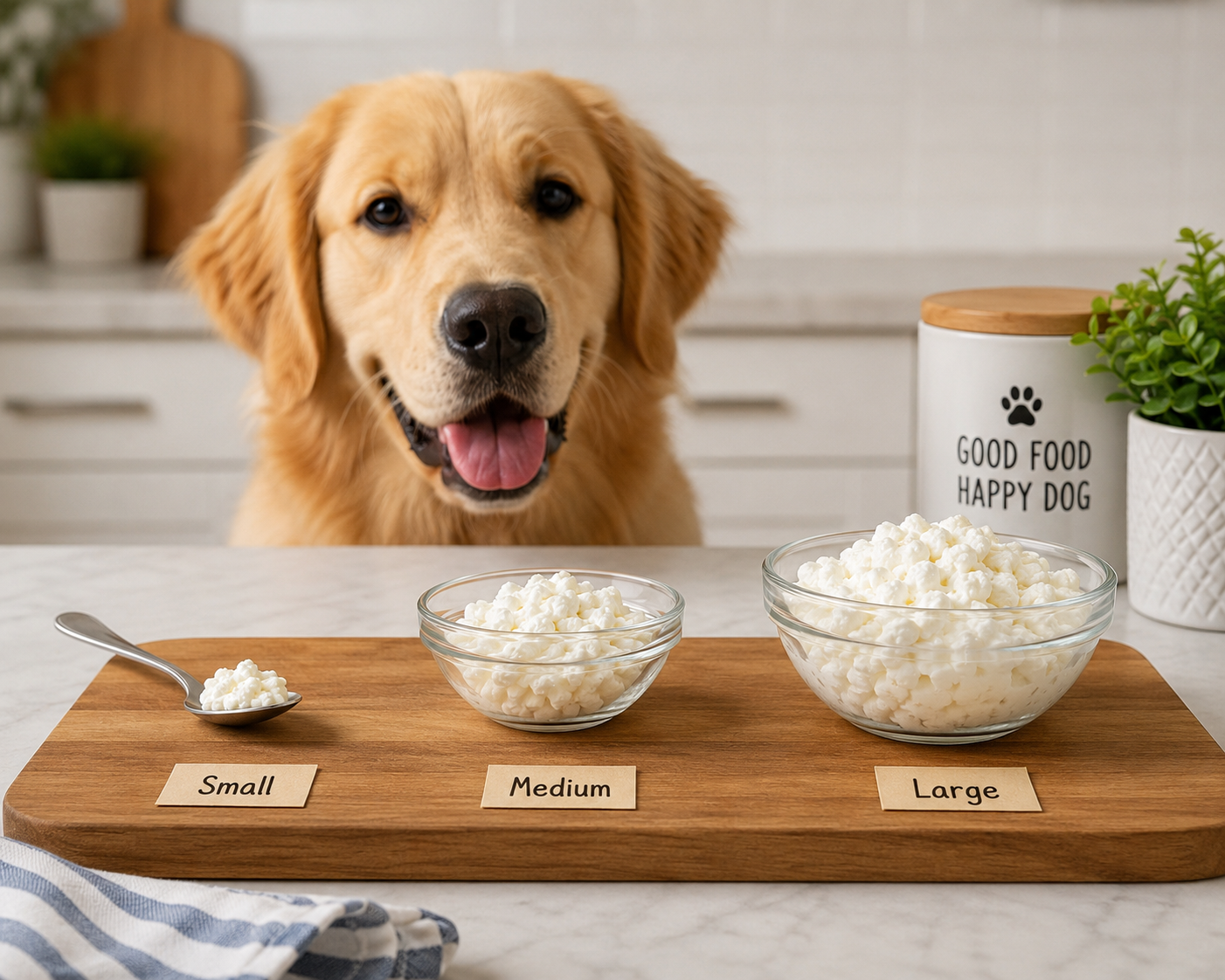
| Dog Size | Suggested Serving |
| Small dogs (under 20 lbs) | 1 to 2 teaspoons, occasionally |
| Medium dogs (20–50 lbs) | 1 to 2 tablespoons, occasionally |
| Large dogs (over 50 lbs) | 2 to 3 tablespoons, occasionally |
These are general guidelines, not strict rules. Always start with a smaller amount than you think your dog needs, and watch how they respond before offering it again.
Tips for Feeding Cottage Cheese Safely

- Choose Plain, Unsalted, Low-Fat Varieties — Avoid flavored or sweetened options entirely.
- Start With a Small Test Amount — Watch for any signs of digestive upset over the following 24 hours.
- Keep It Occasional, Not Daily — Treats, including dairy, should make up a small portion of overall diet.
- Avoid It If Your Dog Has Known Dairy Sensitivity — Don’t reintroduce it ‘just to see’ if it caused problems before.
- Check Labels for Xylitol or Added Sweeteners — Some sweeteners are toxic to dogs even in small amounts.
- Pair It Thoughtfully With Other Bland Foods — If used during recovery from an upset stomach, plain boiled chicken and rice are common companions.
- Ask Your Vet About Underlying Conditions — Especially for dogs with pancreatitis, kidney issues, or chronic GI problems.
Cottage Cheese vs Plain Yogurt for Dogs
| Feature | Cottage Cheese | Plain Yogurt |
| Lactose content | Relatively low | Low, especially with live cultures |
| Main benefit | Higher protein content | Probiotics that may support gut health |
| Main risk | Sodium in some brands | Added sugar in flavored varieties |
| Best for | Protein boost, bland diet support | Digestive and gut health support |
Common Misconceptions
| Misconception | Reality |
| All dairy is automatically toxic to dogs | Plain dairy in small amounts is generally safe for most dogs; the issue is usually quantity or sensitivity |
| Cottage cheese is a complete meal for dogs | It’s a supplemental food or treat, not a balanced standalone diet |
| If a dog tolerated it once, it’s always safe | Tolerance can change, and overfeeding can still cause issues even in dogs who normally do fine |
| Low-fat means it’s calorie-free | Low-fat varieties still contain calories and should be factored into a dog’s daily intake |
What Veterinary Sources Generally Say
Veterinary nutrition resources, including those published by the American Kennel Club and VCA Animal Hospitals, generally describe plain, low-fat cottage cheese as an acceptable occasional treat for dogs without dairy sensitivities, often noting its usefulness in bland diets for digestive recovery. These same sources consistently caution against flavored varieties and emphasize moderation.
When to Contact Your Veterinarian
Reach out to your vet if your dog shows ongoing vomiting or diarrhea after eating cottage cheese, seems unusually lethargic, has known pancreatitis or kidney disease and accidentally ate a large amount, or if you’re unsure whether dairy is appropriate given your dog’s specific health history.
Reducing the Risk of Problems
- Stick to small, occasional portions rather than regular daily feeding
- Always choose plain varieties with no added salt, sugar, or flavoring
- Introduce it gradually and watch for any reaction
- Avoid it altogether if your dog has a confirmed dairy intolerance
- Check with your vet if your dog has any chronic digestive or metabolic condition
Bottom Line
Cottage cheese is generally safe for dogs and can even be a helpful, protein-rich treat or bland-diet addition when used in moderation. The main things to watch for are dairy sensitivity, added sodium or sugar in flavored varieties, and portion size. When in doubt, a quick check with your veterinarian can help you feed it with confidence.
Frequently Asked Questions
Can puppies eat cottage cheese?
In small amounts, most puppies can have plain cottage cheese, but it’s best to check with your vet first since puppies can be more sensitive to dietary changes.
Is cottage cheese good for dogs with diarrhea?
It’s often included in bland diets for dogs recovering from mild digestive upset, but if diarrhea persists, a vet visit is recommended rather than relying on diet alone.
Can dogs be allergic to cottage cheese?
True dairy allergies are less common than lactose intolerance in dogs, but they can occur. Watch for itching, hives, or digestive symptoms after feeding.
Is low-fat or full-fat cottage cheese better for dogs?
Low-fat varieties are generally preferred, especially for dogs prone to weight gain or pancreatitis.
How often can I give my dog cottage cheese?
A few times a week in small portions is a reasonable guideline for most healthy dogs, rather than feeding it daily.
What dairy products should dogs avoid completely?
Ice cream, flavored yogurts with added sugar, and any dairy containing xylitol or chocolate should be avoided entirely.
Can cottage cheese help a dog gain weight?
Its protein and calorie content can support healthy weight gain in underweight dogs, but this should be done under veterinary guidance.
Is cottage cheese safe for senior dogs?
Generally yes in small amounts, though senior dogs with kidney or digestive issues should only have it with a vet’s approval.
