
Start Here
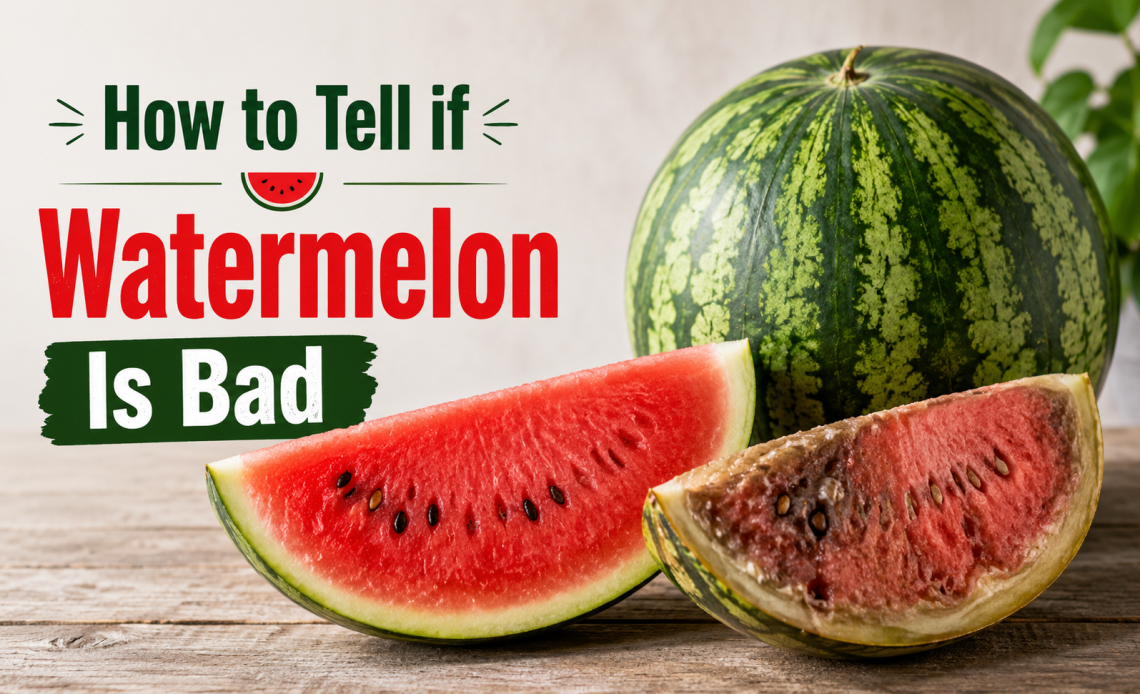
A watermelon that has gone bad can make you sick, and because it is such a large fruit, it is not always obvious when the problem is on the inside rather than the outside. If you are wondering how to tell if watermelon is bad, the good news is that a spoiled watermelon usually gives itself away through a combination of sensory clues: the way it looks, smells, sounds, and feels.
This guide walks through every sign to check, whether the watermelon is still whole or already cut, so you can decide with confidence whether it is worth eating or time to throw it out.
At a Glance: What to Check
| What You Notice | What It Likely Means |
| Soft spots, sunken areas, or a shriveled rind | Flesh is breaking down, discard it |
| Mold on the outside surface | Discard, especially if soft underneath |
| Dull thud instead of a hollow knock when tapped | Past peak ripeness, likely overripe or starting to turn |
| Sour, fizzy, or fermented smell | Discard, it has started to ferment |
| Mushy, grainy, or slimy flesh on the inside | Discard, not safe to eat |
| Dark pink to red, firm, juicy flesh | Fresh and good to eat |
Quick Checklist
- Check the outside: no mold, no soft spots, no deep dents or cracks.
- Check the sound: tap the melon, it should return a deep hollow knock.
- Check the smell: fresh and subtly sweet, not sour, off, or alcoholic.
- Check the inside: bright, firm flesh; no sliminess, no watery areas, no off color.
- Check how long it’s been stored: whole watermelon keeps about 2 weeks unrefrigerated; cut watermelon lasts 3 to 5 days in the fridge.
Why Watermelons Go Bad the Way They Do
It’s Mostly Water
At over 90 percent water content, watermelon deteriorates differently than lower-moisture fruits. Bacteria and yeast thrive in the wet environment inside, and once the flesh starts to break down, fermentation can happen surprisingly quickly, particularly in warm conditions.
The Rind Is Both a Protector and a Hiding Place
The tough outer rind helps preserve the flesh inside but can also mask early internal spoilage, which is why checking both outside and inside matters.
Whole vs Cut: Very Different Timelines
A whole, uncut watermelon kept at room temperature can last up to two weeks in good conditions. Cut watermelon left uncovered in the fridge should be eaten within 3 to 5 days, after which deterioration is rapid.
Why This Check Is Worth Doing Carefully
Eating spoiled watermelon can cause food poisoning symptoms including nausea, vomiting, stomach cramps, and diarrhea. Watermelon is also a fruit people often serve to children and large groups, which raises the stakes for getting the freshness check right. A quick sensory check before cutting or serving takes under a minute and can easily prevent a miserable experience.
Signs a Whole Watermelon Has Gone Bad
1. Visible Mold on the Surface
Any fuzzy growth, white, green, or black patches on the rind is a clear sign of mold. Even if it appears on just one small spot, spores can have already spread internally.
2. Soft Spots or Sunken Areas on the Rind
Press gently on different parts of the rind. Firm is good. If any area gives way noticeably, the flesh beneath is already deteriorating.
3. Cracks or Deep Dents
Physical damage to the rind allows bacteria and air to reach the flesh faster. A cracked watermelon is not necessarily spoiled yet, but it will deteriorate much more quickly than one with an intact rind.
4. A Dull Thud When Tapped
A ripe, fresh watermelon produces a deep, resonant, hollow knock when you tap it with your knuckles. An overripe or deteriorating watermelon sounds dull or flat, almost like tapping a thick wall.
5. Off Smell Even Before Cutting
A good watermelon should smell faintly sweet near the stem end. A sour, musty, or fermented smell before cutting is a sign the fruit is already turning.
6. Shriveling or Wrinkling of the Rind
Slight surface wrinkling is a sign the fruit is drying out, which usually accompanies internal breakdown.
Signs a Cut Watermelon Has Gone Bad
Slimy or Mushy Texture
Fresh watermelon flesh is firm and juicy. If it feels slimy to the touch or is easily mushed under gentle pressure, it’s past safe eating.
Sour, Fermented, or Vinegar-Like Smell
This is one of the most reliable signs of spoilage in cut watermelon. Even a faint sour or alcoholic smell means fermentation has started.
Grainy or Dry Texture
Flesh that looks mealy, dry, or gritty rather than smooth and juicy is typically overripe or breaking down, even if it hasn’t yet developed a bad smell.
Dark Spots or Discoloration in the Flesh
Bright red or deep pink flesh is expected. Brown patches, dark streaks, or an overall darkening of the flesh signal deterioration.
Separation of Juice From Flesh
If a pool of liquid has collected in the container separate from the flesh, and the flesh looks deflated, the cellular structure has broken down and it should be discarded.
When in doubt, throw it out. The consequences of eating spoiled watermelon, particularly for children, older adults, or anyone with a compromised immune system, aren’t worth the risk of saving a small amount of fruit.
What Happens If You Eat Bad Watermelon
Mild Cases
Nausea, stomach cramps, or loose stools may appear within a few hours of eating spoiled watermelon.
More Significant Reactions
Vomiting, diarrhea, and fever are possible, particularly if the watermelon had developed significant bacterial or mold growth.
Symptoms That Need Medical Attention
Persistent vomiting, high fever, signs of dehydration (extreme thirst, dark urine, dizziness), or blood in stool warrant a doctor’s visit, especially in young children, pregnant people, or older adults.
Who Is at Higher Risk From Spoiled Watermelon
- Young children, whose immune and digestive systems are still developing
- Pregnant individuals, for whom foodborne illness carries added risks
- Older adults, who may experience more severe dehydration from vomiting or diarrhea
- People with weakened immune systems from illness or certain medications
Watermelon is often served at gatherings and outdoor events in warm weather, exactly the conditions under which it deteriorates fastest. If a cut watermelon has been sitting out for more than 2 hours in temperatures above 30°C (86°F), treat it as unsafe.
How Long Watermelon Actually Lasts
| Storage Situation | Expected Freshness |
| Whole watermelon, room temperature | Up to 2 weeks |
| Whole watermelon, refrigerated | 2 to 3 weeks |
| Cut watermelon, covered in the fridge | 3 to 5 days |
| Cut watermelon, left out at room temperature | 2 hours maximum |
| Cut watermelon, frozen (cubed) | Up to 10 to 12 months for best quality |
How to Keep Watermelon Fresh for as Long as Possible
- Store Whole Watermelon Away From Direct Sunlight — A cool, dry spot at room temperature is fine for up to two weeks.
- Refrigerate Once Cut — Wrap cut pieces tightly in cling wrap or store in an airtight container.
- Don’t Leave It Out More Than 2 Hours — Especially outdoors in hot weather, where bacterial growth accelerates.
- Use Clean Utensils for Cutting — Cross-contamination from a dirty knife or board can introduce bacteria directly to the flesh.
- Don’t Pre-Cut Too Far in Advance — Cut only what you need, or store cut pieces properly right after slicing.
- Freeze What You Won’t Finish in Time — Cube and freeze leftover flesh on a tray, then transfer to a sealed bag for smoothies or blended drinks.
Fresh Watermelon vs Overripe Watermelon: Knowing the Difference
| Feature | Fresh and Good | Overripe or Going Bad |
| Flesh color | Bright, deep red or pink | Darkened, brownish, or uneven |
| Texture | Firm, juicy, smooth | Mushy, grainy, dry, or slimy |
| Smell | Mildly sweet, fresh | Sour, fermented, or off |
| Tap sound | Deep, hollow knock | Dull, flat thud |
| Taste | Sweet and refreshing | Bland, overly sweet, sour, or off |
Common Myths About Watermelon Freshness
| Myth | Fact |
| A yellow spot means the watermelon is bad | A creamy yellow field spot on the bottom is actually a sign of ripeness, not spoilage |
| If it smells fine outside, it’s fine inside | Internal fermentation can begin before any outside smell is detectable |
| Refrigerating watermelon ruins the taste | Refrigeration slows spoilage; cut watermelon must be refrigerated |
| Seeds mean the watermelon is old | Seeds are a normal part of many varieties and don’t indicate spoilage |
What Food Safety Sources Recommend
The U.S. Food and Drug Administration and the USDA food safety guidelines classify watermelon as a high-risk food for bacterial growth once cut, primarily due to its high moisture and sugar content, and recommend refrigerating cut watermelon within 2 hours of cutting and consuming it within 3 to 5 days.
When to See a Doctor After Eating Bad Watermelon
Seek medical care if you experience persistent vomiting that lasts more than 24 hours, signs of dehydration such as extreme thirst, no urination, or dizziness, a fever above 38.5°C (101.5°F), or if a young child, elderly person, or someone with a compromised immune system is affected by food poisoning symptoms.
Simple Rules to Avoid the Problem
- Buy whole watermelon rather than pre-cut when possible, for a longer shelf life
- Check the rind for soft spots and mold before buying, not just before eating
- Refrigerate promptly once cut and use within 5 days maximum
- Trust your nose, a sour or fermented smell means discard
- Never leave cut watermelon at a picnic or outdoor event for more than 2 hours
The Final Word
Telling whether a watermelon has gone bad doesn’t require any special skill, just a quick check using your senses. Look for mold, soft spots, and discoloration. Tap for a hollow sound. Smell for anything sour or off. And on the inside, trust the texture and smell above everything else. When the signs add up, don’t second-guess it.
Frequently Asked Questions
Is it safe to eat watermelon that smells slightly sour?
No. A sour or fermented smell, even a faint one, means fermentation has already started and the watermelon should be discarded.
Can you eat watermelon with white or pale flesh?
Pale flesh can mean the watermelon was underripe when picked rather than spoiled. If it smells fine and the texture is firm, it’s generally safe to eat, just less sweet.
Does a yellow field spot mean the watermelon is overripe?
No. A creamy or yellowish spot on the bottom of a whole watermelon is where it rested on the ground during growing and is actually a sign of ripeness, not spoilage.
How do I know if pre-cut watermelon from the store has gone bad?
Check for a sour or fermented smell through the packaging, any pooling of liquid separate from the flesh, or a darkening or slimy surface on the cut side.
Can you freeze watermelon to extend its shelf life?
Yes, cubed watermelon freezes reasonably well for up to 10 to 12 months and works well in smoothies, though the texture becomes soft when thawed.
What does it mean if the flesh inside is stringy?
Stringy texture in watermelon usually indicates overripeness rather than dangerous spoilage. It may still be safe to eat but will likely taste bland or off.
Can you get food poisoning from watermelon?
Yes, spoiled or contaminated watermelon can cause foodborne illness with symptoms like nausea, vomiting, and diarrhea.
Is watermelon left out overnight safe to eat?
Whole watermelon left out overnight is generally fine. Cut watermelon left unrefrigerated overnight should be discarded, since bacteria multiply quickly in cut fruit at room temperature.