
The real reasons it happens, and what actually helps
Quick Answer
Your nose gets stuffy at night mainly because lying down shifts blood flow toward your nasal tissue, causing it to swell and narrow your airway. Dust in your bedding, dry indoor air, and your sleep position all make it worse. It’s almost never about extra mucus — it’s about drainage and gravity changing the moment you lie flat.
At a Glance
| Factor | Details |
| Topic | Nighttime nasal congestion (often called nocturnal rhinitis) |
| Definition | Swelling of nasal tissue that worsens specifically when lying down |
| Main Causes | Gravity-driven blood flow shift, allergens in bedding, dry air, sinus drainage, sleep position |
| Why It Happens | Blood vessels in the nose dilate more when horizontal, narrowing airflow |
| Key Benefit of Knowing This | You treat the actual cause instead of guessing with random remedies |
| Risk if Ignored | Poor sleep, snoring, mouth breathing, morning dry throat |
| Best Use Case for Action | When it happens most nights — not just during a cold |
You’re Not Imagining It — This Is a Real Pattern
You feel fine all day. Then you lie down, and within minutes, one or both nostrils close up.
This is not random. It is one of the most common, most under-explained sleep complaints out there.
And no, it is not just “allergies” every time, even though that is the answer most people default to.
So, Why Does My Nose Get Stuffy at Night? The answer usually comes down to a mix of position, airflow, inflammation, indoor triggers, and how your nose naturally works while you sleep.
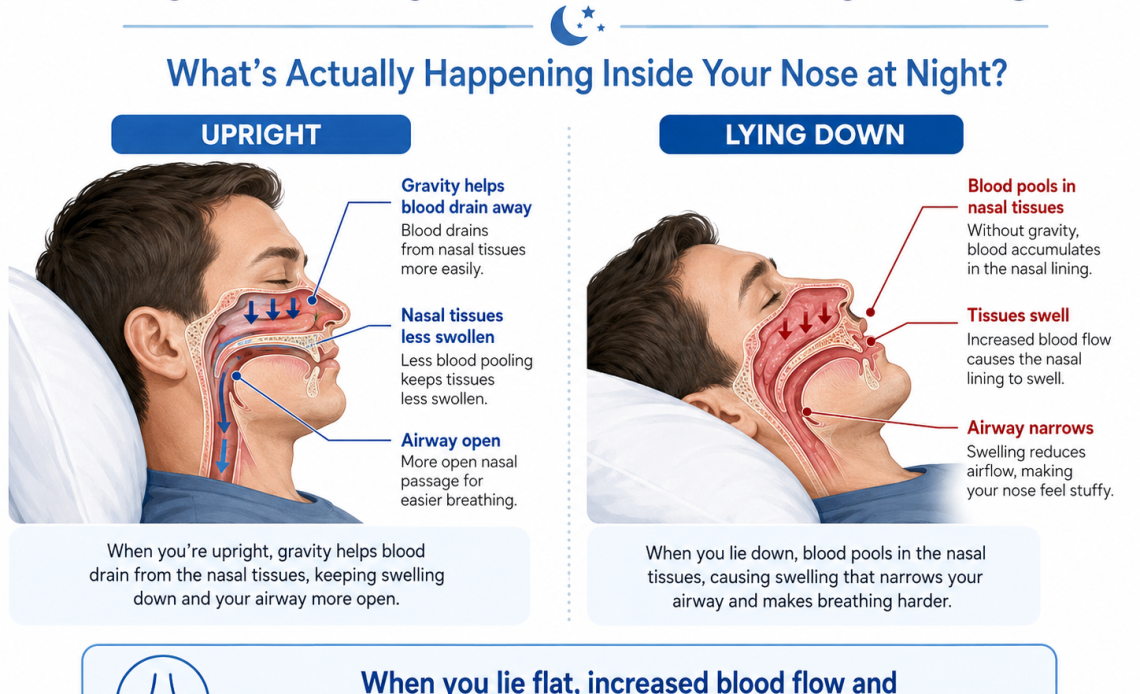
What’s Actually Happening Inside Your Nose at Night?
Your nasal passages are lined with tiny blood vessels that expand and contract throughout the day.
When you stand or sit, gravity helps drain blood away from your head. When you lie flat, that drainage slows down.
More blood pools in the nasal tissue, the tissue swells, and your airway gets tighter — even if you weren’t congested an hour earlier.
Why Does Lying Down Make It So Much Worse?
Three things happen at once when you go horizontal:
- Blood flow to the nose increases
- Mucus that would normally drain down your throat sits in your sinuses instead
- Less airflow means less natural evaporation, so swelling lingers
It’s a mechanical problem before it’s a medical one.
Who Deals With This the Most?
This shows up more in people who:
- Sleep in rooms with forced-air heating or AC (very dry air)
- Have pets, carpets, or older mattresses and pillows
- Sleep on their back
- Already have mild allergies, even if not officially “diagnosed”
If any of these sound familiar, that’s usually your first clue.
What Are the Main Triggers? (It’s Rarely Just One)
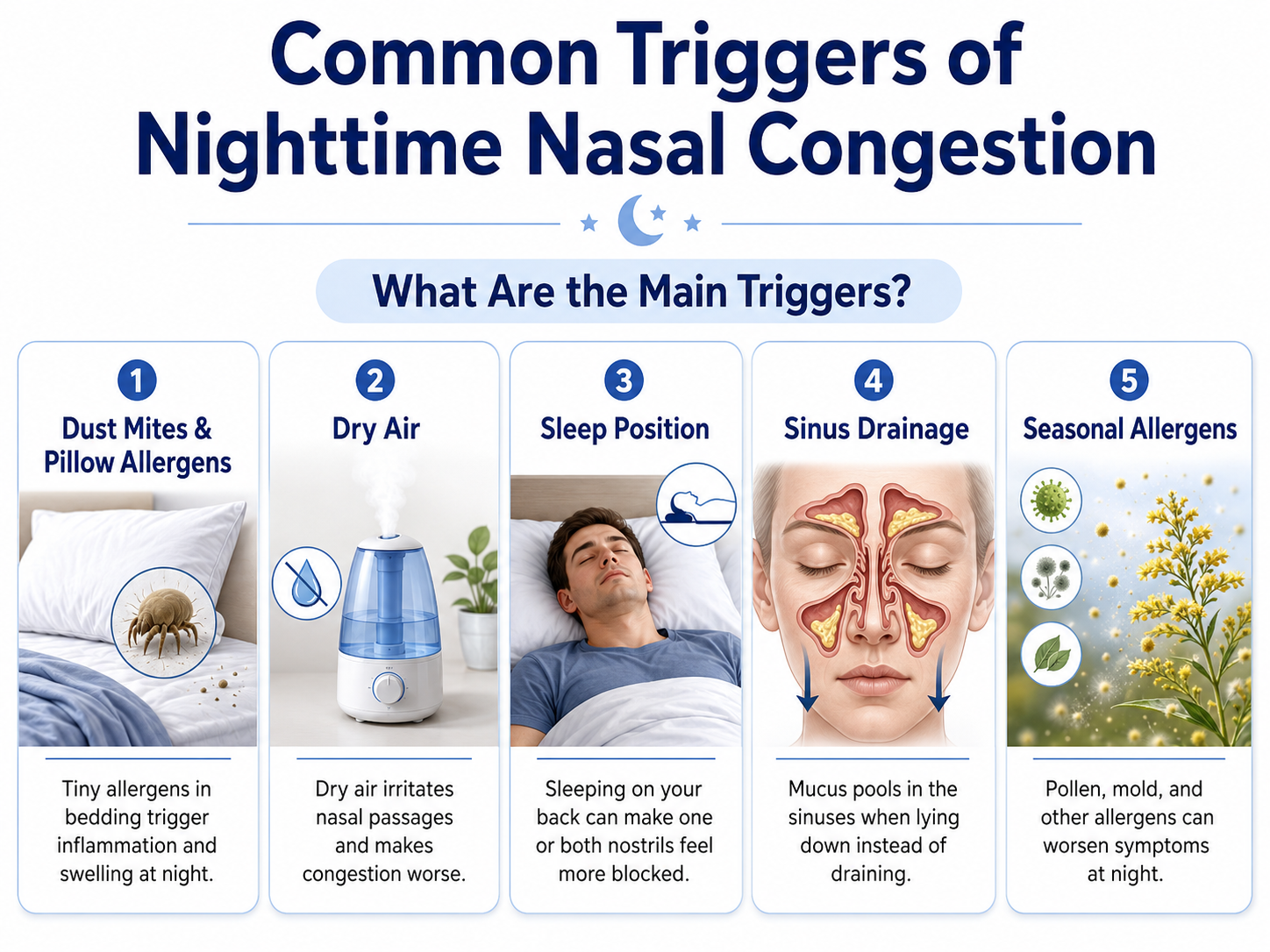
| Trigger | How It Shows Up |
| Dust mites & pillow allergens | Worse only at night, better during the day |
| Dry air | Stuffy nose + dry mouth/throat in the morning |
| Sleep position | One nostril worse than the other |
| Sinus drainage | Congestion paired with a mild headache or pressure |
| Seasonal allergens | Worse during specific months, better with windows closed |
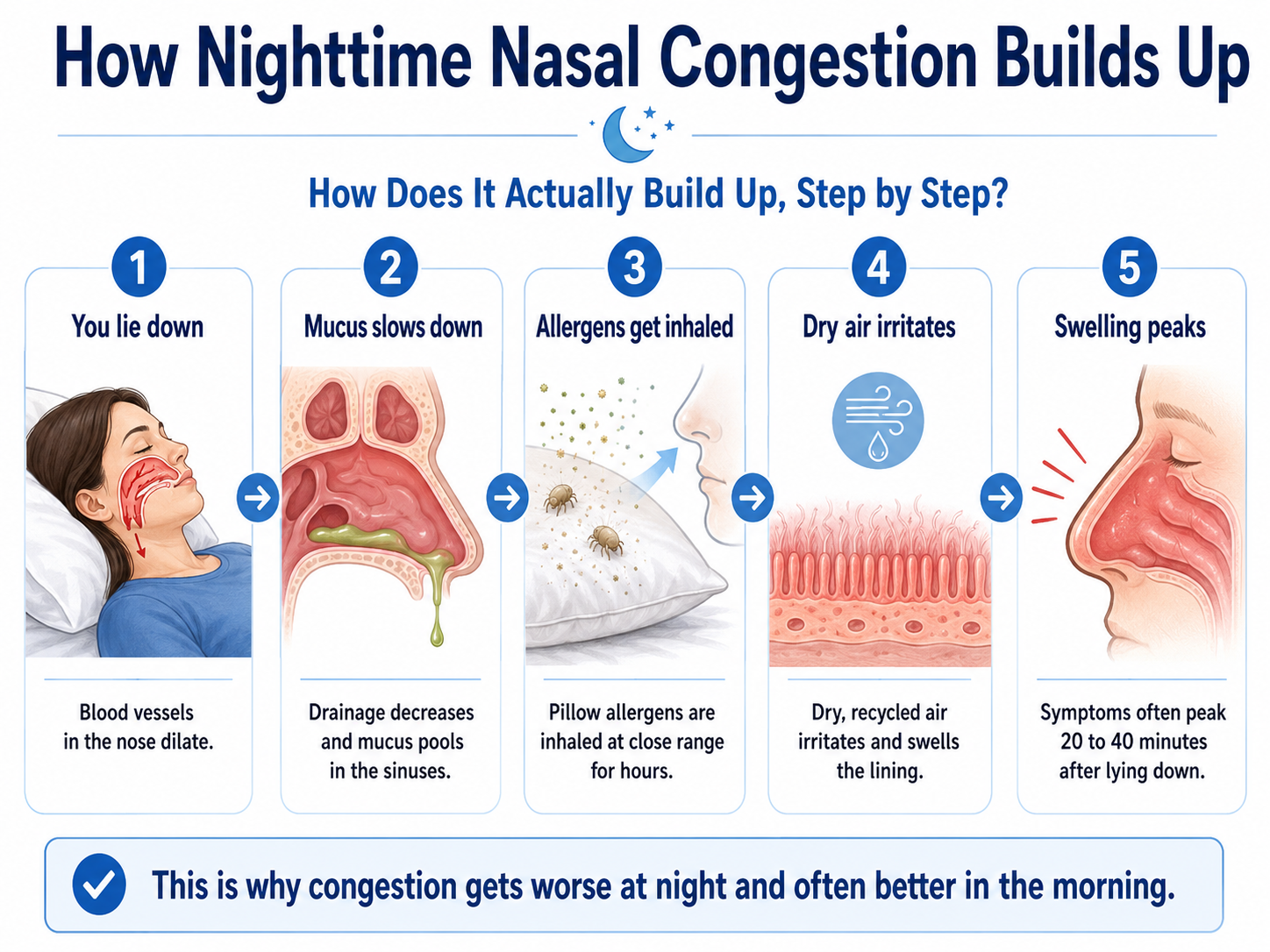
How Does It Actually Build Up, Step by Step?
- You lie down — blood vessels in the nose dilate
- Mucus that normally drains forward now sits in your sinuses
- Allergens trapped in your pillow get inhaled at close range for hours
- Dry, recycled bedroom air dries and irritates nasal lining
- Swelling peaks 20–40 minutes after lying down — which is exactly when people notice it
A Real-Life Scenario
Someone feels completely normal all evening. They lie down at 11 PM, and by 11:30, one nostril is fully blocked.
They flip to the other side, and within a few minutes, the other nostril takes over.
This switching pattern confuses a lot of people — but it’s actually a known, normal nasal behavior (more on that below).
5 Common Mistakes People Make With Nighttime Congestion
- Assuming it’s always allergies — dry air and sleep position are just as common.
- Sleeping flat on the back — this is the worst position for drainage.
- Ignoring old pillows — they’re one of the biggest dust mite reservoirs in the house.
- Overusing nasal sprays — some types cause rebound congestion if used too long.
- Blaming “a cold” every single night — if it’s nightly and not improving, it’s not a cold anymore.
Is It Allergies, a Cold, or Something Else?
| Likely Cause | Signs to Look For | What Helps | What Doesn’t |
| Allergies | Itchy eyes, sneezing, worse with pets/dust | Allergy-proof pillow covers, regular cleaning | Ignoring bedding hygiene |
| Common cold | Sore throat, fatigue, fades in 5–10 days | Rest, fluids, humidifier | Expecting it to last for weeks |
| Dry air | Dry mouth, no other symptoms | Humidifier, hydration | Heavy decongestant use |
| Sinus issue | Facial pressure, congestion lasting weeks | Saline rinse, doctor visit if persistent | Self-diagnosing long-term |
| Sleep position | One-sided congestion that switches sides | Side sleeping, elevated head | Sleeping flat on the back |
What Can You Actually Do Tonight?
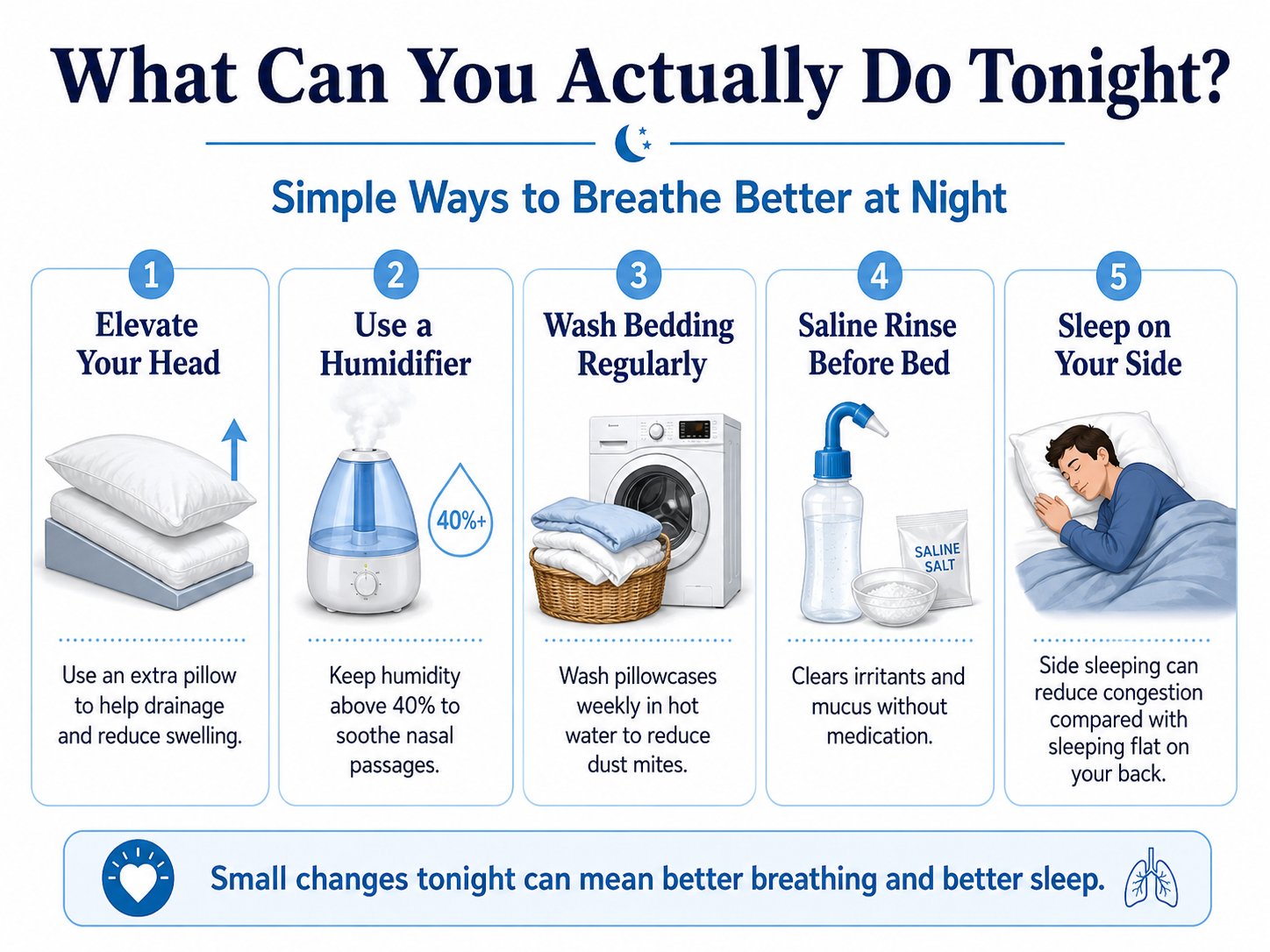
- Elevate your head slightly with an extra pillow — gravity helps drainage
- Run a humidifier if your home has dry, forced-air heating or cooling
- Wash pillowcases weekly in hot water to cut down on dust mites
- Try a saline rinse before bed — it clears irritants without medication
- Sleep on your side instead of flat on your back when congestion is active
Small changes here tend to matter more than people expect.
Why Does Only One Side of My Nose Get Stuffy?
This is called the nasal cycle. Your body naturally shifts more airflow between nostrils every few hours, even when you’re healthy — lying on one side just makes the effect more noticeable.
Does a Humidifier Really Make a Difference?
Yes, especially in heated or air-conditioned bedrooms. Dry air irritates nasal lining directly, and humidity above 40% noticeably reduces overnight stuffiness for most people.
Can Allergies Cause Stuffiness Only at Night?
Yes. Pillow and mattress dust mites sit inches from your face for hours, which creates a much stronger reaction than daytime exposure to the same allergens elsewhere.
Should I Worry If This Happens Every Single Night?
If it’s persistent for more than 2–3 weeks, paired with facial pressure or thick discolored mucus, it’s worth seeing a doctor to rule out chronic sinusitis.
Is It Bad to Sleep With My Mouth Open Because of This?
Occasional mouth breathing isn’t dangerous, but regular nightly mouth breathing can dry your throat, worsen snoring, and affect sleep quality over time.
What Most People Don’t Realize
Most people treat nighttime congestion like a medical mystery. It usually isn’t.
It’s a mechanical and environmental issue — blood flow, drainage angle, and what’s literally sitting in your pillow.
Myth: “I must be getting sick every night.”
Reality: Your body is reacting to position and bedroom air quality, not a new illness each time.
That single shift in thinking changes how people approach fixing it — they stop reaching for medicine and start fixing their environment.
What Should You Do Next?
If this happens occasionally, start with the bedroom basics: humidity, pillow hygiene, and sleep position.
If it happens nearly every night for weeks, or comes with pain and pressure, that’s the point to involve a doctor rather than guessing further.
Avoid relying on decongestant sprays night after night — that’s the one habit most likely to make things worse over time.