
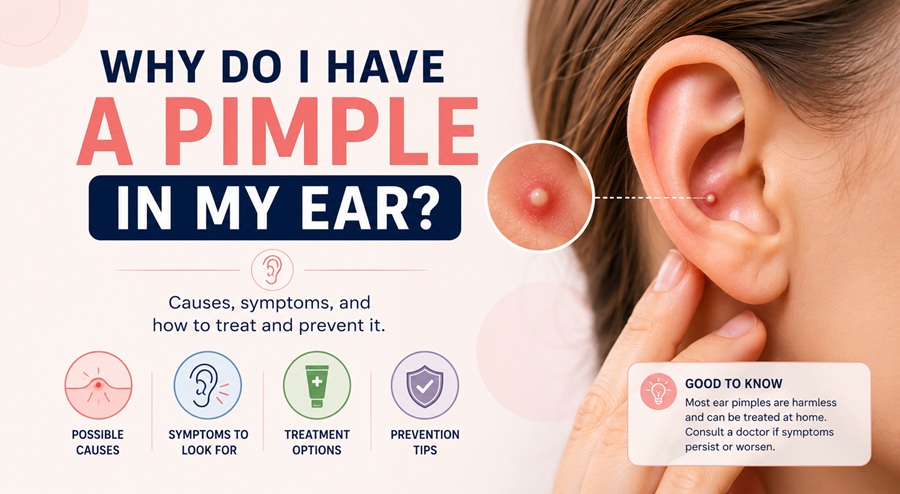
Finding a pimple in your ear is more common than most people realize, and it happens for the same basic reason pimples appear anywhere else on the body — a pore gets clogged, bacteria move in, and the immune system responds with inflammation. The ear just makes the whole situation more noticeable because the skin there is tighter, there is less underlying fat to absorb pressure, and the confined anatomy means there is often nowhere for the swelling to go. That is why a relatively small pimple in the ear canal can feel dramatically more painful than a much larger one on your face.
The good news is that most ear pimples resolve on their own within a few days to two weeks, and the right approach is usually simple: leave it alone, apply warmth, and keep the area clean. The wrong approach — popping it — consistently makes things worse.
Why the Ear Gets Pimples at All
The outer ear and the entrance to the ear canal contain all the biological ingredients needed to produce acne: skin cells that shed continuously, sebaceous glands that produce sebum (the skin’s natural oil), and hair follicles. When dead skin cells and sebum accumulate faster than they can be cleared — whether from excess oil production, external irritation, bacteria, or a combination — the pore becomes blocked and a pimple forms.
The ear’s anatomy creates specific conditions that make this more likely than you might expect. The concha, the bowl-shaped hollow of the outer ear, tends to collect skin debris, sweat, and oils. The narrow entrance to the ear canal traps material even more effectively. The skin in these areas is less mobile than facial skin, which means it cannot shed as freely, and anything pressed against it — an earbud, a phone, a pillow — creates friction that disrupts the skin barrier and encourages blockage.
The Most Common Reasons You Have a Pimple in Your Ear
Earbud and Headphone Use
This is the single most common trigger in people who develop recurring ear pimples. Earbuds sit directly against or inside the ear canal for hours at a time, doing several things that promote acne simultaneously. They trap warmth and moisture against the skin, creating the warm, humid environment that bacteria thrive in. They create friction that irritates the skin barrier. They press skin against itself, preventing normal cell shedding and oil drainage. And unless cleaned regularly, they accumulate bacteria and skin oils from previous uses that get reintroduced to the ear with every use.
Sharing earbuds compounds the problem significantly by introducing a different person’s bacterial flora into your ear canal.
Hormonal Changes
Androgens — including testosterone — stimulate sebaceous glands to produce more sebum. During puberty, the menstrual cycle, pregnancy, and periods of significant hormonal fluctuation, sebum production increases throughout the body, including in the ears. This is why ear pimples often track alongside facial breakouts during hormonal phases. Hormonal contraceptives, anabolic steroids, and certain other medications that affect androgen levels can also influence sebum production and acne frequency in the ears.
Poor Ear Hygiene or Over-Cleaning
Under-cleaning the ears allows dead skin cells, excess sebum, and environmental debris to accumulate in the outer ear. Over-cleaning — particularly using cotton swabs inside the canal — disrupts the ear’s natural self-cleaning mechanism and pushes debris deeper rather than clearing it, while also removing the cerumen (earwax) that normally traps and expels bacteria. The ear canal is designed to clean itself outward through jaw movement and epithelial migration; inserting objects disrupts that process and irritates the skin.
Hair Products and Skincare
Shampoos, conditioners, hair sprays, and styling products that run into the ears during washing or application can leave residue that clogs pores. Similarly, skincare products applied to the face that migrate toward the hairline and ears are a common and frequently overlooked cause of periauricular acne — pimples around the outer ear and behind it.
Stress
Stress triggers the release of cortisol, which in turn increases sebum production and promotes systemic inflammation. Both mechanisms contribute to acne flares across the body, including in the ears. There is a consistent clinical association between periods of elevated psychological stress and acne worsening, and the ears are not exempt from this pattern.
Touching and Touching Your Phone
The hands carry enormous bacterial loads, and frequently touching the ears — scratching, adjusting earrings, resting the hand against the ear — transfers bacteria directly to the skin. Holding a phone against the ear presses bacteria from the phone screen against the skin for extended periods. Phone screens carry significant bacterial contamination from surfaces, hands, and pockets, making extended phone calls a surprisingly consistent acne trigger in this area.
Dietary Factors
The relationship between diet and acne is complex, but the evidence for certain associations has strengthened in recent years. High glycemic index foods — refined carbohydrates and sugars — cause rapid insulin spikes that increase circulating androgens and sebum production. Dairy products, particularly those with high whey protein content, have been associated with acne flares in some clinical studies. These effects play out across the entire body’s sebaceous glands, including in the ear.
Types of Pimples That Form in the Ear
Not all ear pimples are the same, and the type affects both how they feel and how they are best treated.
Closed comedones (whiteheads) form when a pore becomes blocked and the opening remains closed, trapping sebum and dead skin beneath the surface. They appear as small, flesh-colored or slightly white bumps.
Open comedones (blackheads) occur when the pore opens and the trapped material oxidizes on contact with air, turning dark. The black color is oxidized sebum and skin debris, not dirt.
Papules are inflamed pimples without visible pus — red, raised, and tender to the touch. They develop when a comedone becomes infected with bacteria and triggers an immune response.
Pustules are the classic white-headed pimples filled with pus — a collection of dead white blood cells, bacteria, and skin debris. These are the most tempting to pop and the most dangerous to do so inside the ear.
Cystic acne develops when infection extends deeper into the skin tissue, forming a large, painful, fluid-filled lump below the surface. Cysts in the ear canal are particularly painful given the surrounding bone and cartilage and have very little room to expand. These rarely resolve without medical assistance.
Why Ear Pimples Hurt More Than Facial Ones
The pain disparity between facial pimples and ear pimples is real and has a clear anatomical explanation. The skin of the outer ear and ear canal is thin and sits directly over cartilage and bone with very little subcutaneous fat as a buffer. When a pimple forms and causes inflammation and swelling, that swelling has nowhere to expand into without pressing against the rigid underlying structures. The pressure triggers pain receptors more intensely than the same degree of swelling in an area with more tissue flexibility.
For pimples deep inside the ear canal, the pain can radiate and feel like an earache, making it difficult to distinguish from an ear infection without examination.
What to Do About It
Warm Compress
The most effective and safest home treatment for an ear pimple is a warm compress applied two to three times daily for ten to fifteen minutes. The heat increases local blood flow, softens the pore, and encourages the pimple to come to a head and drain naturally. If the pimple drains on its own, gently clean the area with mild soap and water.
Do not use water that is too hot — the skin around the ear is sensitive and can be easily irritated.
Topical Treatments
Benzoyl peroxide and salicylic acid — the two workhorses of over-the-counter acne treatment — can be applied carefully to accessible parts of the outer ear. Benzoyl peroxide kills acne-causing bacteria on the skin surface. Salicylic acid is a beta hydroxy acid that penetrates pores and dissolves the dead skin cells and oils that clog them.
Use these products sparingly in the ear area and keep them away from the ear canal itself, as the delicate skin inside the canal is more sensitive to irritation than facial skin.
Witch hazel applied with a cotton ball to the outer ear can reduce inflammation and has mild antimicrobial properties. Tea tree oil, diluted in a carrier oil before application, has demonstrated antibacterial effects in some studies on acne treatment.
Do Not Pop It
This cannot be overstated for pimples specifically in the ear. Popping an ear pimple does not expel the contents outward — it often forces pus and bacteria deeper into the pore or into the ear canal, where the bacteria can cause a more serious infection. Inside the ear canal, a burst pimple can introduce infectious material to an area with poor access to natural drainage, leading to otitis externa — an infection of the outer ear canal — which is far more painful and takes far longer to resolve than the original pimple. The risk of damaging the eardrum from inserting anything deep into the canal to reach a pimple is also real.
For cystic or nodular ear pimples that are very large, very painful, or not improving, a physician or dermatologist can drain them properly using sterile instruments in a safe clinical environment.
When It Might Not Be a Pimple
Several conditions can produce bumps in or around the ear that look and feel like pimples but require different treatment.
Sebaceous cysts are larger, slower-growing lumps beneath the skin formed by a blocked sebaceous gland. They are not infectious in origin but can become infected. They tend to persist rather than resolving within a few days.
Folliculitis is an infection of the hair follicle — usually bacterial — that produces a red, pus-filled bump at the follicle opening. It can look identical to a pustular pimple and is treated similarly with topical antibiotics.
Otitis externa (swimmer’s ear) is an infection of the ear canal that can produce swelling and bumps inside the canal alongside pain, discharge, and hearing changes. It requires antibiotic ear drops rather than topical acne treatment.
Keloids are overgrown scar tissue that form in some people after ear piercings, particularly in individuals with genetic predisposition to keloid formation. They appear as firm, rubbery, often flesh-colored or pinkish growths around the piercing site and can be mistaken for recurring pimples.
Basal cell carcinoma is a skin cancer that can occasionally present as a persistent, non-healing bump on the outer ear. Any lesion that does not respond to typical acne treatment, grows slowly over weeks to months, bleeds spontaneously, or has irregular borders warrants evaluation by a physician.
When to See a Doctor
Most ear pimples do not require medical attention and resolve with basic home care within one to two weeks. See a healthcare provider or dermatologist if the pimple is very large, deeply embedded in the ear canal, or extremely painful; if there are signs of spreading infection — redness extending beyond the pimple, warmth, swelling, or fever; if there is any discharge or hearing change; if the bump has been present for more than two weeks without improvement; or if ear pimples are recurring frequently and interfering with your quality of life.
Recurring acne anywhere — including the ears — that does not respond to over-the-counter treatment benefits from dermatological evaluation. A dermatologist can assess severity, identify any underlying contributors, and prescribe targeted treatment including topical retinoids, topical antibiotics, or systemic therapy where appropriate. The American Academy of Dermatology’s patient resource on acne provides comprehensive guidance on acne types, treatment options, and when professional care is warranted.
Preventing Ear Pimples
Clean your earbuds and headphones regularly
Wipe them with an alcohol swab before each use. Never share them.
Wash your hands before touching your ears
This simple habit removes one of the most common bacterial introduction routes.
Clean your phone screen
Regular phone screen cleaning — particularly before long calls — reduces the bacterial load being pressed against your skin.
Rinse your ears when washing your hair
Letting shampoo and conditioner sit in the outer ear is a pore-clogging risk. Rinse gently and dry the outer ear thoroughly after washing.
Avoid inserting objects into the ear canal
Cotton swabs, fingers, and similar objects disrupt the ear’s natural cleaning mechanism and irritate the canal skin. The ear canal does not need manual cleaning.
Manage systemic acne
If you have facial acne that tends to flare with stress, diet, or hormonal cycles, the ear is subject to the same systemic triggers. Managing those factors — through skincare, diet, or dermatological treatment — reduces ear breakouts as a downstream benefit.
Frequently Asked Questions
Can earwax cause pimples?
Cerumen — earwax — is produced by glands in the outer ear canal and plays a protective role, trapping dust, bacteria, and debris. Under normal circumstances it does not cause pimples. However, excessive cerumen buildup that traps bacteria and debris against the canal skin can contribute to folliculitis or acne in some people.
Why do I keep getting pimples in the same spot in my ear?
Recurring pimples in the same location often indicate a persistently blocked pore or sebaceous gland at that site. They can also reflect a behavioral trigger — an earbud that presses against a particular spot, a habit of touching or scratching a specific area, or an earring in a location that creates chronic friction. Identifying and addressing the specific trigger is more effective than treating each recurrence individually.
Can a pimple in the ear affect hearing?
A very large or deeply situated pimple can partially obstruct the ear canal and cause a temporary reduction in hearing, similar to the muffled sensation from water in the ear. This typically resolves when the pimple clears. If hearing changes are accompanied by pain, discharge, or persist beyond the pimple, evaluation by a physician is warranted.
Is it safe to use cotton swabs to apply acne treatment inside the ear?
A cotton swab can be used to apply treatment to the very entrance of the ear canal or accessible parts of the outer ear, but inserting it deep into the canal risks irritating the skin, pushing debris further in, and potentially damaging the eardrum. Keep topical treatments to the outer ear and the entrance of the canal only.