
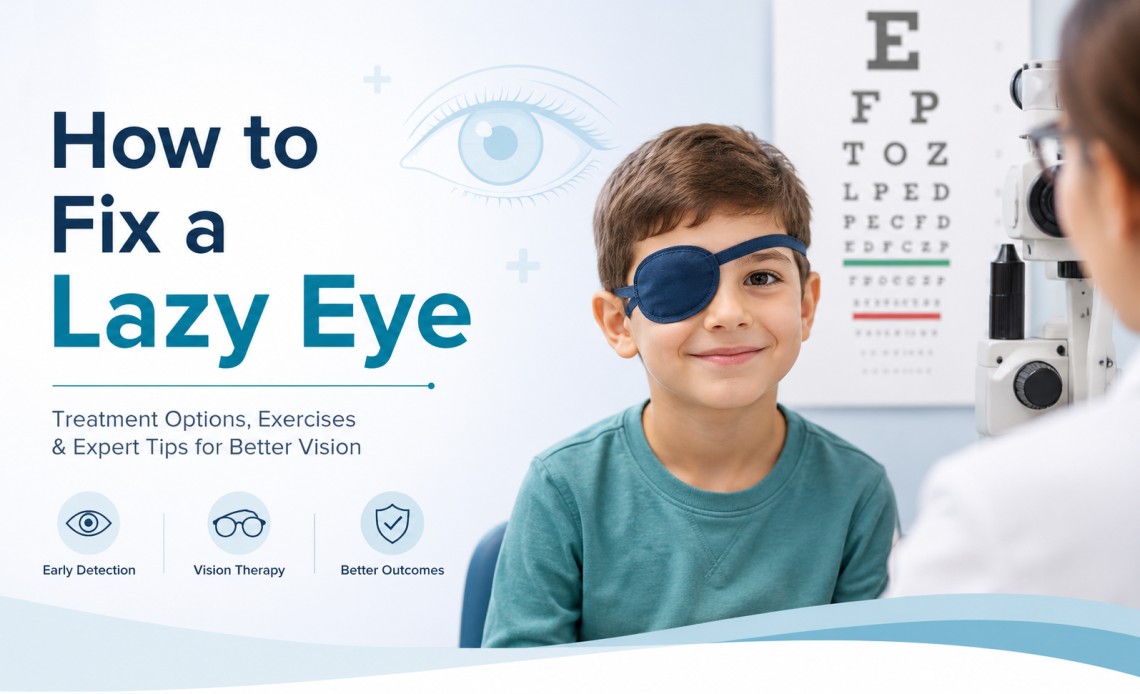
Treatments for Children and Adults, What Actually Works, and When to Act
| Quick Answer
A lazy eye (amblyopia) is fixed by forcing the brain to use the weaker eye — most commonly through corrective glasses, an eye patch worn over the stronger eye, or atropine eye drops. Vision therapy and, in some cases, surgery are also options. Treatment is most effective before age seven, but modern research confirms meaningful improvement is possible in teenagers and adults too. The earlier you act, the better the outcome — but it is never definitively too late to try. |
Lazy Eye (Amblyopia) — At a Glance
| Factor | Details |
| Medical Term | Amblyopia |
| What It Is | Reduced vision in one eye caused by the brain favouring the other — not a structural eye problem |
| Who It Affects | Approximately 2–3% of children; the most common cause of one-eye vision loss in kids |
| Main Causes | Strabismus (crossed eyes), refractive error difference between eyes, deprivation (cataract/drooping eyelid) |
| Key Symptom | Poor vision in one eye, sometimes with that eye drifting outward or inward |
| Best Treatment Age | Before age 7 — but evidence shows improvement is achievable up to age 17 and into adulthood |
| Primary Treatments | Corrective glasses, eye patch, atropine drops, vision therapy, surgery (in some cases) |
| Treatment Duration | Six months to two years typically; longer for adults |
| Success Rate (kids) | Most children improve significantly with treatment; best results before age 7 |
| Success Rate (adults) | Over 70% show improvement with compliant vision therapy programmes |
| Risk If Untreated | Permanent partial or complete blindness in the weaker eye |
| Cost Range | $119 to $9,000 for non-surgical treatment; surgery $3,800 to $9,643 without insurance |
| Covered by Insurance | Yes — typically covered as it is not classified as cosmetic |
| New 2025 Options | VR-based dichoptic therapy, neurovision training, computer-based binocular programmes |
The Eye Condition That Looks Simple But Runs Deeper Than People Think
What Is a Lazy Eye — And Why the Name Is Misleading
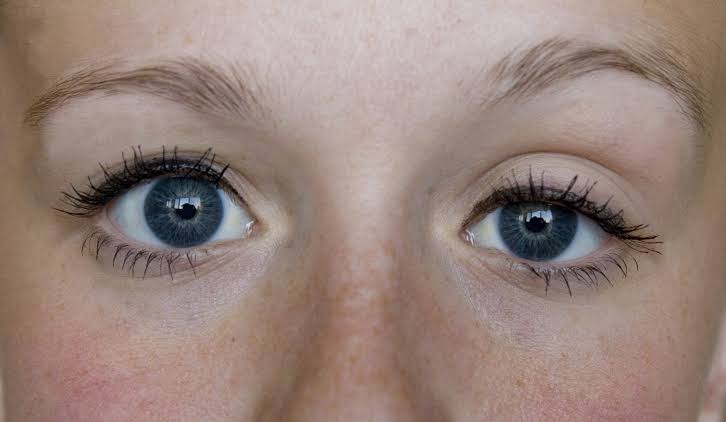
The medical term is amblyopia. The popular term — lazy eye — is misleading, because nothing about the eye is actually lazy. The eye itself is usually fine. The problem is in the brain.
When both eyes send different quality signals to the brain — because of a significant prescription difference, a crossed eye, or a physical obstruction — the brain makes a decision. It starts favouring the clearer signal and slowly suppresses the weaker one. Over time, the neural pathway between the weaker eye and the brain weakens through disuse. That is amblyopia. The eye did not fail. The brain stopped listening to it.
This matters enormously for treatment. You are not trying to fix the eye. You are trying to retrain the brain.
| Type of Amblyopia | What Causes It | How Common |
| Refractive Amblyopia | Significant prescription difference between the two eyes — one eye is much more nearsighted, farsighted, or astigmatic than the other | Most common type |
| Strabismic Amblyopia | Crossed or drifting eyes (strabismus) — the brain suppresses one eye to avoid double vision | Very common |
| Deprivation Amblyopia | A physical blockage in front of the eye — congenital cataract, drooping eyelid, or corneal scarring — prevents visual input entirely | Least common but most severe |
| Anisometropic Amblyopia | A subtype of refractive — when one eye is significantly more far- or near-sighted, glasses alone may not fully correct the issue | Common |
Why Early Detection Changes Everything
Between birth and around age seven, the brain is actively building the neural pathways that process visual information. This window is called the critical period. During it, the brain is far more adaptable — changes made to how the eyes are used during these years can permanently reshape how the visual system works.
If amblyopia goes undetected and untreated during this window, the suppression of the weaker eye becomes increasingly hardwired into the brain. The longer it goes on, the more time and effort is required to reverse it — and the less complete that reversal tends to be.
That is why a routine eye exam before school age is not optional. Lazy eye rarely causes obvious symptoms that a child will report. They have grown up not knowing that their vision in that eye is worse, because they have no point of comparison. An eye exam is the only reliable way to catch it.
The Main Treatments — How Each One Works
| Treatment | How It Works | Best For | Duration |
| Corrective Glasses / Contacts | Equalises the prescription between both eyes — in some children, this alone is enough to resolve the amblyopia as the brain gets balanced input | Refractive amblyopia; first-line treatment for all types | Worn continuously; reassessed every 3–6 months |
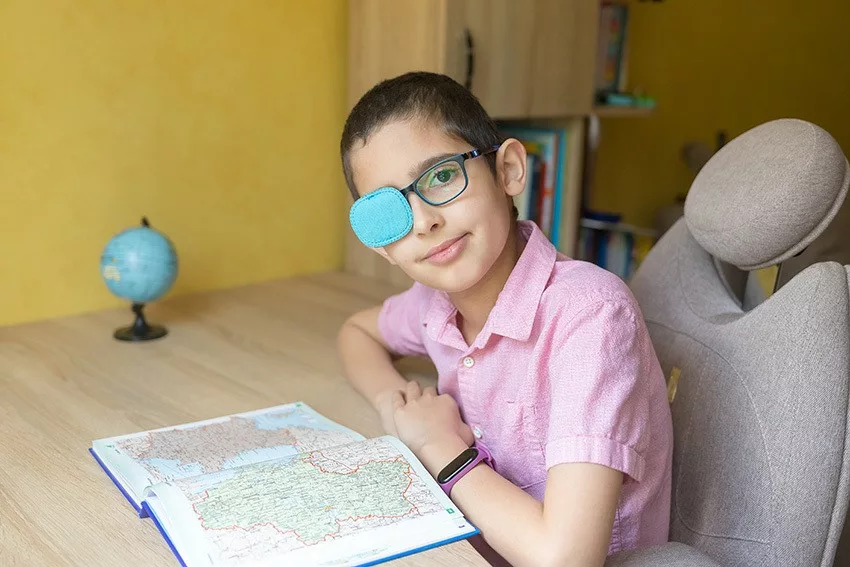
| Eye Patching | Covers the stronger eye for 2–6 hours daily, forcing the brain to rely on the weaker eye and build new neural connections | Children — most widely used active treatment after glasses | Weeks to months; typically six months to two years |
| Atropine Eye Drops | Blurs the vision in the stronger eye using drops rather than a patch — less intrusive for children who resist patching; once-daily application | Children who cannot or will not wear a patch; mild to moderate amblyopia | Months; same effectiveness as patching for mild cases |
| Vision Therapy | Supervised programme of exercises to improve eye coordination, binocular vision, and brain-eye communication; includes in-office and home exercises | Older children, teenagers, and adults; best when combined with patching or drops | Six to nine months; sessions typically 30–45 minutes once weekly |
| Dichoptic Therapy (VR) | Presents different images to each eye simultaneously via VR headset, controlling contrast levels to reduce suppression of the weaker eye | Adults and older children; newest evidence-based approach available in 2025 | Ongoing research; early results show strong improvement rates |
| Surgery | Does not treat amblyopia directly — corrects underlying strabismus or removes physical obstructions (cataracts, droopy eyelids); amblyopia treatment continues after surgery | Strabismic or deprivation amblyopia where structural issue must be addressed first | Single procedure; followed by months of post-surgical amblyopia treatment |
The Treatment Journey — Step by Step
Step 1 — Get a professional diagnosis. An eye exam by an optometrist or ophthalmologist is the only way to confirm amblyopia and identify its type. Children should be screened before age five — ideally around three.
Step 2 — Correct any underlying refractive error first. Glasses or contact lenses are prescribed to equalise vision between both eyes. For many children, this is the only treatment needed. The brain is given equally clear input and adjusts naturally over weeks to months.
Step 3 — Add active treatment if glasses alone are not enough. If vision in the weaker eye has not improved after around twelve weeks of wearing glasses, patching or atropine drops are introduced. Patching is typically prescribed for two to six hours per day depending on severity.
Step 4 — Monitor and adjust consistently. Progress is reviewed every eight to twelve weeks. The patch duration may be increased or decreased. Both eyes are tested separately at each appointment.
Step 5 — Add vision therapy where appropriate. Particularly for older children and adults, structured vision therapy sessions add another layer of retraining. Exercises address binocular vision, depth perception, and eye coordination.
Step 6 — Consider surgery if a structural issue is involved. If strabismus or a physical obstruction is part of the picture, surgery may be needed — but it is done to enable amblyopia treatment, not to replace it.
Step 7 — Continue monitoring after treatment ends. Up to a quarter of children experience a recurrence of amblyopia. Regular check-ups for at least twelve to twenty-four months after treatment finishes are essential.
Can Adults Fix a Lazy Eye? The Answer Has Changed.
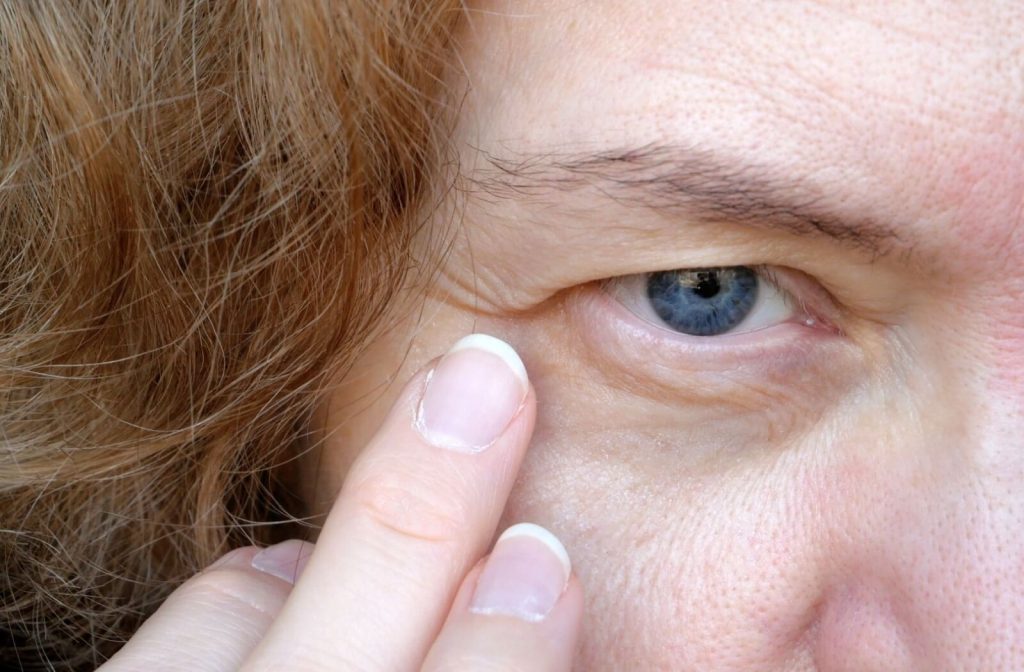
For decades, the medical consensus was clear: if a lazy eye was not treated before age seven or eight, nothing could be done. That consensus was based on real science — the critical period is real, and early treatment is genuinely more effective.
But the science has moved on. Studies funded by the National Eye Institute and published between 2020 and 2025 have consistently shown that adults retain enough neuroplasticity to achieve meaningful vision improvement with the right treatment. Clinical data puts success rates above seventy percent in adults who follow a structured, compliant vision therapy programme.
What changes for adults is the timeline and the effort. Treating amblyopia in adulthood is reversing a lifetime of suppression — the brain has spent years ignoring that eye. It takes longer, requires more commitment, and results are typically less complete than in young children. But meaningful improvement — better acuity, improved depth perception, reduced eye strain — is achievable.
| Treatment Factor | Children (Under 7) | Older Children (7–17) | Adults |
| Response rate | Highest — best outcomes | Good — studies confirm benefit | Over 70% with compliant therapy |
| Speed of improvement | Weeks to a few months | Several months | Six months to over a year |
| Primary treatment | Glasses + patching or drops | Patching, drops, vision therapy | Vision therapy + dichoptic/VR tools |
| Surgery available | Yes — for structural causes | Yes — for structural causes | Yes — for strabismus correction |
| Complete cure likely | Very likely with early treatment | Often — less predictable | Improvement likely; full cure less certain |
| Brain plasticity | Highest | Moderate | Lower but present — proven by research |
Things People Consistently Get Wrong About Lazy Eye
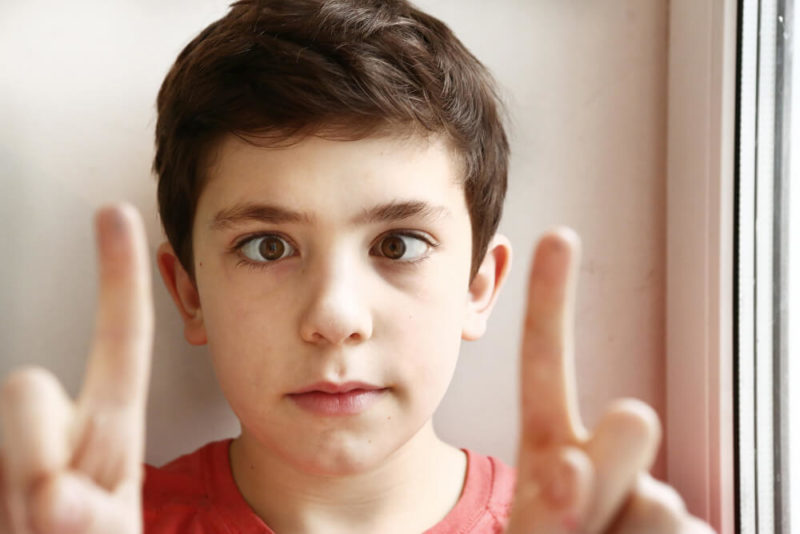
- “It will sort itself out on its own.” It will not. Amblyopia does not self-resolve. Without intervention, the suppression of the weaker eye typically worsens over time as the brain’s preference for the dominant eye becomes more firmly established. Waiting is the most expensive option.
- “If they are over seven, treatment cannot help.” This is outdated. Half of children aged seven to seventeen respond to treatment. Adult treatment shows success rates above seventy percent with proper programmes. The critical period is real, but it is not a hard cutoff — it is a gradient.
- “Eye patches are the only treatment.” Patches are one treatment. Atropine drops work as well for mild to moderate cases. Glasses alone are sometimes enough. Vision therapy, dichoptic therapy, and VR-based programmes are additional options — particularly for adults.
- “Lazy eye means the eye is structurally damaged.” In most cases the eye itself is healthy. The problem is in the brain’s neural pathway, not in the anatomy of the eye. That is actually good news — it means the system can be retrained.
- “Surgery cures a lazy eye.” Surgery corrects structural problems that cause or contribute to amblyopia — strabismus, cataracts, drooping eyelids. It does not treat amblyopia itself. Active treatment of the amblyopia still needs to happen after surgery.
Comparing Treatment Options — Which Is Right for Your Situation?
| Option | Best For | Pros | Cons |
| Corrective Glasses | All types as first step; especially refractive amblyopia | Non-invasive; may resolve amblyopia alone; essential foundation for all other treatments | Not enough on its own for most cases; requires consistent wearing |
| Eye Patch | Children under 12; strabismic and refractive amblyopia | Well-researched; highly effective for children; straightforward to use | Children often resist wearing it; vision is temporarily worse in patched eye; social self-consciousness |
| Atropine Drops | Mild to moderate amblyopia in children; those who refuse patches | Once-daily use; no patch; similar effectiveness to patching for mild cases | Blurs the strong eye all day; may cause light sensitivity; not always effective for severe cases |
| Vision Therapy | Adults, teenagers, older children; binocular vision deficits | Addresses root cause (binocular vision); suitable for adults; improves depth perception and eye coordination | Time-intensive; requires commitment; weekly in-office sessions over months; not always covered by insurance |
| Dichoptic / VR Therapy | Adults; treatment-resistant cases; those seeking newer approaches | Evidence-based; engaging for patients; does not require patching; suitable for home use | Newer technology; not universally available; still emerging evidence base |
| Surgery | Strabismus-related or deprivation amblyopia with structural cause | Addresses root structural cause; allows subsequent treatment to be more effective | Invasive; recovery time needed; does not directly treat amblyopia; must be followed by active therapy |
Practical Steps You Can Actually Take Right Now
Whether you are a parent who suspects something is wrong with your child’s vision, or an adult who was never treated and is considering options for the first time, these are the moves that actually make a difference.
- Book an eye exam immediately. Not next month. Not after a few more weeks of watching. Amblyopia does not produce obvious symptoms in most children — it requires a professional examination to detect. Every week of delay in a young child is a week of the brain reinforcing its preference for the dominant eye.
- Find a developmental optometrist or paediatric ophthalmologist. Not every eye care provider has the same depth of experience with amblyopia treatment — particularly for adults. A developmental optometrist specialises in exactly this. If you are an adult seeking treatment, specifically ask about dichoptic therapy and vision therapy for amblyopia.
- If patching is prescribed, make it consistent. The most common reason patching fails is inconsistent use. The prescribed hours per day matter. Build the patch into a specific daily activity — reading, homework, screen time — to make compliance easier to maintain.
- Keep every follow-up appointment. Progress needs to be monitored every eight to twelve weeks. The patch duration may need adjusting. Sticking to follow-up appointments is not optional — it is how you confirm the treatment is working and course-correct if it is not.
- Ask about atropine drops if your child refuses the patch. Many parents give up on amblyopia treatment because their child will not wear the patch. Atropine drops are equally effective for mild to moderate cases and require no physical compliance from the child. Ask your eye doctor if switching is appropriate.
- For adults — start the conversation even if you feel it is too late. The research says it is not. Ask about a full Functional Vision Test with a developmental optometrist. Find out what your specific case involves and what improvement is realistically achievable before writing off treatment.
What People Keep Searching About Lazy Eye Treatment
Can a lazy eye be fixed in adults? Yes — modern research confirms it. Clinical studies from 2024 and 2025 show over seventy percent of adults see meaningful improvement with compliant vision therapy. Recovery takes longer than in children, but the idea that adults cannot be helped is outdated.
At what age is it too late to treat amblyopia? There is no hard cutoff. Treatment is most effective before age seven. Half of children between seven and seventeen still respond. Adults show improvement with the right programme. The earlier, the better — but too late is rarely the right conclusion.
How long does lazy eye treatment take? For children, significant improvement often appears within weeks to months. Most treatment programmes run for six months to two years. For adults, expect six months to over a year, depending on severity and compliance.
Does patching hurt or damage the strong eye? No. Research has found no evidence that patching the stronger eye causes lasting harm to it. In rare cases where patching is extreme or prolonged, temporary blurring can occur — but this reverses when patching stops. Your eye doctor will monitor both eyes throughout.
Is lazy eye covered by insurance? Generally yes. Amblyopia treatment is considered a medical condition, not cosmetic, and is typically covered by most health insurance plans. Vision therapy coverage varies — check with your provider before starting a programme.
What happens if lazy eye is left untreated? The vision in the weaker eye continues to decline. In the worst cases, permanent partial or complete functional blindness in that eye results. Depth perception is affected. Eye strain and fatigue become ongoing issues. Untreated amblyopia in childhood is the leading cause of one-eye vision loss in adults.
What Most Articles About Lazy Eye Miss
The majority of content about amblyopia focuses on one narrow scenario: a young child with a noticeable eye that drifts. What gets left out is the much more common version — a child whose eyes look perfectly normal but whose brain has been quietly favouring one eye for years. No drift. No visible sign. Just slightly worse vision in one eye that nobody thought to check.
That quiet version of amblyopia is the one most commonly missed. And it is missed because parents, teachers, and even some healthcare providers assume that if an eye looks straight and the child has not complained, everything is fine. An eye exam that tests each eye separately is the only way to find it.
The adult treatment story is also underreported. Most adults with untreated amblyopia have been told at some point that nothing can be done and have internalised that as permanent fact. The 2024 and 2025 clinical evidence contradicts this directly. The brain retains more neuroplasticity than the traditional model assumed, and motivated adult patients in structured programmes are achieving results that would have seemed impossible under the old consensus.
Most people do not realise that the dichoptic therapy approach — presenting different images to each eye simultaneously to reduce suppression — is arguably the most significant development in amblyopia treatment in a generation. VR-based dichoptic training is becoming more accessible and is particularly promising for adults who struggle with traditional patching. It is worth asking about specifically if conventional approaches have not worked or are not viable.
What to Do Next — The Honest Summary
A lazy eye can be fixed. The key variables are: how early you catch it, how consistently treatment is applied, and whether you give up before the evidence says you should.
For parents: book the eye exam. Do not wait for a symptom that may never appear. The most common form of amblyopia is invisible until an eye doctor looks for it. If your child is diagnosed, treat it as a priority — not a hassle to manage on a slow timeline.
For adults who were never treated: have the conversation with a developmental optometrist. A Functional Vision Test will tell you exactly what your specific case involves and what realistic improvement looks like. The research says improvement is possible. The only way to know for certain what that means for you individually is to be properly assessed and try.
What to avoid: waiting it out, assuming age rules out treatment, and accepting a generic answer about amblyopia without pressing for specifics about your individual case. Every amblyopia diagnosis is different. The type, the severity, the age, and the consistency of treatment all shape the outcome — and all of those factors are worth understanding before you decide what to do next.
The Decision Framework — Which Path Applies to You?
| Situation | First Step | Primary Treatment Route |
| Child under 7 — just diagnosed | Corrective glasses immediately | Glasses first; add patching or drops if not enough after 12 weeks |
| Child aged 7–17 — diagnosed late | Full eye exam with paediatric specialist | Glasses + patching or atropine; add vision therapy; surgery if strabismus involved |
| Adult — never treated as a child | Book Functional Vision Test with developmental optometrist | Vision therapy programme; ask about dichoptic/VR therapy; prescription glasses to correct refractive error |
| Child resists wearing patch | Discuss with eye doctor immediately | Switch to atropine drops — equally effective for mild to moderate cases |
| Suspected strabismus with amblyopia | Ophthalmologist referral for assessment | Strabismus surgery if needed; followed by active amblyopia treatment |
| Amblyopia from cataract or drooping eyelid | Urgent referral — deprivation amblyopia worsens fastest | Surgery to remove obstruction first; then intensive amblyopia treatment |
Myth vs. Reality — The Quick Reference
| Myth | Reality |
| It will improve on its own without treatment | It will not — amblyopia does not self-resolve and typically worsens without intervention |
| Treatment only works before age 7 | Evidence confirms benefit in 7–17 year olds; adult treatment shows over 70% improvement rates with proper programmes |
| Patching damages the strong eye | Research has found no evidence of this — temporary blurring can occur but reverses after treatment ends |
| Surgery fixes amblyopia | Surgery corrects structural causes only — active amblyopia treatment must follow |
| Lazy eye means the eye itself is damaged | The eye is usually healthy — the problem is in the brain’s suppression of the neural pathway from that eye |