
1. Introduction
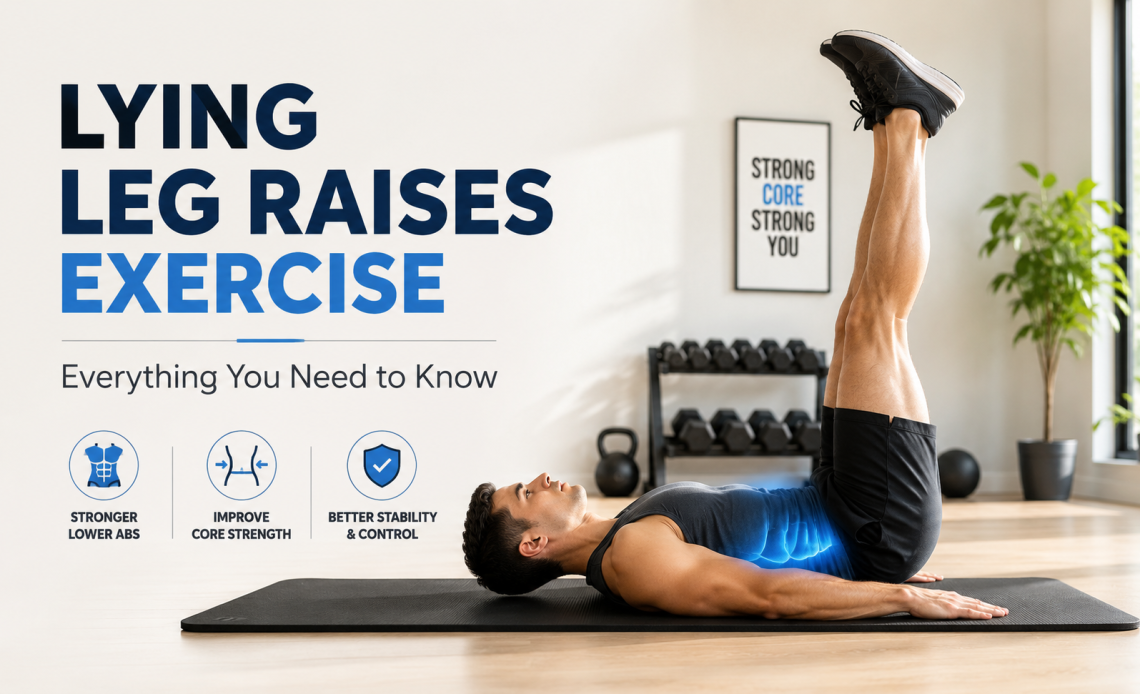
Lying leg raises exercise is a common fitness topic that many people search for because it targets the lower abdominal muscles and hip flexors, two areas that are often hard to train effectively with regular sit-ups or crunches. Whether the goal is building core strength, improving posture, or working toward visible abs, this simple bodyweight move shows up in almost every beginner and intermediate workout plan.
The answer to whether the lying leg raises exercise is right for you depends on your current fitness level, any existing back or hip issues, and how you perform the movement. Done correctly, it is one of the most efficient lower-ab exercises available with no equipment required.
In this article, you will learn what lying leg raises are, how to do them safely, their benefits, common mistakes, who should be careful, and how to progress the exercise over time.
2. Quick Answer: Lying Leg Raises Exercise
Lying leg raises are a bodyweight core exercise performed by lying flat on your back and lifting both legs together toward the ceiling, then lowering them slowly without touching the floor. They primarily target the lower abdominal muscles and hip flexors. The exercise is generally safe for most healthy adults but can strain the lower back if done with poor form, especially by people with existing back conditions.
| Question | Short Answer |
| Is it good for beginners? | Can be challenging; a modified version is recommended at first |
| Does it target lower abs? | Yes, along with hip flexors |
| Is it safe for the lower back? | Yes, if done with proper form and control |
| How often can I do it? | 2 to 4 times per week with rest days |
3. Key Takeaways
- Lying leg raises mainly work the lower abs, hip flexors, and core stabilizer muscles.
- Poor form, especially an arched lower back, is the most common cause of discomfort or injury.
- Beginners may benefit from bent-knee or single-leg variations before attempting the full move.
- Consistency and slow, controlled movement matter more than speed or repetition count.
- People with lower back pain or recent abdominal surgery should check with a doctor or physical therapist first.
4. What Is Lying Leg Raises Exercise?
Simple Meaning of Lying Leg Raises
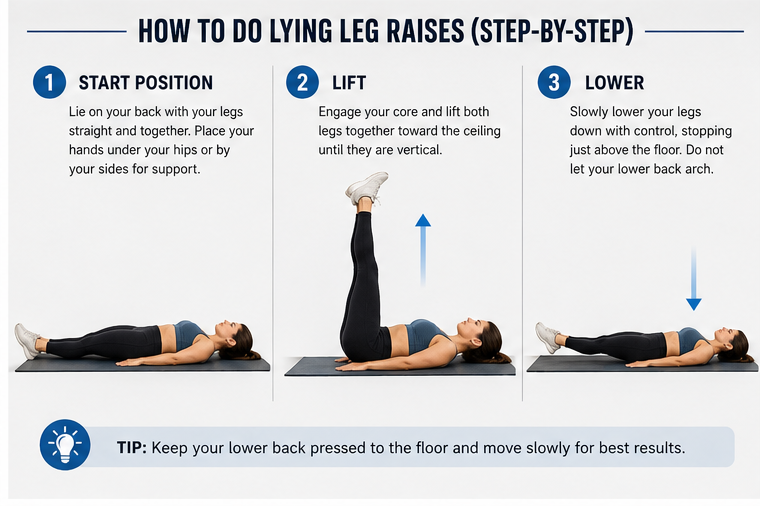
Lying leg raises are a floor-based core exercise where you lie on your back, keep your legs straight (or slightly bent), and raise them together toward the ceiling before lowering them back down without letting them touch the floor. The movement is controlled by the core rather than momentum.
How Lying Leg Raises Affect the Body
The exercise primarily engages the rectus abdominis (especially the lower portion), the hip flexors, and the transverse abdominis, which helps stabilize the spine. The lower back muscles also work isometrically to keep the pelvis stable throughout the movement.
Who Commonly Performs This Exercise
Lying leg raises are popular among people doing home workouts, gym-goers building core strength, athletes working on hip flexor power, and anyone following ab-focused workout routines such as bodyweight circuits or Pilates-inspired training.
5. Why Lying Leg Raises Exercise Matters
A strong core does more than improve appearance. It supports posture, protects the spine during daily movements like lifting and bending, and improves balance and stability in sports and everyday activity. Lying leg raises specifically target the lower abs, an area that exercises like crunches often miss.
Ignoring lower core strength can contribute to poor posture and lower back strain over time, since a weak core forces other muscles to compensate. Many people also confuse “doing enough ab exercises” with “having strong abs,” when in reality form and consistency matter more than volume.
6. Common Mistakes and Form Issues With Lying Leg Raises
1. Arching the Lower Back
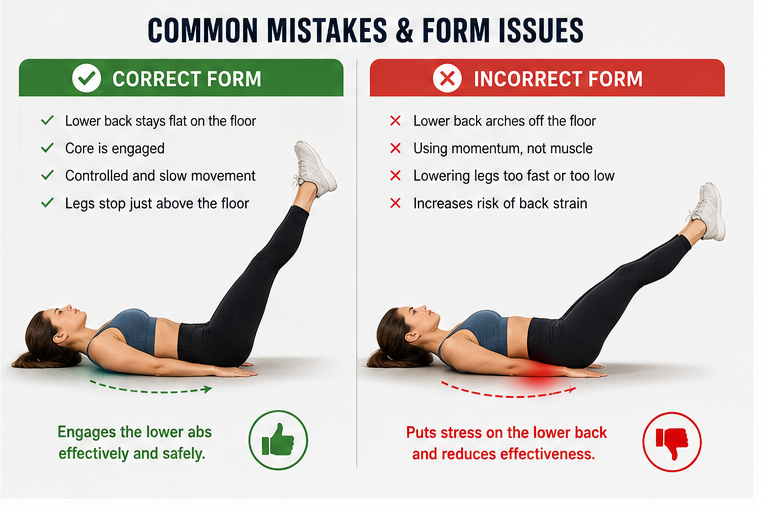
This is the most frequent issue. When the lower back lifts off the floor, it shifts strain away from the abs and onto the spine.
2. Using Momentum
Swinging the legs up quickly rather than lifting them with control reduces the effectiveness of the exercise and increases injury risk.
3. Lowering Legs Too Far Too Fast
Dropping the legs all the way to the floor too quickly, especially before building enough core strength, can strain the lower back.
4. Holding the Breath
Many people unconsciously hold their breath during the lift, which increases tension and reduces control.
5. Skipping Warm-Up
Performing the exercise cold, without warming up the hip flexors and core, raises the chance of strain.
6. Doing Too Many Reps Too Soon
Jumping straight into high repetitions before the core is strong enough often leads to compensatory movement and poor form.
7. Effects of Lying Leg Raises on the Body
Short-Term Effects
Mild muscle fatigue or soreness in the lower abs and hip flexors is common after starting this exercise, especially for beginners.
Long-Term Effects
With consistent practice, the exercise can contribute to improved core strength, better posture, and more stable hips over weeks to months.
Positive Effects
Strengthened lower abdominal muscles, improved hip flexor strength, and better core stability for other exercises and daily movement.
Negative Effects
If done with poor form repeatedly, it may lead to lower back discomfort, hip flexor tightness, or strain over time.
8. Benefits of Lying Leg Raises Exercise
May Strengthen the Lower Abdominal Muscles
This is one of the few common exercises that directly isolates the lower abs, an area many other ab exercises do not target effectively.
May Improve Hip Flexor Strength
The hip flexors are heavily engaged throughout the movement, which can support better performance in running, kicking, and other leg-driven activities.
May Support Better Core Stability
Because the move requires controlling the pelvis and spine throughout, it helps build the kind of core stability used in daily movement and other workouts.
May Require No Equipment
The exercise can be done anywhere with just a mat or flat surface, making it accessible for home workouts.
May Take a Few Weeks to Notice Results
Like most strength exercises, visible or felt improvements in core strength typically take consistent practice over 3 to 6 weeks.
9. Risks, Side Effects, or Disadvantages of Lying Leg Raises
Lying leg raises are not risk-free for everyone. The exercise puts direct demand on the lower back and hip flexors, and incorrect form is a common cause of discomfort. People with weak core muscles may unintentionally arch their lower back, which can strain the spine over time. Overtraining or skipping rest days can also lead to hip flexor tightness or lower back fatigue.
10. Who Should Be Careful With Lying Leg Raises?
- People with existing lower back pain or injury
- People recovering from abdominal or hip surgery
- Pregnant women (especially after the first trimester)
- People with herniated discs or spinal conditions
- Beginners with very weak core strength
- People with hip flexor injuries or tightness
- Anyone experiencing pain during the movement
If any of these apply, it’s best to consult a doctor or physical therapist before adding this exercise to a routine.
11. Best Ways to Perform and Progress Lying Leg Raises
- Start With Bent-Knee Raises
Easier on the lower back while building core strength.
- Keep the Lower Back Pressed to the Floor
Engage the core throughout to avoid arching.
- Move Slowly and With Control
Avoid swinging the legs using momentum.
- Exhale on the Way Up
Proper breathing helps maintain core tension.
- Limit the Range if Needed
Lowering only partway can reduce strain for beginners.
- Try Single-Leg Raises First
A good stepping stone before doing both legs together.
- Rest Between Sessions
Avoid doing the exercise on consecutive days when starting out.
- Stop if You Feel Lower Back Pain
Pain in the back, rather than the abs, is a sign to adjust form or stop.
12. Lying Leg Raises vs Hanging Leg Raises
| Feature | Lying Leg Raises | Hanging Leg Raises |
| Meaning | Performed lying on the floor | Performed hanging from a bar |
| Main benefit | Easier for beginners, targets lower abs | Greater intensity, full core and grip engagement |
| Main risk | Lower back strain if form is poor | Shoulder and grip strain, harder on beginners |
| Best for | Beginners to intermediate exercisers | Intermediate to advanced exercisers |
13. Myths and Facts About Lying Leg Raises
| Myth | Fact |
| Leg raises alone will give you visible abs | Visible abs depend mainly on overall body fat percentage, not one exercise |
| You should do as many reps as possible | Quality and control matter more than rep count |
| Leg raises only work the abs | The hip flexors are also heavily involved |
| It’s safe for everyone regardless of back condition | People with back issues should modify or avoid the full version |
14. What Experts Say About Lying Leg Raises
Fitness and physical therapy sources generally note that core exercises like leg raises are most effective and safest when performed with controlled form and adequate core engagement to protect the lower spine. Organizations such as the American Council on Exercise have highlighted that exercises isolating the lower abdominal region, including leg raises, should be paired with proper pelvic stabilization to reduce strain on the lumbar spine.
15. When Should You See a Doctor or Trainer?
You should speak with a doctor, physical therapist, or certified trainer if you experience sharp or persistent lower back pain during or after lying leg raises, numbness or tingling in the legs, ongoing hip pain, or if you have a pre-existing back or hip condition and are unsure whether the exercise is safe for you.
16. Prevention Tips to Avoid Injury
- Warm up the core and hips before starting
- Begin with modified versions (bent knees or single leg)
- Keep movements slow and controlled
- Stop immediately if you feel back pain rather than ab fatigue
- Strengthen your core gradually rather than rushing into high reps
- Maintain proper breathing throughout the movement
- Consider professional guidance if you have any existing injury
17. Final Takeaway
Lying leg raises are a simple, effective, equipment-free exercise for strengthening the lower abs and hip flexors, but proper form is essential to avoid lower back strain. Beginners should start with modified versions and focus on slow, controlled movement rather than high repetitions. Anyone with existing back, hip, or pregnancy-related concerns should check with a healthcare professional before adding this exercise to their routine.
FAQ Section
Is lying leg raises exercise good or bad?
It is generally a beneficial exercise for building lower core and hip flexor strength when performed with correct form. It can become problematic if done with poor technique, particularly an arched lower back.
What muscles do lying leg raises work?
They primarily target the lower abdominal muscles and hip flexors, with secondary engagement of the core stabilizers and lower back.
Can lying leg raises hurt your back?
Yes, if performed with an arched lower back or using momentum instead of controlled movement. Proper form, including keeping the lower back pressed down, helps prevent this.
How can I make lying leg raises easier?
Bend your knees, raise one leg at a time, or limit how far you lower your legs to reduce the difficulty while building strength.
What should I avoid when doing lying leg raises?
Avoid arching your lower back, swinging your legs with momentum, holding your breath, and doing high repetitions before your core is ready.
When should I worry about pain from this exercise?
Sharp, persistent, or worsening pain in the lower back or hips, rather than normal muscle fatigue, is a sign to stop and reassess your form or consult a professional.
Should pregnant women do lying leg raises?
It’s best to consult a doctor first, as the exercise puts pressure on the core and may not be suitable, especially after the first trimester.
How often should I do lying leg raises for results?
Most people can perform this exercise 2 to 4 times per week, with rest days in between to allow muscle recovery.