
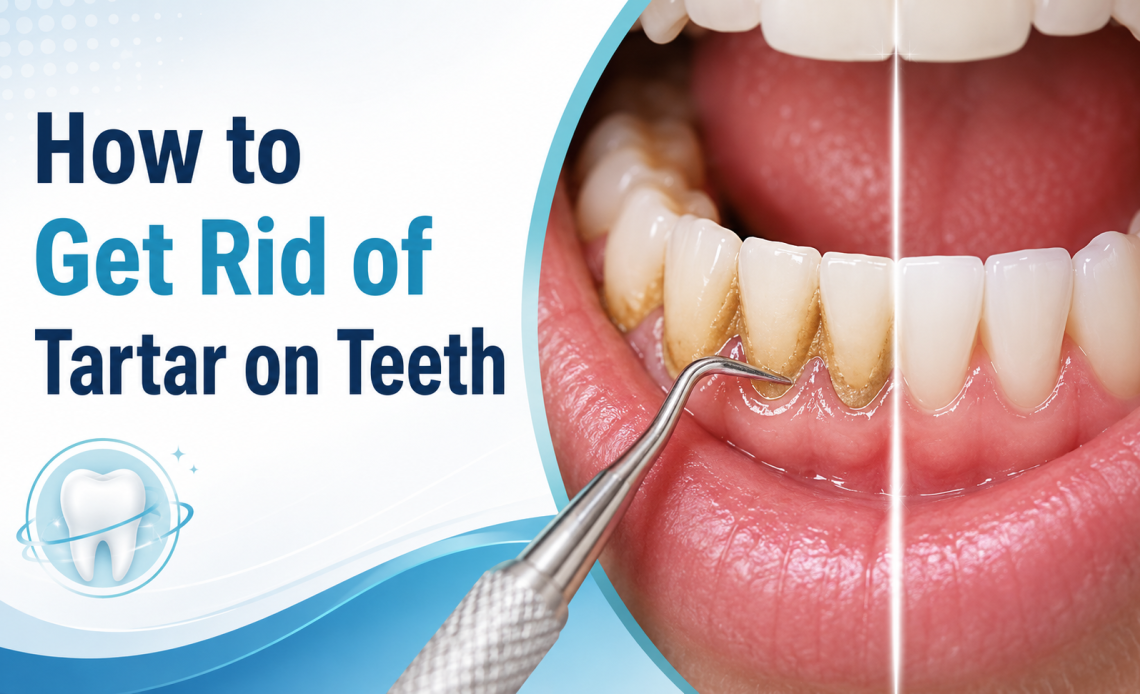
Run your tongue along the back of your lower front teeth and feel something rough and crusty? That is tartar, and once it forms, brushing alone will not remove it. Tartar is hardened plaque that has bonded to the tooth surface, and getting rid of it takes a different approach than everyday oral hygiene.
If you are wondering how to get rid of tartar on teeth, the most important thing to know is that hardened tartar usually needs professional dental cleaning. This guide walks through what actually works to remove tartar, what does not, and why a dental visit is usually part of the answer, no matter how good your home routine is.
Plaque and Tartar Are Not the Same Thing
Plaque is a soft, sticky film of bacteria that forms on your teeth every day. It is easy to remove with regular brushing and flossing. Tartar, also called dental calculus, is what happens when plaque is left in place long enough to harden, usually within 24 to 72 hours, by absorbing minerals from saliva. Once that happens, only mechanical scraping, typically by a dental professional, can take it off.
| Plaque | Tartar | |
| Texture | Soft and sticky | Hard and crusty |
| Color | Usually pale or invisible | Yellow, brown, or grayish |
| Removable by brushing? | Yes | No, needs professional scaling |
| Forms in | Hours | Days, once plaque is left untouched |
The Short Version
✓ Tartar cannot be brushed away once it hardens, only scraped off or professionally treated.
✓ A dentist or hygienist removing it is called scaling, and it is a normal part of a routine cleaning.
✓ Some home methods can help loosen early buildup, but none reliably remove established tartar.
✓ Left alone, tartar contributes to gum disease, bad breath, and eventual tooth loss.
✓ Preventing new tartar is far easier than removing tartar that has already formed.
Why Tartar Forms in the First Place
Tartar is the end result of plaque that was not cleaned away in time. A few things make that more likely to happen.
Skipping or Rushing Brushing
Missed spots, especially along the gumline and between teeth, give plaque time to sit undisturbed and start hardening.
Saliva Composition
Saliva naturally contains minerals like calcium and phosphate. Some people’s saliva mineralizes plaque faster than others, leading to quicker tartar formation even with decent brushing habits.
Diet High in Sugar and Starch
Sugary and starchy foods feed the bacteria that form plaque, increasing how much builds up between cleanings.
Smoking and Tobacco Use
Tobacco use is strongly linked to faster and heavier tartar buildup, along with staining.
Crowded or Misaligned Teeth
Teeth that overlap or sit close together are harder to clean thoroughly, creating spots where plaque hardens more easily.
Not Flossing
Brushing alone misses the tight spaces between teeth, which is often where tartar first forms.
How Do You Know Tartar Has Already Formed?
- A rough, gritty feeling when you run your tongue over your teeth
- Yellow, brown, or gray discoloration near the gumline
- Gums that look red, swollen, or bleed easily when brushing
- Persistent bad breath that does not go away with brushing
- Visible hard deposits, especially on the inner surface of the lower front teeth
If you notice any of these signs, brushing harder will not fix it. That buildup needs to be professionally removed.
What Happens If You Just Leave It There?
Tartar is porous and rough, which makes it an even better surface for new plaque and bacteria to cling to. Over time, this creates a cycle: more tartar leads to more plaque, which leads to more tartar. The bacteria trapped underneath irritate the gums, which is how tartar becomes one of the leading contributors to gingivitis and, eventually, more advanced gum disease that can affect the bone supporting your teeth.
None of this happens overnight, but it also does not reverse on its own. The longer tartar sits, the more it tends to spread below the gumline, where it becomes harder to see and harder to treat.
Home Methods People Try, and Whether They’re Worth It
| Method | Does It Actually Remove Tartar? | Verdict |
| Baking soda paste | May help buff surface stains, not hardened tartar | Low impact |
| Oil pulling | No evidence it removes tartar | Skip it |
| Tartar-control toothpaste | Helps slow new tartar, does not remove existing buildup | Good for prevention only |
| White vinegar rinse | May soften minor buildup slightly, not reliable | Limited effect |
| Electric toothbrush with scaler head | Some can chip away small deposits but risk enamel damage | Use with caution |
| Dental pick or scaler tool at home | Can technically remove some tartar | Risky, easy to hurt gums or scratch enamel |
The honest answer is that no home method matches what a dental professional can do with proper tools. At-home tartar removal kits sold online carry a real risk of gum injury or enamel damage if used incorrectly, and even when used carefully, they usually only reach visible surfaces, not below the gumline.
What Actually Happens During Professional Tartar Removal
A dental hygienist uses a process called scaling to remove tartar, either with hand instruments, an ultrasonic scaling device that uses vibration to break tartar loose, or a combination of both. For tartar that has spread below the gumline, a deeper cleaning called root planing may be recommended, which smooths the tooth root to help gums reattach and heal.
This is typically painless or only mildly uncomfortable, and most routine cleanings take well under an hour. If tartar has built up significantly, more than one visit may be needed.
Who Tends to Build Up Tartar Faster Than Most
- Smokers and tobacco users
- People with dry mouth, whether from medication or a medical condition
- People with crowded, overlapping, or hard-to-clean teeth
- Anyone with diabetes, which can affect gum health and healing
- People who skip regular dental cleanings for more than a year
- Mouth breathers, since a drier mouth speeds up mineral buildup
Daily Habits That Actually Keep Tartar From Coming Back
- Brush twice a day for a full two minutes, angling the brush toward the gumline.
- Floss once daily, since this is where a lot of early tartar gets its start.
- Use a tartar-control toothpaste if you are prone to buildup.
- Cut back on sugary and starchy snacks between meals.
- Drink water after eating if you cannot brush right away.
- Quit or avoid tobacco products.
- Chew sugar-free gum to help stimulate saliva if you have a naturally dry mouth.
- Book a professional cleaning every six months, or more often if your dentist recommends it.
A Few Things Worth Clearing Up
Brushing harder does not remove tartar. Once plaque hardens, extra pressure just risks wearing down enamel and irritating your gums without touching the tartar itself.
Whitening toothpaste does not dissolve tartar. It may reduce surface stains, but tartar sits on and under the tooth surface in a way whitening formulas are not designed to touch.
You cannot always see all your tartar. A lot of buildup happens below the gumline, out of view, which is part of why a dentist’s exam matters even if your teeth look fine to you.
One missed cleaning will not ruin your teeth, but a pattern of skipped visits lets buildup accumulate in ways that become harder, and more expensive, to reverse.
What Dental Professionals Generally Recommend
Dental associations consistently point to the same conclusion: professional scaling is the only reliable way to remove tartar once it has formed, and no toothpaste, mouthwash, or home tool has been shown to fully replace it. Most guidance recommends a professional cleaning every six months for the average person, though some people with faster tartar buildup or gum disease risk may need visits every three to four months.
If you are unsure how often you personally need a cleaning, that is a reasonable question to bring to your next dental visit.
When a Dentist Visit Shouldn’t Wait
Book an appointment sooner rather than later if your gums bleed regularly, look swollen or pulled away from your teeth, if you notice loose teeth, persistent bad breath, or visible hard deposits building up. These can be early signs of gum disease progressing beyond what a routine cleaning alone can reverse, and catching it earlier makes treatment simpler.
The Bottom Line
Once plaque hardens into tartar, brushing will not undo it, no matter how good your technique is. A dental hygienist’s tools are really the only dependable way to get rid of it. What you can control is how fast it comes back, and that comes down to consistent brushing, flossing, a lower-sugar diet, and regular cleanings before buildup gets a chance to take hold.
Common Questions About Tartar Removal
Can I remove tartar myself without going to a dentist?
Not reliably. Home tools and remedies may chip away small amounts of surface buildup at best, and carry a real risk of hurting your gums or enamel if used incorrectly.
How long does it take for plaque to turn into tartar?
Plaque can begin hardening into tartar in as little as 24 to 72 hours if it is not brushed or flossed away.
Does tartar cause bad breath?
Yes, tartar traps bacteria that produce odor, which is why persistent bad breath despite regular brushing can be a sign of buildup.
Is tartar removal painful?
Most people experience little to no pain during scaling, though those with significant buildup or sensitive gums may feel mild discomfort.
Will whitening strips or toothpaste get rid of tartar?
No, whitening products target surface stains, not the hardened mineral deposits that make up tartar.
How often should I get a professional cleaning?
Every six months is standard for most people, though your dentist may recommend more frequent visits if you build up tartar quickly.
Can tartar fall off on its own?
Occasionally small pieces may chip off, but tartar generally does not resolve on its own and continues building up until it is professionally removed.
What is the fastest way to prevent new tartar from forming?
Consistent brushing and flossing, cutting back on sugar, and staying on top of six-month cleanings are the most effective ways to keep new tartar from taking hold.