
Quick Answer
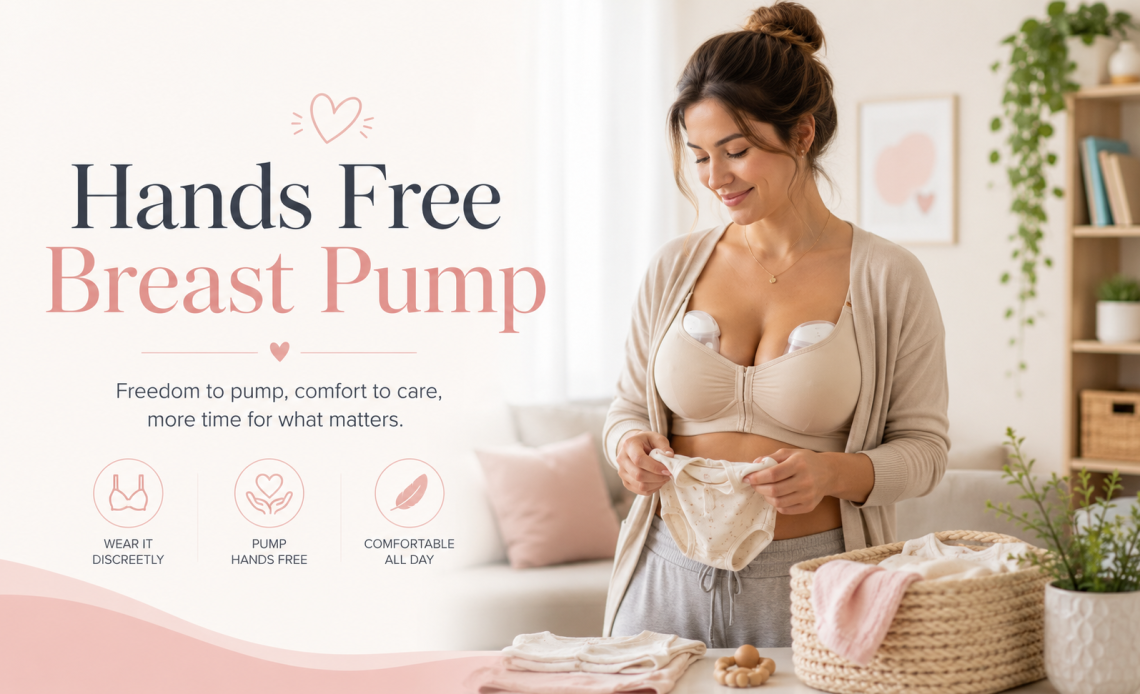
A Hands Free Breast Pump lets you pump without holding bottles or sitting attached to a wall outlet, but the term covers two meaningfully different designs: fully wearable pumps that sit entirely inside a bra with no external parts, and corded hands free pumps that use in-bra cups connected by tubes to a small clip-on motor. Wearable pumps offer more discretion, while corded hands free pumps usually deliver stronger suction closer to a traditional electric pump. For most parents, a wearable hands free breast pump works well as a secondary on-the-go pump, while a traditional or hospital-grade pump remains the better primary option for building or maintaining supply.
Quick Facts for 2026
| Detail | Information |
| Two Main Types | Fully wearable (entirely in-bra) and corded hands free (in-bra cups plus external motor) |
| Insurance Coverage | The Affordable Care Act requires most US insurance plans to cover at least one breast pump per pregnancy |
| Top Fully Wearable Brands | Eufy, Willow Go, Ardo Melia, Momcozy S12 Pro, Zomee Fit |
| Top Corded Hands Free | Elvie Stride, Spectra 9 Plus with CaraCups, Elvie Stride 2 |
| Notable Industry Update | Elvie went into administration in March 2025 and was acquired by Willow, which is keeping the brand active |
| Best Use for Wearables | Secondary pump for working moms, commuting, or running errands while supply is established |
You Want to Pump Without Being Anchored to a Wall or a Chair
A 2025 State of Breastfeeding survey from Mamava and Medela found that 81 percent of parents surveyed have pumped or nursed in their car at some point. That number tells you everything about why hands free pumping has gone from niche product to mainstream category in just a few years.
What the category name doesn’t tell you is that not all hands free pumps work the same way, and the right choice depends significantly on where you are in your breastfeeding journey and what you need the pump to actually do.
The Most Important Thing to Understand Before You Buy
The terms wearable and hands free get used interchangeably by most sellers, but they refer to two distinct designs with real trade offs between them.
| Type | How It Works | Best For | Trade Off |
| Fully wearable (wireless) | Entire pump unit sits inside your bra, no cords, no external parts, milk collects inside the cup | Discretion, total mobility, pumping while working or commuting | Suction is typically less powerful than corded options |
| Corded hands free | In-bra cups connected by tubes to a small motor you clip to your waistband or wear around your neck | Stronger suction, better supply maintenance, less discreet than fully wearable | Not as portable or discreet as fully wearable, you still carry the motor |
Why Lactation Experts Recommend a Wearable as a Secondary Pump
Certified lactation counselor Karrie Locher, cited in Forbes, put it directly: a wearable pump increases the likelihood of meeting pump sessions that parents otherwise couldn’t make work. That’s the core case for it.
The caveat from the same sources is that a pump-dependent parent trying to establish or maintain a full supply may find a wearable pump insufficient on its own. Suction strength and how thoroughly the breast is emptied both affect milk supply, and most wearables sit below the threshold of a hospital-grade or traditional double electric pump.
A real world comparison test published by Karing for Postpartum found that even the Willow Go and Elvie, among the highest rated wearables, produced less output per session than a Spectra pump used afterward in the same test, suggesting that residual milk remained after the wearable session.
Who Each Type of Pump Actually Suits
| Situation | Better Choice | Why |
| Supply already established, pumping a few times during the workday | Fully wearable pump | Discretion and mobility matter more than maximum suction |
| Exclusively pumping or pump-dependent | Hospital grade or strong traditional pump as primary | Supply maintenance requires consistent, thorough emptying |
| Commuting, running errands, or travelling | Fully wearable pump | No private room or power outlet needed |
| Want hands free benefit but also strong suction | Corded hands free like Elvie Stride | Combines in-bra cups with motor-strength suction up to 300 mmHg |
| Budget limited, insurance covered option | Check insurance-eligible models first | ACA requires most plans to cover at least one pump per pregnancy at no cost |
What the Market Looks Like Right Now in 2026
The category has moved fast. A few years ago, Willow and Elvie dominated with premium-priced models. Since then, Eufy, Momcozy, Ardo, Zomee, and Motif have entered with more affordable options, and both Willow and Elvie released lower-cost versions in response.
| Pump | Type | Standout Feature | Approx Price Range |
| Eufy S1 Pro | Fully wearable | Warming feature, app control, strong for a wearable | Premium tier |
| Willow Go | Fully wearable | Spill proof, 5 oz capacity, four pumping modes, app connected | Mid to premium |
| Ardo Melia | Fully wearable | Massage mode mimicking natural sucking, 15 vacuum levels, known for comfort | Mid tier |
| Momcozy S12 Pro | Fully wearable | Large 6 oz capacity, affordable entry point with solid output | Budget to mid |
| Elvie Stride (now Willow-owned) | Corded hands free | Hospital-grade suction up to 300 mmHg, app connected, strong suction without wires at the breast | Mid to premium |
| Spectra 9 Plus with CaraCups | Corded hands free | Pairs a quiet Spectra motor with in-bra cups, familiar Spectra performance | Mid tier |
| Eufy E20 | Fully wearable | Same core wireless experience as Eufy lineup without the heating feature, budget entry | Budget tier |
An Important Brand Note for Elvie Buyers in 2026
Elvie went into administration in March 2025 and was subsequently acquired by Willow. Willow has stated its intention to keep the Elvie brand active, and existing Elvie products continue to be sold and supported.
If you are considering an Elvie product, it is worth checking directly with the retailer or Elvie’s current support channels to confirm parts availability and warranty terms, since ownership transitions can affect long term servicing even when the brand name continues.
Using Your Insurance to Cover the Cost
Under the Affordable Care Act, most US health insurance plans are required to cover at least one breast pump per pregnancy at no cost to the insured. This applies to both traditional and wearable pumps, though some specific models may require a small upgrade fee above the base plan allowance.
- Check your specific plan’s covered pump list before purchasing
- Insurance-eligible models commonly include: Hygeia Esprit and Express, Spectra S1, Motif Luna, Lansinoh Signature Pro, and select Willow and Eufy models
- Some wearable models like Elvie Stride and Willow Go are available through insurance with a possible upgrade fee
- Sites like Aeroflow Breastpumps specialize in helping parents navigate insurance coverage for pumps
Common Mistakes People Make When Buying a Hands Free Pump
- Assuming a wearable can fully replace a traditional pump: for exclusive pumping or supply building, a wearable alone is usually not sufficient.
- Buying based on brand name without checking flange size: flange fit is one of the biggest factors in comfort and output, and many wearables offer a limited range of sizes.
- Ignoring output differences between sessions: if your output drops significantly with a wearable, try adjusting flange size or using your wearable for shorter, more frequent sessions rather than long ones.
- Not checking insurance eligibility before paying out of pocket: a significant number of parents pay full price for pumps their insurance would have covered.
- Buying only a wearable without a backup traditional pump: most lactation experts suggest having a traditional electric pump as your primary and a wearable as your secondary.
How to Choose the Right One for You
- Start with your insurance coverage: find out which models are covered at no cost before evaluating any premium options.
- Define your primary use case: daily commute and work sessions point toward a fully wearable. Supply building or exclusive pumping points toward a traditional or corded hands free with stronger suction.
- Check flange size options before buying: most wearables include one or two sizes, while traditional pumps offer a wider range. Getting the right fit matters more than any other feature.
- Read output reviews from pumpers with similar situations to yours: a parent nursing a healthy baby a few times a day and a parent exclusively pumping for a NICU baby have very different suction needs.
Will a Wearable Pump Affect My Milk Supply?
It can, if the wearable becomes your primary pump and its suction is insufficient to fully empty the breast. Incomplete emptying signals your body to produce less milk over time. For most parents who use a wearable as a secondary alongside a stronger primary pump, supply is generally not affected.
How Quiet Are Wearable Pumps?
Most fully wearable pumps are notably quieter than traditional pumps, which is part of their appeal for office use. The Elvie, Willow Go, and Ardo Melia in particular are consistently rated as quiet enough to use in meetings or shared workspaces without drawing attention.
Can I Use a Wearable Pump While Driving?
Technically yes, and it is one of the common reasons parents choose a wearable. From a safety standpoint, keep in mind that adjusting any device while driving creates distraction, and the best approach is to set up the pump before starting your journey.
What Is the Elvie Acquisition by Willow and Does It Affect Current Buyers?
Elvie went into administration in early 2025 and was acquired by Willow. Willow has said they intend to keep the Elvie brand active. If you already own an Elvie or are considering buying one, check parts availability and warranty terms directly with the current support channels.
Are Hands Free Pumps Covered by the ACA?
Most are eligible for insurance coverage, though the specific models covered and whether an upgrade fee applies varies by plan. Fully in-bra wearable models are increasingly covered, but it is worth verifying with your insurer before purchasing.
What Most Parents Don’t Realize
Most people shopping for a hands free pump focus almost entirely on discretion and convenience, which are the right things to prioritize for a secondary pump. What they often miss is the flange fit question, which has more impact on both comfort and output than any specific brand or suction level.
A wearable pump with the wrong flange size will both be uncomfortable and extract milk less efficiently, often leading parents to conclude the pump doesn’t work well, when the issue is actually the fit. Most wearables include only one or two flange sizes, so confirming your size before purchasing is more useful research time than comparing maximum suction specs between brands.
The Two Pump Setup Most Lactation Experts Recommend
Rather than choosing between a wearable and a traditional pump, the approach most commonly recommended by certified lactation counselors is using both for different situations:
- Pump One, at home or at your desk: a traditional electric or hospital-grade pump with strong, consistent suction for supply maintenance and longer pump sessions.
- Pump Two, on the go: a fully wearable hands free pump for commuting, work meetings, errands, or any situation where mobility and discretion matter more than maximum output.
The two pump approach also means your routine does not break down the moment one pump has a battery issue or needs cleaning, which matters more than it sounds after a few weeks of regular use.
What Should You Do Next?
Start by checking your insurance coverage before evaluating any specific pump. A significant number of models are available at no cost or low upgrade cost, which changes the decision entirely.
If you are looking for a secondary on-the-go pump to complement a traditional pump you already have, a fully wearable option in the mid tier, such as the Willow Go, Ardo Melia, or Momcozy S12 Pro, covers most situations comfortably.
Avoid buying a wearable as your only pump if you are exclusively pumping or working to establish supply. The suction difference from a traditional or hospital-grade pump is real and affects your output over time.
Suggested Internal Links
Add these once matching pages exist on your site, using descriptive anchor text:
- Link to a breast pump insurance guide using anchor text like “how to get a breast pump covered by insurance”
- Link to a flange sizing guide using anchor text like “how to find the right breast pump flange size”
- Link to a pumping at work guide using anchor text like “tips for pumping discreetly at the office”