
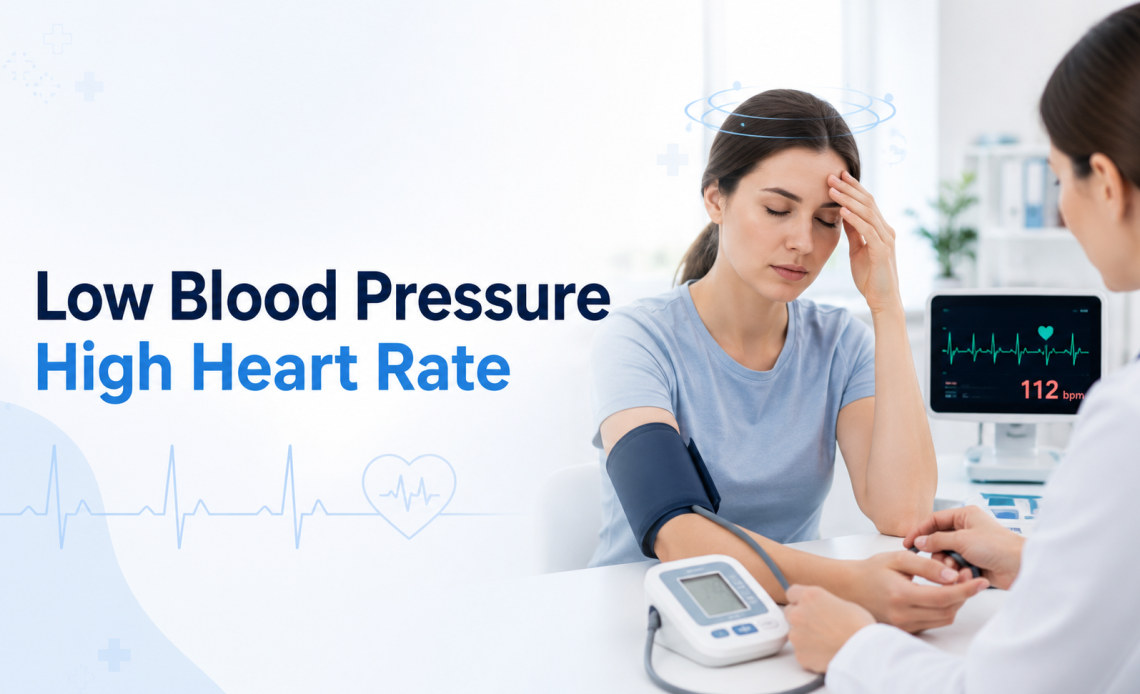
A practical guide to understanding low readings with a fast pulse, including when the combination needs emergency care.
Blood pressure and heart rate measure different parts of circulation. Blood pressure reflects the force of blood against artery walls, while heart rate shows how many times the heart beats per minute. When pressure falls, the body may speed up the heartbeat to maintain blood flow to the brain and other organs. This compensation can happen after heat exposure or mild dehydration, but it can also appear with blood loss, infection, a heart rhythm problem, or another urgent condition.
Seeing low blood pressure high heart rate on a monitor can be alarming, especially if dizziness, weakness, palpitations, or fainting occur. A single reading does not identify the cause. The numbers should be repeated correctly and interpreted alongside symptoms, medicines, recent illness, pregnancy status, bleeding risk, and personal medical history.
| QUICK ANSWER Low blood pressure is often described as a reading around 90/60 mm Hg or lower, and a resting heart rate above 100 beats per minute is considered tachycardia. The combination becomes more concerning when it is persistent, worsening, or accompanied by chest pain, trouble breathing, fainting, confusion, cold or clammy skin, major bleeding, or a weak rapid pulse. Those symptoms require immediate medical attention. |
Key Takeaways
|
· A faster pulse can be the body’s attempt to compensate for reduced blood flow or reduced circulating volume. · Common causes include dehydration, fever, medication effects, pregnancy, anemia, and a sudden drop after standing. · Serious causes include major bleeding, sepsis, severe allergic reaction, dangerous arrhythmias, heart attack, and shock. · Symptoms matter more than one isolated number. Fainting, chest pain, severe breathlessness, confusion, or cold clammy skin are emergency warning signs. · Do not stop prescribed medicine, take extra salt, or force large amounts of fluid without considering heart, kidney, pregnancy, or fluid-restriction risks. |
What Counts as Low Blood Pressure and a High Heart Rate?
For many adults, blood pressure near 90/60 mm Hg or lower is considered hypotension. However, some healthy people naturally run below that level without symptoms. A resting heart rate above 100 beats per minute is called tachycardia, although exercise, pain, anxiety, fever, pregnancy, and certain medicines can temporarily raise the pulse. The important question is whether the reading is new, sustained, symptomatic, or associated with signs that the organs are not receiving enough blood.
The National Heart, Lung, and Blood Institute explains that low blood pressure becomes clinically important when it causes symptoms or reflects an underlying problem. Its low blood pressure guidance highlights dizziness, fainting, falls, medicine effects, and age-related risk as reasons to seek evaluation rather than relying on a number alone.
Reading and symptom guide
| Pattern | Typical interpretation | What to watch for | Suggested response |
| Below 90/60, no symptoms | May be normal for some people | New trend, medicine changes, pregnancy | Track and discuss if persistent |
| Below 90/60 with pulse above 100 | Possible compensation or illness | Dizziness, weakness, palpitations | Repeat correctly and contact a clinician |
| Sudden drop after standing | Possible orthostatic hypotension | Lightheadedness, blurred vision, near-fainting | Sit or lie down and arrange evaluation if recurrent |
| Very low pressure with severe symptoms | Possible shock or poor organ perfusion | Confusion, fainting, cold skin, weak rapid pulse | Call 911 immediately |
Why Can Blood Pressure Fall While Heart Rate Rises?
The body uses pressure sensors in major arteries to detect reduced circulation. If pressure drops, the nervous system can increase heart rate and tighten blood vessels to protect blood flow to the brain and heart. That response is useful for a brief problem, but it cannot always overcome severe fluid loss, bleeding, infection, or weak heart pumping. A fast pulse with low pressure is therefore a pattern, not a diagnosis.
Common Causes
Dehydration and Fluid Loss
Sweating, vomiting, diarrhea, fever, poor fluid intake, diuretics, and hot weather can reduce circulating blood volume. Pressure may fall while the heart speeds up to maintain circulation. Dry mouth, thirst, dark urine, reduced urination, headache, and weakness support dehydration as a possibility. Mild dehydration may improve with appropriate fluids, but persistent vomiting, confusion, inability to drink, or severe weakness needs medical care.
A Sudden Drop When Standing
Orthostatic hypotension occurs when blood pressure falls after moving from lying or sitting to standing. The pulse may rise as the body tries to compensate. Causes include dehydration, prolonged bed rest, autonomic nervous system disorders, medication effects, and age-related changes. Postural orthostatic tachycardia syndrome, or POTS, is different: it involves an excessive heart-rate rise on standing, and blood pressure may remain stable or sometimes fall. Repeated symptoms deserve professional evaluation.
Medication Effects
Blood pressure medicines, diuretics, nitrates, some antidepressants, sedatives, Parkinson disease medicines, and drugs used for urinary symptoms may lower pressure. Stimulants, decongestants, thyroid replacement, bronchodilators, and some supplements may raise heart rate. A new combination can appear after a dose change, illness, weight loss, or reduced food and fluid intake. Do not stop or double a prescription on your own. A pharmacist or prescriber should review the full medication list, including over-the-counter products.
Pregnancy
Blood vessels naturally relax and circulation expands during pregnancy, so blood pressure may run lower and heart rate may rise. Mild changes can be normal, but fainting, heavy bleeding, severe abdominal pain, chest pain, breathlessness, or persistent palpitations require urgent obstetric assessment. Ectopic pregnancy and hemorrhage can produce low pressure with a rapid pulse and may become life-threatening.
Anemia, Fever, and Thyroid Problems
Anemia reduces the blood’s oxygen-carrying capacity, which can make the heart beat faster. Fever increases metabolic demand and may also cause dehydration. An overactive thyroid can produce tachycardia, tremor, heat intolerance, weight loss, and palpitations. Blood tests can help identify anemia, infection, electrolyte abnormalities, and thyroid dysfunction when symptoms persist.
Serious Causes That Need Prompt Care
Bleeding and Shock
Major blood loss can be obvious after an injury, but internal bleeding may be hidden. Black stools, vomiting blood, heavy vaginal bleeding, abdominal swelling, severe back or abdominal pain, unexplained bruising, and fainting are warning signs. As circulating volume falls, the pulse often becomes fast and weak while blood pressure drops. This can progress to shock and requires emergency treatment.
Sepsis or a Severe Allergic Reaction
A severe infection can widen blood vessels and disrupt circulation. High or unusually low temperature, rapid breathing, confusion, extreme weakness, mottled skin, and reduced urination can accompany sepsis. Anaphylaxis can cause hives, swelling, wheezing, throat tightness, vomiting, low pressure, and a fast pulse. Use prescribed epinephrine immediately for suspected anaphylaxis and call 911.
Arrhythmia or Heart Pumping Problems
A very fast or irregular rhythm may prevent the heart from filling and pumping effectively. Atrial fibrillation, supraventricular tachycardia, ventricular rhythms, heart attack, heart failure, and severe valve disease can all reduce blood pressure. Readers who want broader context on reduced blood flow and heart symptoms can review this guide to ischemic heart disease. New chest pressure, breathlessness, fainting, or a fast irregular heartbeat should not be managed only with a home monitor.
When to Call 911
| Call 911 now if low blood pressure and a fast heart rate occur with:
· Chest pain, pressure, or severe shortness of breath · Fainting, inability to wake, new confusion, or seizure · Cold, pale, blue, gray, or clammy skin with a weak rapid pulse · Signs of stroke, including face drooping, arm weakness, or speech difficulty · Heavy bleeding, vomiting blood, black stools, or severe abdominal pain · Throat swelling, wheezing, hives, or suspected anaphylaxis · A sudden heart rate that is extremely high or irregular for you and accompanied by severe symptoms |
The American Heart Association advises emergency help when heart rate is suddenly very high or very low for the individual, particularly with chest pain, shortness of breath, dizziness, or fainting. Its heart-rate guidance reinforces that symptoms and sudden change are critical, not just a universal numerical cutoff.
What to Do Right Away for a Mild Episode
- Sit or lie down. This reduces fall risk and may improve blood flow to the brain. Raise the legs slightly if comfortable and there is no injury or breathing difficulty.
- Repeat the measurements. Rest quietly for five minutes, keep the arm supported at heart level, use the correct cuff size, and check the pulse for a full minute if it feels irregular.
- Consider recent triggers. Heat, exercise, diarrhea, vomiting, fever, missed meals, alcohol, new medicine, and prolonged standing can provide useful clues.
- Drink fluids only when appropriate. Water or an oral rehydration drink may help mild fluid loss, but people with heart failure, advanced kidney disease, fluid restrictions, or pregnancy complications should follow professional advice.
- Avoid driving. Do not drive while dizzy, faint, confused, or experiencing a racing heartbeat.
- Contact a clinician. Seek same-day advice if the combination persists, repeatedly returns, or occurs with new palpitations, weakness, fever, pregnancy, medication changes, or reduced urination.
How Doctors Evaluate the Combination
Evaluation begins with the timing of symptoms, recent illness, fluid loss, bleeding, pregnancy possibility, medicine use, caffeine or stimulant intake, and personal heart history. Blood pressure may be checked while lying down and again after standing. An electrocardiogram can identify abnormal rhythms, while blood tests may assess blood counts, electrolytes, kidney function, thyroid function, infection, glucose, and pregnancy when relevant. Depending on the findings, clinicians may use an echocardiogram, rhythm monitor, imaging, or additional autonomic testing.
Home wearables can show useful trends but cannot determine blood pressure accurately in every situation or diagnose the cause of tachycardia. For a broader explanation of recovery metrics and how they differ from pulse, see the Boston Health Journal guide on how to improve HRV. Heart-rate variability is not the same as heart rate, and neither should replace symptom-based medical assessment.
Treatment Depends on the Cause
| Cause | Possible treatment approach | Important caution |
| Mild dehydration | Fluids and electrolytes when medically appropriate | Severe dehydration may require IV treatment |
| Medicine effect | Dose or medication review by the prescriber | Do not stop abruptly without advice |
| Anemia or bleeding | Identify source and replace blood or iron when indicated | Active bleeding can be an emergency |
| Infection or sepsis | Antibiotics, fluids, monitoring, and hospital care as needed | Delay can be dangerous |
| Arrhythmia | Rhythm-specific medicines, cardioversion, or procedures | Treatment depends on the exact ECG rhythm |
| Orthostatic disorder | Hydration plan, gradual position changes, compression, exercise, or medicine | Salt and fluid advice must be individualized |
How to Track Readings Safely
- Use a validated upper-arm blood pressure monitor with the correct cuff size.
- Avoid caffeine, nicotine, exercise, and a large meal for about 30 minutes before a planned resting measurement.
- Sit with back supported, feet flat, legs uncrossed, and the arm supported at heart level.
- Record blood pressure, pulse, body position, symptoms, time, medicines, illness, and recent activity.
- Bring the device and log to a medical visit so the cuff and technique can be checked.
Frequently Asked Questions
Is 90/60 blood pressure with a heart rate of 110 dangerous?
It may be temporary, but it is not a reading to ignore if it is new or accompanied by dizziness, weakness, breathlessness, chest pain, fainting, fever, bleeding, or pregnancy. Repeat the measurement after resting and contact a healthcare professional if it persists. Call 911 for severe symptoms.
Can anxiety cause low blood pressure with a high pulse?
Anxiety commonly raises heart rate and may make a person feel faint, but it should not automatically be blamed for documented low pressure. Hyperventilation, dehydration, medicines, arrhythmia, anemia, and other causes may produce similar symptoms.
Can dehydration cause this pattern?
Yes. Reduced circulating fluid can lower pressure while the heart speeds up to maintain blood flow. Mild cases may improve with fluids, but severe weakness, confusion, fainting, inability to drink, or very low urine output requires medical care.
Should I eat salt to raise my blood pressure?
Not without individualized advice. Extra sodium may help selected people with certain orthostatic disorders, but it can worsen heart failure, kidney disease, swelling, and hypertension. A clinician should decide whether a salt increase is appropriate.
When should I schedule a doctor visit?
Arrange an evaluation when readings repeatedly show low pressure with a resting pulse above 100, symptoms return after standing, the pulse feels irregular, or the pattern began after a medicine change. Seek urgent or emergency care sooner when symptoms are severe.
The Bottom Line
Low pressure with a fast pulse can be a normal short-term compensation, but it can also be the first visible sign of dehydration, bleeding, infection, an abnormal rhythm, or shock. Repeat mild readings carefully, pay close attention to symptoms, and avoid self-treating with medication changes or large amounts of salt. Sudden severe symptoms, fainting, chest pain, breathing difficulty, confusion, cold clammy skin, major bleeding, or a weak rapid pulse require emergency care.
| Medical disclaimer: This article is for general educational purposes and is not a diagnosis or a substitute for care from a qualified healthcare professional. Call 911 for emergency symptoms. |