
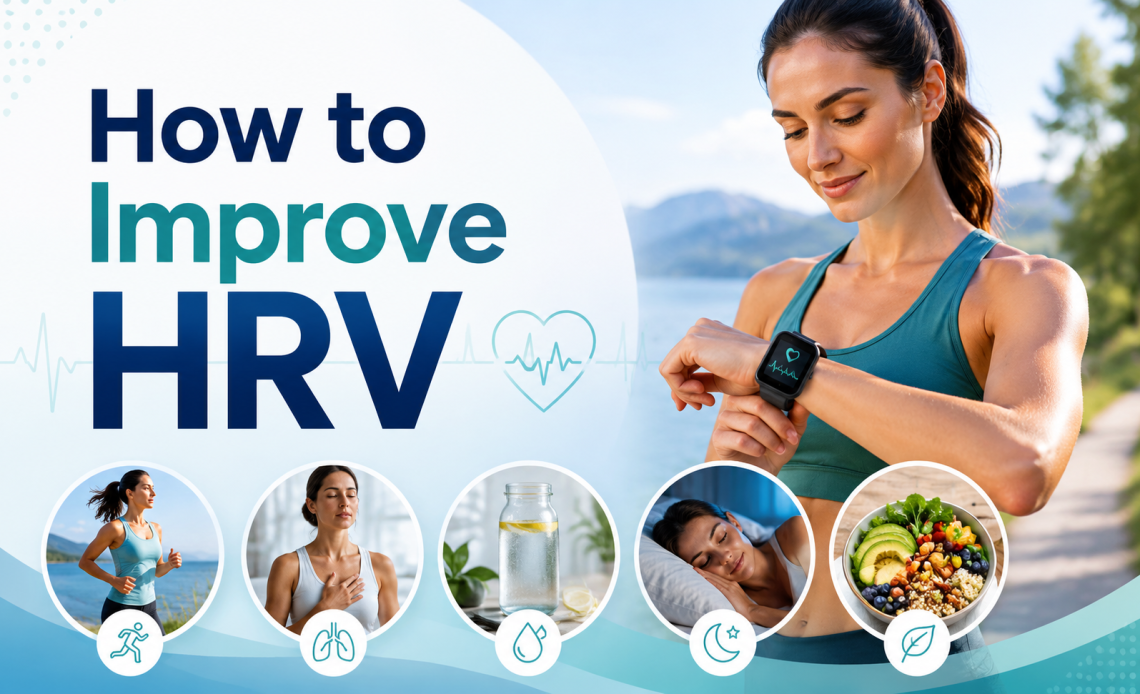
A realistic guide to exercise, sleep, stress, breathing, wearable data, and when to talk with a healthcare professional
Heart rate variability, usually shortened to HRV, measures the small differences in time between one heartbeat and the next. Those changes reflect how the body adjusts to breathing, activity, sleep, stress, illness, and recovery through the autonomic nervous system.
People searching for how to improve hrv often expect one breathing exercise, food, or supplement to raise the number quickly. In practice, HRV usually responds best to a combination of consistent aerobic fitness, sufficient sleep, manageable training, lower alcohol intake, stress regulation, and reliable measurement habits. The goal is not to outperform someone else’s score. It is to build a healthier personal trend over time.
| KEY TAKEAWAYS
· HRV is highly individual. Compare your readings with your own baseline, not a universal “good” number. · Regular aerobic exercise can improve HRV over time, but excessive training without recovery may lower it temporarily. · Sleep quality, psychological stress, alcohol, dehydration, illness, and some medications can influence daily readings. · Slow breathing and biofeedback may help increase short-term parasympathetic activity, but they do not replace medical care. · A persistent change accompanied by chest pain, fainting, palpitations, shortness of breath, or unusual fatigue needs professional evaluation. |
What HRV Actually Measures
HRV is usually expressed in milliseconds. It reflects the balance between the sympathetic nervous system, which supports alertness and the fight-or-flight response, and the parasympathetic nervous system, which supports rest and recovery. Lower readings often appear during stress, fatigue, poor sleep, illness, or heavy training.
The Cleveland Clinic overview of heart rate variability explains that HRV is not the same thing as an abnormal heart rhythm and that age, health conditions, medications, and measurement method all affect interpretation. A single low reading is rarely meaningful by itself. A pattern collected under similar conditions is much more useful.
What Counts as a Good HRV?
There is no universal HRV target for every adult. Values vary with age, genetics, fitness, medical history, device type, and the calculation used by the app. Your own pattern, measured consistently, is more useful than comparing your score with someone else’s.
| Reading pattern | Possible interpretation | Best response |
| Near your normal baseline | Your current recovery state may be typical for you | Continue normal habits and watch the trend |
| Lower for one night | Poor sleep, alcohol, hard training, stress, travel, or measurement noise | Avoid overreacting; review the previous 24 to 48 hours |
| Lower for several days | Accumulated fatigue, illness, inadequate recovery, or sustained stress | Reduce training load, prioritize sleep, and monitor symptoms |
| Gradually rising over weeks | Improving aerobic fitness or recovery habits may be contributing | Maintain the routine and compare under consistent conditions |
| Very unusual reading with symptoms | Device error or a health issue may need evaluation | Seek medical advice, especially for cardiac symptoms |
How to Improve HRV Over Time
1. Build a Consistent Aerobic Base
Regular aerobic activity is one of the strongest ways to support cardiovascular fitness and autonomic balance. Brisk walking, cycling, swimming, jogging, or rowing can help when performed consistently. Beginners can start with 20 to 30 minutes of comfortable walking on most days.
The CDC physical activity guidance for adults recommends at least 150 minutes of moderate-intensity aerobic activity each week, along with muscle-strengthening activity on two or more days. People who are sedentary, pregnant, recovering from illness, or living with heart, lung, metabolic, or joint conditions should ask a clinician how to begin safely.
2. Avoid Turning Every Workout Into a Test
Exercise can improve long-term HRV, but strenuous sessions often lower it temporarily while the body recovers. Repeatedly adding intensity despite poor sleep, soreness, low motivation, or declining performance can keep the nervous system under strain. Alternate hard sessions with easy movement or rest.
A balanced program should develop both aerobic capacity and muscular strength. This explanation of why weight training affects strength differently from cardiorespiratory fitness can help readers understand why lifting and cardio create different adaptations. For HRV and overall health, most people benefit from including both rather than relying exclusively on one style of training.
3. Protect Sleep Consistency
Sleep is a common reason HRV changes from day to day. Keep a consistent wake time, allow enough time in bed, make the room cool and dark, and reduce late caffeine, heavy meals, alcohol, and bright screens. Change one sleep habit for two weeks and compare the trend.
4. Practice Slow, Comfortable Breathing
Slow breathing can encourage a calmer nervous-system state and may raise HRV during or shortly after practice. Try five minutes once or twice daily. Breathe gently, let the abdomen expand, and make the exhale slightly longer than the inhale. Stop if you feel dizzy or uncomfortable.
5. Reduce the Stress Load You Can Control
Work pressure, caregiving, financial strain, anxiety, and unresolved sleep problems can keep the stress response active. Walking, yoga, meditation, social connection, time outdoors, therapy, and structured problem-solving may help. Choose a method you can repeat consistently instead of an elaborate routine that quickly becomes another obligation.
For ideas that combine movement with stress and mood support, see this guide to evidence-based exercises for mental health. Activities such as walking, yoga, strength training, swimming, and tai chi may be easier to sustain when selected according to personal preference and physical ability.
6. Limit Alcohol and Stop Nicotine Use
Alcohol can disrupt sleep, raise overnight heart rate, and reduce HRV even when it initially causes drowsiness. Compare alcohol-free nights with nights after drinking. Nicotine also stimulates the cardiovascular system and can interfere with recovery, so smokers and vapers should seek evidence-based cessation support.
7. Eat and Hydrate for Overall Cardiovascular Health
No single food reliably raises HRV overnight. Favor vegetables, fruit, beans, whole grains, nuts, seeds, fish or other lean protein, and mostly unsaturated fats. Regular meals can help active people avoid under-fueling. Hydrate according to activity, heat, altitude, and illness rather than forcing excessive water intake.
8. Treat Medical and Sleep Conditions Properly
Persistent low HRV may reflect more than lifestyle. Sleep apnea, infections, diabetes, high blood pressure, rhythm disorders, thyroid conditions, chronic pain, anxiety, depression, and some medicines can affect autonomic function. Never stop a prescription because of a wearable score. Review trends and symptoms with a clinician.
A Simple Four-Week HRV Improvement Plan
| Week | Primary focus | Practical actions |
| 1 | Create a trustworthy baseline | Measure consistently and log sleep, stress, alcohol, illness, and training |
| 2 | Improve recovery basics | Keep a consistent wake time; add easy walking; schedule at least one lower-load day; reduce late alcohol |
| 3 | Build autonomic flexibility | Continue aerobic work; add five minutes of slow breathing daily; include two sensible strength sessions |
| 4 | Review the trend | Compare weekly averages, energy, sleep, mood, and performance; keep habits that helped and discuss persistent concerns |
How to Measure HRV More Reliably
Use the same device, body position, and time of day whenever possible. Morning readings before caffeine can work, while many wearables use overnight averages. Do not compare numbers produced by different devices or algorithms as though they are identical.
- Track for at least four weeks before deciding what your normal range looks like.
- Compare seven-day or weekly averages instead of reacting to every daily change.
- Note unusual factors such as travel, fever, medication changes, menstrual cycle changes, alcohol, or a hard workout.
- Use the number alongside resting heart rate, sleep, energy, mood, soreness, and performance.
- Repeat an implausible reading after sitting quietly, checking device fit, and following the manufacturer’s instructions.
Common Mistakes That Can Make HRV Tracking Less Useful
The most common mistake is treating HRV like a competition. A higher value is not always healthier, and one reading cannot diagnose fitness, stress, or heart disease. Change habits gradually so you can identify what may be influencing the trend.
Be cautious with products promising to boost vagal tone or rapidly raise HRV. Supplements, extreme cold exposure, breath-holding, and exhausting workouts are unnecessary and may be unsafe for some people. Address specific nutritional or medical needs with a qualified professional.
When to Talk With a Doctor
A low HRV number alone is usually not an emergency. Seek routine medical advice when a previously stable trend remains substantially lower for several weeks, especially with reduced exercise tolerance, persistent fatigue, medication changes, or signs of a sleep disorder.
| SEEK URGENT MEDICAL CARE
Get urgent help for chest pressure or pain, fainting, severe shortness of breath, a sustained rapid or irregular heartbeat, sudden weakness, confusion, or other stroke-like symptoms. Do not wait for a wearable reading to confirm a medical emergency. |
Frequently Asked Questions
How quickly can HRV improve?
A breathing session may alter a short-term reading, but a healthier baseline usually takes weeks or months of consistent exercise, sleep, recovery, and stress management.
Does a low HRV mean I have heart disease?
No. Low HRV can occur with stress, poor sleep, illness, aging, medicine effects, or measurement limitations. Persistent changes and symptoms deserve medical review.
Can walking improve HRV?
Yes. Regular brisk walking can improve aerobic fitness and recovery capacity, particularly for inactive people. Consistency and gradual progression matter more than maximal effort.
Should I skip a workout when HRV is low?
Not automatically. Consider the size and duration of the change along with sleep, soreness, illness symptoms, motivation, and resting heart rate. Repeated low readings plus fatigue may justify rest or reduced intensity.
Is HRV more important than resting heart rate?
They provide different information. Resting heart rate measures beats per minute, while HRV measures variation between beats. Both are most useful as personal trends interpreted with symptoms and health history.
What breathing rate is best for HRV?
Many people respond to slow, comfortable breathing near five or six breaths per minute, but an exact rate is not required. Comfort and consistency matter more than chasing a device response.
The Bottom Line
Improving HRV usually means strengthening the habits that help the body adapt and recover: regular aerobic activity, sensible strength training, enough sleep, stress management, less alcohol, good nutrition, hydration, and treatment of underlying conditions.
HRV is useful context, not a medical verdict. Wearables can reveal patterns, but they cannot explain every change or replace an electrocardiogram, examination, or professional diagnosis.
Medical disclaimer: This article is for general educational purposes for readers in the United States. It is not a diagnosis or individualized medical, exercise, or treatment advice. Consult a qualified healthcare professional about symptoms, heart conditions, medicines, pregnancy, or starting a new exercise program.