
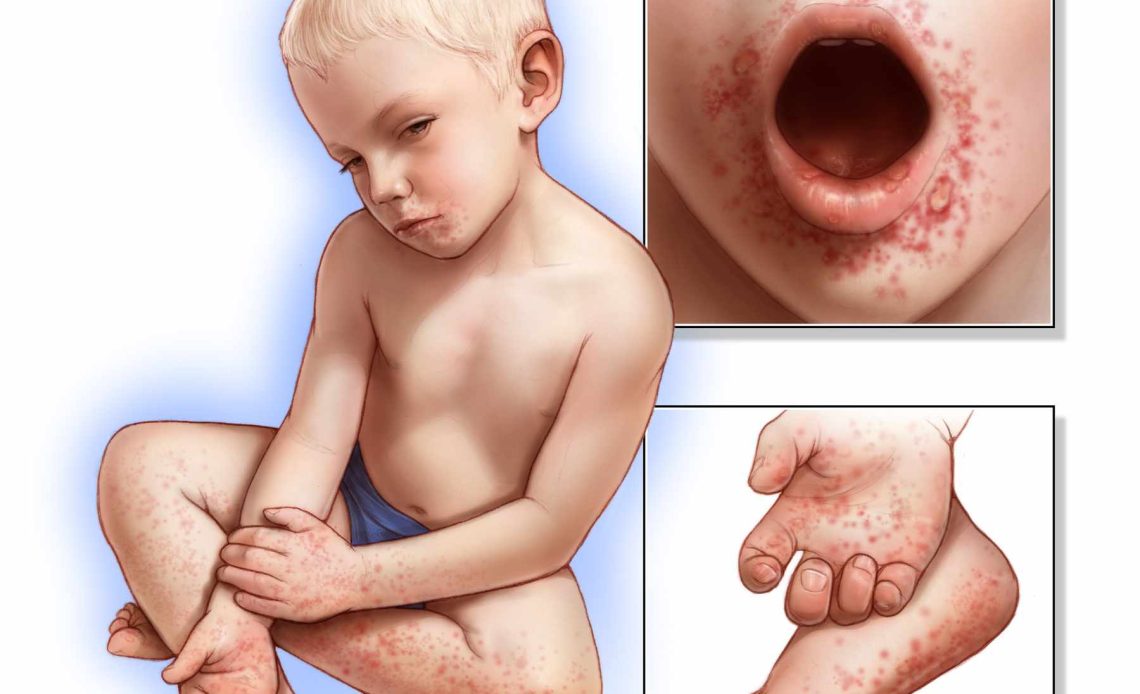
Hand, foot, and mouth disease sounds alarming the first time you hear the name, but hand, foot, and mouth disease is one of the most common, generally mild childhood illnesses out there. Knowing roughly what to expect day by day tends to bring down the panic more than any single fact about the virus itself.
What’s Actually Going On
HFMD is a viral infection, most often caused by coxsackievirus A16 or enterovirus 71, that mainly affects children under 5, though older kids and adults can catch it too. It’s not related to foot-and-mouth disease in farm animals, and you can’t catch either version from a pet. It spreads easily through saliva, mucus, blister fluid, and stool, which is exactly why it moves fast through daycares and preschools.
The Timeline: What Happens and When
Symptoms typically show up 3 to 6 days after exposure, and the whole course usually wraps up within 7 to 10 days. Here’s roughly how it unfolds:
| Timing | What’s Happening | Contagious Level |
| Days 1–2 (incubation) | No symptoms yet, but the virus is already present in the body | Possible, even without symptoms |
| Day 1–2 of illness | Low-grade fever (100.4–102.2°F), sore throat, feeling generally unwell, sometimes a runny nose | High |
| Day 2–3 | Mouth sores appear first, often painful, making eating and drinking uncomfortable | High |
| Day 3–5 | Rash or small blisters appear on palms, soles, and sometimes buttocks or knees | High, this is peak rash and contagion |
| Day 5–7 | Fever resolves, blisters start to dry out and scab over | Lower, but still present |
| Day 7–10 | Most symptoms resolve; skin may begin peeling on fingers/toes | Lower, though virus can shed in stool for weeks |
| Weeks 2–8 (occasional) | Fingernails or toenails may temporarily shed or show ridges; harmless and temporary | Minimal |
What the Rash Actually Looks Like
The rash isn’t just one thing, it shows up a bit differently depending on where it lands:
- Mouth: Small, painful sores usually on the tongue, gums, and inside of the cheeks, often the most uncomfortable part for young children since it affects eating and drinking
- Hands and feet: Small, flat red spots that develop into small blisters, typically on the palms and soles rather than the backs of the hands or feet
- Other areas: Less commonly, spots can appear on the buttocks, knees, elbows, or groin area
- Note: A child doesn’t need to have all three areas (hands, feet, and mouth) affected to have HFMD; sometimes only one or two areas show symptoms
How Long Is It Actually Contagious?
This is where a lot of confusion comes in, because “contagious” doesn’t have one single end date:
- Most contagious: During the first week of illness, especially while fever is present, spread happens easily through coughing, sneezing, and saliva
- Still somewhat contagious: For 1 to 3 weeks after symptoms start, the virus can still be shed from the nose, mouth, and lungs
- Longest tail: The virus can be present in stool for several weeks to a couple of months after the initial infection, which is why handwashing after diaper changes and bathroom use matters well beyond the point a child looks better
- Some adults carry and spread the virus without ever developing symptoms themselves
What Actually Helps (Home Care)
There’s no medication that cures HFMD itself, since it’s viral and simply needs to run its course. Comfort measures are really the main tool available:
- Offer age-appropriate acetaminophen or ibuprofen for fever and mouth pain, following dosing guidance from a pediatrician or the product label.
- Offer cold, soft, bland foods and drinks, popsicles, smoothies, yogurt, since acidic or spicy foods can sting mouth sores.
- Keep offering fluids often in small amounts if a sore mouth is making a child reluctant to drink, to avoid dehydration.
- Let blisters dry and scab naturally, and discourage scratching or picking at them to reduce the risk of secondary infection or scarring.
- Prioritize rest, especially during the first few feverish days.
When to Call the Doctor
HFMD is usually mild and self-resolving, but reach out to a doctor if you notice:
- Signs of dehydration, such as noticeably fewer wet diapers, dry mouth, or no tears when crying
- A fever above 102°F that doesn’t respond to fever reducers, or any fever lasting more than 3 days, especially in a child under 3
- Unusual sleepiness, difficulty waking up, or a stiff neck, which can be signs of a rare complication like viral meningitis
- Symptoms that seem to be getting worse rather than better after the first several days
- A pregnant person believes they may have been exposed to HFMD; it’s worth a call to their own doctor
How to Avoid Spreading It to Others
- Wash hands frequently and thoroughly, especially after diaper changes, using the toilet, or wiping a runny nose
- Clean and disinfect frequently touched surfaces and shared toys regularly during an active infection in the household
- Avoid close contact like hugging or kissing while someone is actively sick
- Keep a sick child home from daycare or school during the most contagious early days, following your specific facility’s return-to-school policy
- Remember hand hygiene matters even after visible symptoms clear up, since the virus can still shed in stool for weeks
HFMD vs. Similar-Looking Illnesses
A few other common childhood illnesses can look similar at first glance, which is part of why HFMD sometimes gets misidentified early on:
| Feature | HFMD | Chickenpox | Herpangina |
| Typical rash location | Hands, feet, mouth | All over the body, including scalp | Back of the mouth and throat only |
| Rash appearance | Small blisters on palms/soles, flat spots elsewhere | Itchy blisters in various stages at once | Small ulcers, no rash on hands/feet |
| Fever pattern | Low-grade, early | Can be higher, with rash lasting longer | Sudden high fever, sore throat |
| Caused by | Coxsackievirus A16 or enterovirus 71 | Varicella-zoster virus | Often the same coxsackievirus family as HFMD |
Can Adults Get Hand, Foot, and Mouth Disease?
Yes, though it’s much more common in young children. Adults who catch it may have milder symptoms, or in some cases no symptoms at all while still being able to spread the virus. Because HFMD can be caused by more than one type of virus, it’s also possible to get it more than once in a lifetime, immunity to one strain doesn’t necessarily protect against another.
Quick Answers
How long before HFMD symptoms show up after exposure?
Typically 3 to 6 days, though some sources note the incubation period can range from about 4 to 8 days depending on the specific virus involved.
Can you get hand, foot, and mouth disease more than once?
Yes. Since different viruses can cause HFMD, having it once doesn’t guarantee immunity against a different strain later on.
Is there a vaccine for HFMD?
Not in the United States as of this writing. Prevention relies mainly on handwashing and avoiding close contact with someone who’s sick.
When can a child go back to school after HFMD?
This varies by school or daycare policy, but many recommend waiting until fever is gone and blisters have dried, generally around the end of the first week of illness.
Are complications from HFMD common?
No, complications are rare. When they do occur, they’re more often linked to enterovirus 71 specifically and can include viral meningitis, which is why a stiff neck, severe lethargy, or persistent high fever warrants prompt medical attention.
This article is for general educational purposes only and is not a substitute for professional medical advice. Contact your child’s pediatrician with questions about symptoms, dehydration, or when to return to school or daycare.
