
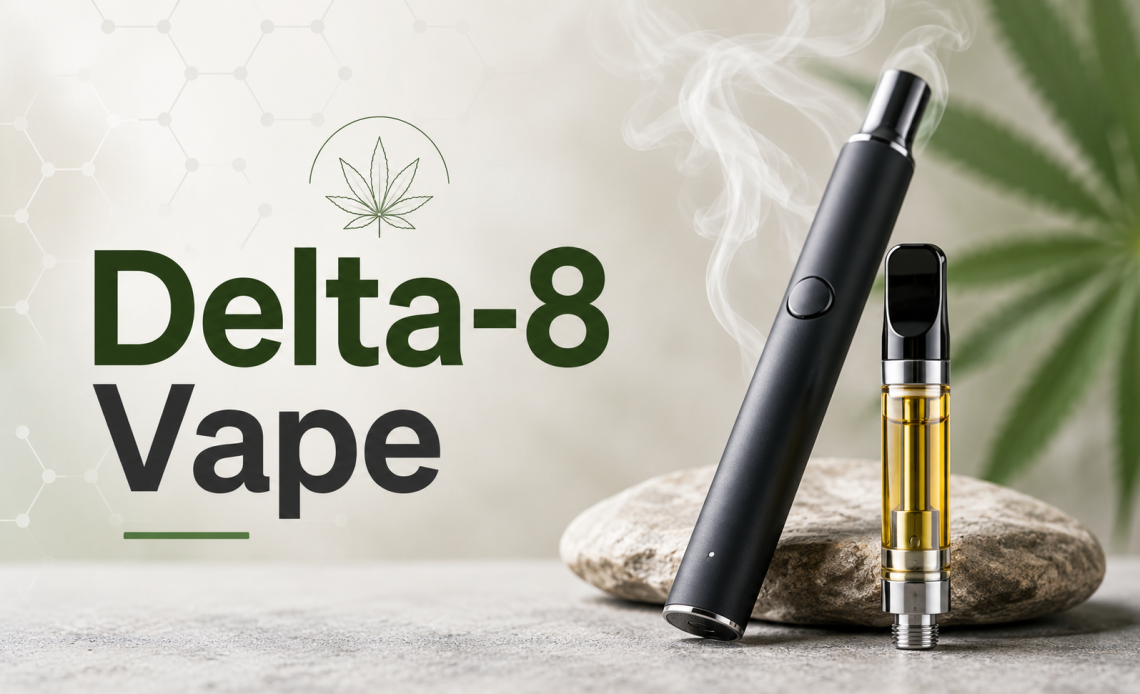
Delta-8 vape carts are sold openly in gas stations, vape shops, and online, often marketed as a “legal” alternative to marijuana. That framing leaves out a lot of important context, especially heading into a major federal law change later this year. If you are trying to understand Delta-8 vape products, here is what is actually going on.
What Is Delta-8 THC?
Delta-8 THC (delta-8-tetrahydrocannabinol) is a cannabinoid chemically similar to delta-9 THC, the primary psychoactive compound in marijuana. It binds to the same brain receptors and produces a similar high, generally reported as milder than delta-9. Delta-8 occurs naturally in hemp, but only in trace amounts, so virtually all commercial delta-8 products are made by chemically converting CBD extracted from hemp into delta-8 THC.
Why Is Delta-8 Legal When Marijuana Isn’t?
The 2018 Farm Bill legalized hemp and “all derivatives, extracts, and cannabinoids” from hemp, defined as cannabis containing less than 0.3% delta-9 THC by dry weight. Because delta-8 is chemically distinct from delta-9, and because the law only measured delta-9 concentration, products high in delta-8 could be sold as legal hemp even though they still get users high. This is often described as a regulatory loophole rather than an intentional legalization of an intoxicating product.
Is Delta-8 Still Legal in 2026?
Currently, yes, in most states, though the landscape is shifting fast. At least ten states have banned delta-8 outright, including New York, Colorado, and Washington, and several others restrict specific product forms like vapes even where other delta-8 products remain legal. A number of states have unclear or actively changing rules, so legality genuinely depends on where you live and where a product ships from.
The bigger change is coming at the federal level. In November 2025, a new law (sometimes referred to as H.R. 5371) was signed that rewrites the federal definition of hemp, shifting from testing only delta-9 THC to testing total THC content, with a strict cap of 0.4 milligrams of total THC per container. That threshold takes effect November 12, 2026, and industry estimates suggest roughly 95% of current hemp-derived THC products, including virtually all delta-8 vape cartridges, won’t meet it. In practical terms, most delta-8 vapes on the market today are expected to lose their federal legal protection later this year unless the product is reformulated or the law changes.
What Does This Mean If You Already Use Delta-8 Vapes?
- Products available today may not be available, or may not be legal, after November 12, 2026
- State laws can be stricter than federal law and can change faster, so a product legal in your state today may not stay that way
- Traveling with delta-8, especially by air or across state lines, carries legal risk that’s easy to underestimate, since enforcement varies widely by jurisdiction
- Industry groups are pushing back on the new federal law, so the situation could still shift before the effective date
Are Delta-8 Vapes Actually Regulated for Safety?
No, not in any meaningful, standardized way. Delta-8 products are not FDA-approved, and most states don’t require manufacturers to test them for contaminants, potency accuracy, or toxic byproducts. “Third-party lab tested” claims on packaging sound reassuring, but these labs aren’t held to consistent government standards, so the label alone doesn’t guarantee a clean or accurately dosed product.
Independent testing has repeatedly found delta-8 products containing more THC than labeled, along with unexpected byproducts like delta-9 THC, delta-10 THC, and heavy metals such as lead and mercury, likely leftover from the chemical conversion process used to make delta-8 from CBD.
What Chemicals Are Used to Make Delta-8, and Why Does That Matter?
Because hemp contains only trace natural delta-8, manufacturers convert CBD into delta-8 using acids and solvents, sometimes including chemicals like propane or butane. The FDA has specifically noted that manufacturers may use “potentially unsafe household chemicals” in this process. There’s no federally approved or standardized method for this conversion, so leftover solvents, reaction byproducts, or contamination can end up in the final vape liquid, which is then heated and inhaled directly into the lungs.
What Are the Known Health Risks of Vaping Delta-8?
Contamination and Unknown Ingredients
Because the market is unregulated, there’s no reliable way to know exactly what’s in a given cartridge, including cutting agents, flavoring chemicals not tested for inhalation safety, or leftover synthesis byproducts.
Lung Effects
Researchers have raised concerns about cannabinoid vaping products contributing to lung injury patterns similar to EVALI (E-cigarette or Vaping Use-Associated Lung Injury), the outbreak linked to certain vaping additives in recent years. Toxicology reviews note that inhaled cannabinoid aerosols, including CBD and THC variants, can cause pulmonary inflammation in preclinical research.
Psychiatric Effects
The FDA has tracked reports of adverse reactions to delta-8, including hallucinations, confusion, vomiting, and loss of consciousness. Addiction medicine specialists have also described cases of substance-induced psychosis following delta-8 use, particularly concerning given how unpredictable actual potency can be from product to product.
Accessibility to Minors
Many delta-8 products are sold with no age restriction in states that haven’t specifically regulated them, which public health officials have flagged as a particular concern given the products’ resemblance to candy or flavored vapes.
Is Delta-8 Addictive?
Like delta-9 THC, delta-8 can lead to tolerance and dependence with regular use, and some users report withdrawal-type symptoms like irritability, sleep disruption, or cravings when stopping. Because delta-8 products are unregulated and potency can vary significantly between batches, it can also be harder for users to gauge their own tolerance compared to products from a regulated cannabis market with consistent lab testing.
How Can You Reduce Risk If You’re Already Using Delta-8 Products?
- Check for a Certificate of Analysis (COA) from an independent lab and confirm it matches the specific batch of your product, not just the brand generally.
- Avoid unusually cheap products, since low prices are often a sign of corners cut on safety testing or ingredient quality.
- Buy from established, transparent brands rather than unmarked or off-brand cartridges sold in bulk at gas stations.
- Confirm current legality in your state, and any state you’re traveling to, before purchasing or carrying delta-8 products.
- Be aware that flavored vape cartridges have raised additional safety questions in past vaping-related lung injury investigations.
- If you notice any signs of an adverse reaction, such as unusual confusion, hallucinations, or breathing difficulty, seek medical attention rather than waiting it out.
Who Should Avoid Delta-8 Vapes Altogether?
- Minors, given the lack of age-verification requirements in many states and developing-brain concerns with THC exposure
- Pregnant or breastfeeding individuals, since THC compounds can affect fetal development
- People with a personal or family history of psychosis or certain psychiatric conditions, given documented reports of substance-induced psychiatric episodes
- People with underlying lung conditions, given the added respiratory risks of inhaling unregulated vape aerosols
- Anyone in a state where delta-8, or specifically delta-8 vape products, is currently banned
How Does Delta-8 Compare to Regulated Cannabis Products?
| Factor | Delta-8 Hemp Products (Current Market) |
| Regulatory oversight | Minimal to none in most states; no FDA approval |
| Lab testing requirements | Inconsistent; varies by state, often self-reported by brands |
| Labeling accuracy | Independent testing has repeatedly found mislabeled potency |
| Federal legal status | Legal today; expected to face new restrictions starting November 12, 2026 |
| Age restrictions | Often none, unlike regulated dispensary cannabis |
What Should You Watch for in the News on This Topic?
Because the federal rules are set to change later in 2026, and because industry groups are actively lobbying against the new standard, this is a genuinely moving target. If you use or sell delta-8 products, it’s worth checking for updates closer to the November 2026 effective date rather than relying on older information, including anything in this article, without a fresh check.
Frequently Asked Questions About Delta-8 Vapes
Is delta-8 the same as marijuana?
No. Delta-8 is a different, though closely related, cannabinoid, and products are legally classified based on their source (hemp vs. marijuana) and delta-9 THC concentration rather than their psychoactive effect.
Will delta-8 show up on a drug test?
Yes. Standard THC drug tests are not designed to distinguish between delta-8 and delta-9 THC, so using delta-8 products can result in a positive test for THC.
Is delta-8 legal everywhere in the US?
No. At least ten states currently ban it outright, others restrict specific product types like vapes, and the legal landscape is expected to shift further with new federal rules taking effect in November 2026.
Why do delta-8 vapes vary so much in quality?
Because the market is largely unregulated, testing and manufacturing standards vary widely between brands, leading to inconsistent potency and, in some tested products, unexpected contaminants.
Can delta-8 vapes cause a bad reaction?
Yes. The FDA has tracked reports of adverse reactions including hallucinations, confusion, vomiting, and loss of consciousness associated with delta-8 use.
Is delta-8 going to be banned nationwide?
Not exactly banned, but a new federal total-THC standard taking effect November 12, 2026 is expected to make most current delta-8 vape products no longer qualify as legal hemp, effectively restricting them without an outright nationwide ban.
Are delta-8 vapes safer than smoking marijuana?
Not necessarily. While delta-8’s psychoactive effects are generally described as milder, the lack of regulation and testing in the delta-8 market introduces safety risks, like contamination and inaccurate labeling, that are less common in tested, regulated cannabis products.
Should I stop using delta-8 vapes because of the new law?
That’s a personal and legal decision, but given the upcoming federal change and the current lack of safety regulation, it’s worth staying informed about your state’s specific laws and any updates as the November 2026 deadline approaches.
This article is for general educational purposes only and is not legal or medical advice. Delta-8 laws vary by state and are actively changing; verify current regulations in your specific location before purchasing, using, or traveling with any delta-8 product.