
1. Introduction
Gum Graft Surgery is a common recommendation once gum recession has progressed far enough that a dentist or periodontist decides root exposure needs more than just improved brushing habits. The answer to whether you need one, and what to expect, matters because this procedure sounds more intimidating than it typically is in practice.
People search for Gum Graft Surgery because gum recession is common but rarely explained well, and the idea of surgery on your gums naturally raises questions about pain, cost, and recovery. In short, gum graft surgery is a minimally invasive periodontal procedure that transplants tissue to cover exposed tooth roots, typically performed under local anesthesia with most patients back to normal activities within a day or two.
In this article, you will learn what gum graft surgery involves, the different types of grafts, what to expect during recovery, typical costs, risks, and how to know if it’s the right option for your gum recession.
2. Quick Answer: What Is Gum Graft Surgery?
Gum graft surgery is a periodontal procedure that transplants healthy tissue, usually taken from the roof of the mouth or a donor source, to cover areas where gum recession has exposed the tooth root. The procedure is performed under local anesthesia, takes about one to two hours, and causes little to no pain during the surgery itself. Most patients experience mild to moderate discomfort for a few days afterward, follow a soft-food diet for one to two weeks, and see full healing of the graft site within four to eight weeks.
| Question | Short Answer |
| Is gum graft surgery painful? | The procedure itself isn’t painful; recovery discomfort is usually mild to moderate |
| How long does recovery take? | Most people return to normal activities in 1–3 days; full healing takes 4–8 weeks |
| How much does it cost? | Typically $600 to $3,000 per tooth, depending on the graft type |
| Does insurance cover it? | Often yes, when it’s documented as medically necessary |
| How long do results last? | Grafts using your own tissue can last a lifetime with good care |
3. Key Takeaways
- Gum graft surgery covers exposed tooth roots by transplanting tissue from the palate, nearby gums, or a donor source.
- The procedure itself is performed under local anesthesia and generally isn’t painful, though recovery involves some soreness.
- There are several graft types, each with different costs, donor sites, and recovery experiences.
- Costs typically range from $600 to $3,000 per tooth, and insurance often covers a portion when medically necessary.
- Following aftercare instructions closely, especially around diet and avoiding smoking, is critical for graft success.
4. What Is Gum Graft Surgery?
Simple Meaning of Gum Graft Surgery
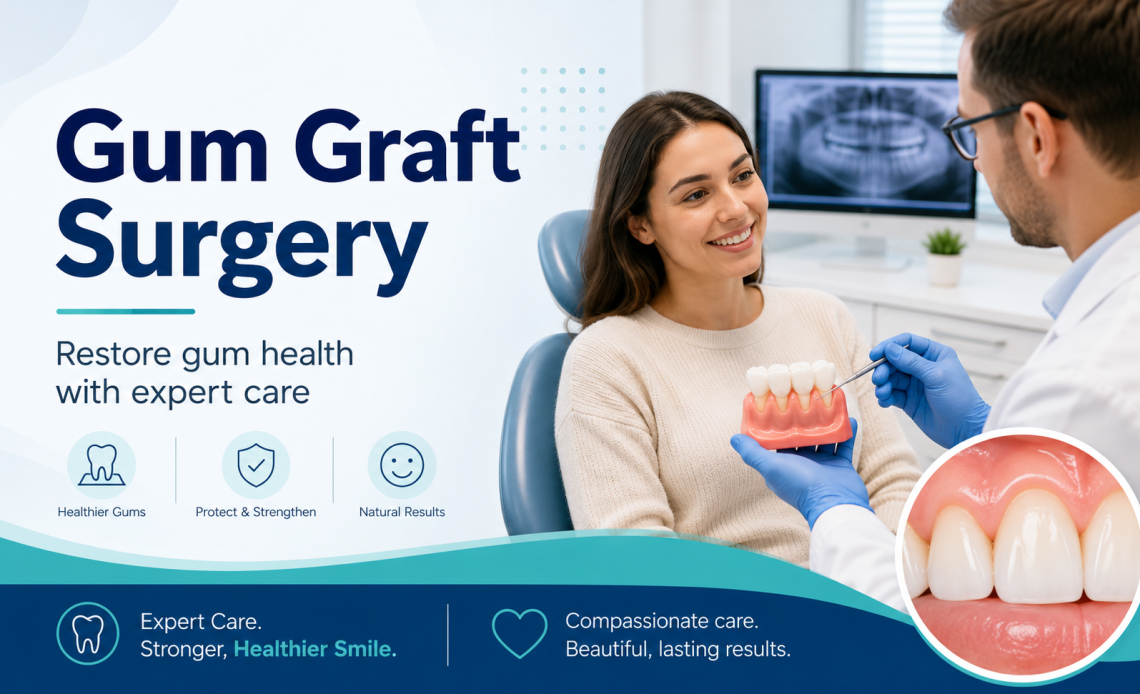
Gum graft surgery, also called gingival grafting or soft tissue grafting, is a dental procedure that repairs gum recession by transplanting tissue onto the affected area to cover an exposed tooth root.
How It Affects the Mouth
Once transplanted, the grafted tissue integrates with the existing gum over several weeks, restoring coverage over the root, reducing sensitivity, and helping prevent further recession or bone loss in that area.
Who Typically Needs Gum Graft Surgery
People with moderate to severe gum recession, noticeable root exposure, ongoing sensitivity, or recession that a periodontist determines is likely to worsen without intervention are the most common candidates for this procedure.
5. Why Gum Graft Surgery Matters
Gum graft surgery matters because gum recession, left untreated, tends to progress rather than stay the same, and exposed roots are more vulnerable to decay, sensitivity, and further bone loss around the tooth. Addressing it proactively can prevent more serious dental problems down the road.
This procedure also matters for confidence and comfort, since visible recession and root sensitivity can affect both a person’s smile and their day-to-day eating and drinking. Understanding what the surgery actually involves helps replace anxiety about “gum surgery” with a clearer, more manageable picture of the process.
6. Types of Gum Graft Surgery
1. Connective Tissue Graft
This is the most common and often considered the gold standard for root coverage. A small flap is made on the roof of the mouth to remove a layer of connective tissue, which is then stitched over the exposed root.
2. Free Gingival Graft
This method removes a thin layer of tissue directly from the surface of the palate and attaches it to the receding area. It’s often used specifically to thicken and strengthen thin gum tissue.
3. Pedicle Graft
Tissue is taken from the gum directly next to the affected tooth rather than from the palate, which can mean a faster, more comfortable recovery since there’s no separate donor site.
4. Allograft (Donor Tissue)
This approach uses processed tissue from a human tissue bank rather than the patient’s own mouth, eliminating the palatal donor wound but sometimes at a higher cost.
5. Xenograft
In this less common approach, donor tissue comes from another species, typically cow or pig, and is specially processed for safe use in the human mouth.
6. Pinhole Surgical Technique
A newer, incision-free method that repositions existing gum tissue through a small pinhole rather than transplanting new tissue, often chosen for its faster recovery.
7. Combination Approaches
Some cases use donor tissue products alongside bone grafting material or regenerative proteins when both gum and bone support have been affected.
7. Signs You May Need Gum Graft Surgery
Common Signs
- Teeth that look noticeably longer than they used to
- Ongoing sensitivity to hot, cold, or sweet foods and drinks
- Visible root exposure or a notch near the gumline
Signs of More Advanced Recession
Significant root exposure, thinning gum tissue, or recession that has progressed despite improved brushing habits are often signs that professional grafting, rather than home care alone, is needed.
Signs Your Dentist May Recommend Surgery Soon
If your dentist or periodontist has measured ongoing recession at recall visits, or notes thin, fragile gum tissue prone to further recession, they may recommend grafting proactively before the problem worsens.
When to Bring It Up With Your Dentist
Ask about grafting if you notice increasing sensitivity, visible changes in your gumline, or if a previous dentist mentioned recession but you haven’t followed up on treatment options.
8. What to Expect During Recovery
Day of Surgery
The procedure is performed under local anesthesia and takes about one to two hours. You should arrange transportation home, since some practices also offer sedation for anxious patients.
First 24 to 72 Hours
Swelling and mild bleeding are common in the first day or two. Most patients manage discomfort with over-the-counter or prescribed pain medication, and the palate donor site, if used, tends to be the most tender area.
First One to Two Weeks
A soft, cool-food diet, such as yogurt, scrambled eggs, and smoothies, is recommended, along with avoiding brushing or flossing directly over the graft site.
Four to Eight Weeks
Full healing and integration of the graft tissue typically takes four to eight weeks, though most people resume normal activities and diet well before that point.
9. Benefits of Gum Graft Surgery
- May significantly reduce or eliminate sensitivity related to exposed roots
- Protects exposed roots from further decay and damage
- Can help stop or slow the progression of gum and bone loss
- May improve the appearance and symmetry of the smile
- Results from grafts using your own tissue can last a lifetime with proper care
10. Risks, Side Effects, and Disadvantages
As with any surgical procedure, gum grafting carries some risk, including infection, bleeding, and in rare cases, the graft not fully integrating with the surrounding tissue. Grafts using tissue from your own palate involve an additional healing site, which some patients find to be the most uncomfortable part of recovery.
Success isn’t guaranteed for everyone, and outcomes can be affected by factors like smoking, uncontrolled diabetes, or not following aftercare instructions closely. There’s also no guarantee that gum recession won’t return in the future without continued good oral hygiene.
11. Who Should Be Careful or Discuss Options Closely With Their Periodontist?
- Smokers, since smoking significantly reduces blood flow and can threaten graft success
- People with uncontrolled diabetes or other conditions that impair healing
- People with very thin gum tissue who may need a specific graft type suited to their anatomy
- Anyone with a bleeding disorder or taking blood-thinning medication
- Patients considering the pinhole technique, since it isn’t suitable for every recession pattern
A periodontist can evaluate your specific case and recommend the graft type best suited to your gum anatomy and health history.
12. Best Ways to Prepare for and Recover From Gum Graft Surgery
- Ask your periodontist which graft type is recommended for your case and why.
- Arrange transportation home if sedation will be used during the procedure.
- Stock up on soft, cool foods like yogurt, eggs, and smoothies before your surgery date.
- Avoid rinsing, spitting forcefully, or touching the surgical site on the day of surgery.
- Take prescribed or recommended pain medication as directed during the first few days.
- Avoid brushing or flossing directly over the graft site until your periodontist advises it’s safe.
- Stop smoking before and after surgery to protect blood flow to the healing graft.
- Attend all follow-up appointments so your periodontist can monitor healing progress.
13. Habits That Support Healing vs. Habits That Risk Graft Failure
| Helpful Habits | Habits to Avoid |
| Following a soft, cool-food diet as instructed | Eating hard, crunchy, or spicy foods too soon |
| Taking prescribed medication as directed | Skipping pain management and pushing through discomfort |
| Attending all follow-up appointments | Missing check-ins meant to monitor graft healing |
| Avoiding smoking before and after surgery | Smoking during the healing period |
| Being gentle around the graft site while brushing | Brushing or flossing directly over the graft too early |
14. Connective Tissue Graft vs. Pinhole Surgical Technique
These are two of the most commonly compared approaches for treating gum recession, each with different trade-offs.
| Feature | Connective Tissue Graft | Pinhole Surgical Technique |
| Method | Tissue harvested from the palate and stitched over the exposed root | Existing gum tissue repositioned through a small pinhole, no harvesting |
| Incisions or sutures | Requires an incision and sutures | Incision-free, generally no sutures |
| Typical recovery | One to two weeks for initial healing | Often faster, with less post-operative discomfort |
| Best for | Cases needing added tissue thickness or volume | Multiple teeth with adequate existing tissue to reposition |
15. Myths and Facts About Gum Graft Surgery
| Myth | Fact |
| Gum graft surgery is extremely painful. | The procedure is done under anesthesia and isn’t painful; recovery discomfort is usually mild to moderate and manageable. |
| Once you have a gum graft, recession can never come back. | Grafts can be very long-lasting, but continued good oral hygiene is still needed to help prevent recession from recurring. |
| All gum grafts require taking tissue from the roof of your mouth. | Some techniques use donor tissue, tissue from adjacent gums, or repositioning methods that avoid a palate donor site. |
| Insurance never covers gum graft surgery. | Many insurance plans cover a portion of the cost when the procedure is documented as medically necessary. |
16. What Dental Experts Say
Dental sources note that gum recession affects a notable share of adults and often goes unnoticed until it becomes more advanced, since it tends to progress gradually. According to periodontal and dental industry data, connective tissue grafts remain the most commonly performed and most predictable technique for root coverage, while newer options like the pinhole surgical technique offer an incision-free alternative for suitable cases.
Cost analyses based on dental industry data indicate that connective tissue grafts commonly range from about $600 to $1,800 per tooth, while multi-tooth treatment areas often fall between $1,500 and $3,000, with many insurance plans covering a portion when the procedure is classified as medically necessary rather than purely cosmetic.
17. When Should You See a Periodontist?
See a periodontist if you notice increasing tooth sensitivity, visible root exposure, or if your dentist has flagged progressive gum recession at previous visits. Contact your provider promptly after surgery if you experience bleeding that doesn’t stop after applying pressure for about 20 minutes, signs of infection, or pain that seems to worsen rather than improve after the first few days.
18. Tips for Protecting Your Results Long-Term
- Use a soft-bristled toothbrush and gentle brushing technique going forward
- Keep up with regular dental checkups and cleanings
- Avoid tobacco products, which can compromise both healing and long-term gum health
- Wear a night guard if you grind or clench your teeth
- Address any new signs of recession early rather than waiting for it to progress
19. Final Takeaway
Gum graft surgery is a well-established, generally low-risk procedure for treating gum recession, with several graft types available depending on your specific needs, budget, and anatomy. While the idea of gum surgery can sound intimidating, the procedure itself isn’t painful, and most people recover within one to two weeks with only mild to moderate discomfort. The best approach is to discuss your specific recession pattern with a periodontist, understand which graft type fits your situation, and commit to the aftercare habits that give your results the best chance of lasting long-term.
FAQ Section
Is gum graft surgery worth it?
For many people with progressive recession or root sensitivity, yes. It can prevent further damage, reduce sensitivity, and improve the appearance of the smile, though it’s a personal decision to discuss with a periodontist.
What causes the need for gum graft surgery?
Gum recession from periodontal disease, aggressive brushing, genetics, or teeth grinding is the most common reason people eventually need grafting.
Can gum recession be fixed without surgery?
Mild recession may be managed with improved home care and monitoring, but more significant recession, especially with root exposure, generally requires a graft to restore coverage.
How can I support healing at home after surgery?
Stick to soft, cool foods, avoid touching or brushing the graft site directly, take medication as prescribed, and avoid smoking during recovery.
What should I avoid after gum graft surgery?
Avoid hard or crunchy foods, vigorous rinsing or spitting in the first day, smoking, and brushing or flossing directly over the surgical site until cleared by your periodontist.
When should I worry after gum graft surgery?
Contact your periodontist if you experience bleeding that won’t stop with pressure, worsening pain after the first few days, or signs of infection.
Should I see a periodontist before considering gum graft surgery?
Yes, a periodontist can evaluate the extent of your recession and determine which graft type, if any, is appropriate for your situation.
What is the best type of gum graft for me?
The best option depends on the extent of your recession, how much donor tissue is available, and your personal preferences around recovery, which your periodontist can help you decide.
This article is for general educational purposes only and is not a substitute for professional dental advice. Always consult a licensed periodontist or dentist for diagnosis and treatment recommendations specific to your gum health.