
| KEY TAKEAWAYS
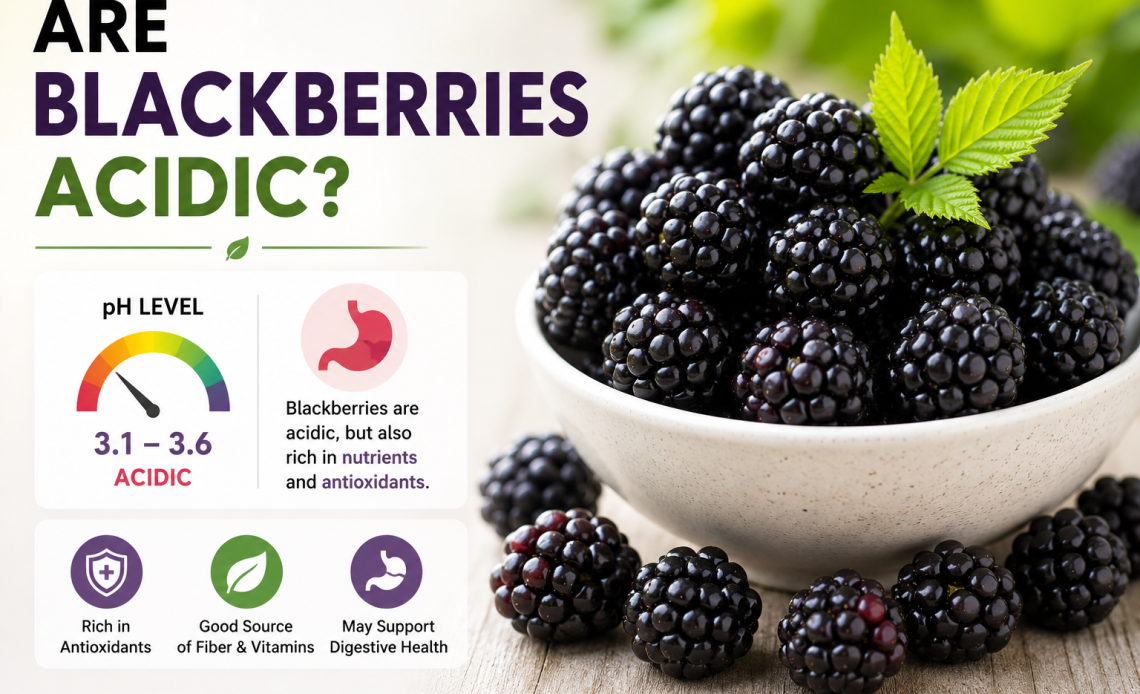
• Yes, blackberries are acidic, with a pH generally falling between about 3.2 and 4.5, depending on ripeness and variety. • That said, they’re on the milder end of the acidity spectrum compared to fruits like lemons, oranges, and cranberries. • Blackberries are considered one of the more reflux-friendly berries, alongside raspberries, though individual tolerance varies. • Their high fiber content may help offset some of their acidity by supporting overall digestive comfort. • If you have acid reflux or GERD, moderation and portion size matter as much as the fruit’s pH number alone. |
Are blackberries acidic is a fair question to ask before loading up a bowl if you deal with heartburn or GERD, and the honest answer is yes, technically. According to Kansas State University’s pH reference chart for common foods, any food with a pH below 7 is considered acidic, and blackberries typically fall somewhere between 3.2 and 4.5, placing them clearly on the acidic side of the scale, even if they’re gentler than many other fruits.
What the pH Scale Actually Tells You
The pH scale runs from 0 to 14, with 7 considered neutral. Anything below 7 is acidic, and the lower the number, the stronger the acidity. This matters for reflux specifically because more acidic foods can add to the acid load already sitting in your stomach, which may aggravate symptoms in people prone to heartburn, though pH is just one piece of a much bigger picture that includes overall diet, portion size, and individual sensitivity.
Where Blackberries Actually Land Compared to Other Fruit
Blackberries are acidic, but they’re far from the most acidic fruit on the shelf. Here’s how they stack up against other common options:
| Fruit | Approximate pH |
| Lemons | ~2.0 (highly acidic) |
| Cranberries | ~2.3–2.5 (highly acidic) |
| Oranges | ~3.0 (acidic) |
| Strawberries | ~3.0–3.9 (acidic) |
| Raspberries | ~3.2–4.0 (acidic) |
| Blackberries | ~3.2–4.5 (acidic, milder than most berries) |
| Bananas | ~5.0 (mildly acidic) |
| Melons (watermelon, cantaloupe) | ~6.0+ (closer to neutral) |
So while blackberries don’t escape the “acidic” label, they sit closer to the gentler end of that range, well below lemons and cranberries, and roughly on par with or slightly milder than raspberries and strawberries.
Are Blackberries Actually a Problem for Acid Reflux?
Not necessarily. Fruit in general tends to be grouped with fiber-rich foods that can support digestive health, and according to Cleveland Clinic’s overview of berry health benefits, blackberries are notably high in fiber, antioxidants, vitamin C, and manganese, all of which support overall digestive and immune function. Some research has even linked higher fiber intake to reduced reflux symptoms, which may help offset some of the discomfort that acidity alone might otherwise cause.
In practice, many people with mild to moderate acid reflux tolerate blackberries reasonably well in modest portions, especially compared to genuinely high-acid trigger foods like citrus, tomatoes, or coffee. Severity of GERD, individual sensitivity, and how the fruit is eaten (fresh vs. juiced, alone vs. with a meal) all play a role in how well any one person handles it.
Why Berries Get Lumped Together as ‘Low-Acid’ Sometimes
You’ll often see berries generally described as a low-acid fruit category in reflux-friendly food lists, and that framing isn’t wrong exactly, it’s just a little imprecise. Compared to the true heavy hitters of dietary acidity, citrus fruits, vinegar-based dressings, and carbonated soft drinks, berries as a group genuinely are milder. But “milder than citrus” and “not acidic at all” are two very different claims, and blackberries specifically still land firmly on the acidic side of neutral. The distinction matters if you’re trying to build an eating pattern around your own reflux triggers rather than relying on a broad category label that glosses over the actual numbers.
Nutritional Benefits Worth Weighing Against the Acidity
Blackberries bring a genuinely strong nutritional profile to the table, which is part of why dietitians are often reluctant to recommend cutting them out entirely just because of a moderate pH. A single cup provides a meaningful amount of vitamin C, along with manganese, which supports bone health and metabolism, and a notable amount of fiber, roughly 8 grams per cup. They’re also rich in anthocyanins, the antioxidant compounds responsible for their deep purple-black color, which have been studied for their potential role in reducing inflammation throughout the body. For most people without severe, treatment-resistant reflux, these benefits are often worth preserving through moderation rather than complete avoidance.
Tips for Eating Blackberries If You Have Reflux
- Start with a small portion, like a third to half a cup, rather than a large bowl, to see how your body responds
- Eat them alongside a meal rather than on an empty stomach, which can reduce how much the acidity affects you
- Choose fresh, ripe blackberries over juices or processed blackberry products, which often concentrate the acid and add sugar
- Pair them with lower-acid foods, like oatmeal or a banana, if you’re trying to balance a dish overall
- Keep a simple food log if you’re not sure whether blackberries specifically trigger your symptoms, since reflux often has multiple contributing factors
What About Blackberry Jam, Juice, or Syrup?
Processed blackberry products behave differently than the fresh fruit. Jams, juices, and syrups are typically more concentrated, often contain added sugar, and can be lower in the fiber that helps offset acidity in the whole fruit. If you tolerate fresh blackberries reasonably well but notice more symptoms after juice or jam, the difference likely comes down to concentration and added sugar rather than the fruit itself suddenly becoming more problematic.
Does Ripeness Affect Blackberry Acidity?
Yes, to some degree. Riper blackberries tend to taste sweeter and somewhat less tart, which often reflects a modest shift toward a slightly higher, gentler pH compared to underripe berries. This is part of why fully ripe blackberries are generally the better choice if you’re specifically trying to minimize acidity, rather than reaching for firmer, more tart berries earlier in their ripening process.
Other Factors That Matter More Than pH Alone
- Total meal size: eating a large quantity of any fruit at once is more likely to trigger symptoms than a modest serving
- Timing: eating close to bedtime or lying down soon after eating can worsen reflux regardless of what you ate
- Individual sensitivity: some people with GERD tolerate moderately acidic foods just fine, while others react to nearly anything below neutral
- Overall diet pattern: a diet consistently high in fried, fatty, or highly processed foods tends to matter more for reflux than one moderately acidic fruit
How This Compares to Blueberries and Blackcurrants
Since blackberries are frequently mentioned in the same breath as other dark berries, it’s worth a quick side note on how they compare. Blueberries generally run slightly more acidic than blackberries, often in the pH 3.1 to 3.6 range, while blackcurrants tend to be more acidic still. This doesn’t mean blueberries are off-limits for reflux either, the difference between these berries is fairly small in practical terms, and personal tolerance tends to matter more than the small gap between their respective pH ranges.
Quick Answers
Are blackberries considered a high-acid or low-acid fruit?
They’re acidic, generally falling between pH 3.2 and 4.5, but they’re considered milder than high-acid fruits like lemons, oranges, and cranberries.
Can people with acid reflux eat blackberries?
Many people with mild to moderate reflux tolerate blackberries reasonably well in moderate portions, though individual sensitivity varies, so it’s worth testing your own tolerance.
Are blackberries more or less acidic than raspberries?
They’re similar, with blackberries often landing at the slightly milder end of that comparison, though exact pH can vary by ripeness and growing conditions.
Does cooking or juicing blackberries change their acidity?
Juicing tends to concentrate the acid and remove some of the fiber that may help offset it, so juice or processed blackberry products can feel more aggravating than the fresh whole fruit.
What fruits are better options than blackberries for acid reflux?
Bananas and melons, like watermelon and cantaloupe, are generally considered gentler options with a higher, more neutral pH.
Should I avoid blackberries completely if I have GERD?
Not necessarily. Most people don’t need to eliminate them entirely; starting with small portions and paying attention to your own symptoms is a more practical approach than automatic avoidance.