
| KEY TAKEAWAYS
• An anteverted uterus simply means the uterus tilts forward toward the bladder, which is the most common position, found in roughly 70–75% of women. • It’s considered a normal anatomical variation, not a medical condition, and doesn’t require treatment. • It doesn’t affect fertility, pregnancy, or delivery in any meaningful way. • Most people never know their uterine position unless it’s mentioned during a pelvic exam or ultrasound. • Pelvic pain or pressure is usually caused by something else entirely, not by the angle of the uterus itself. |
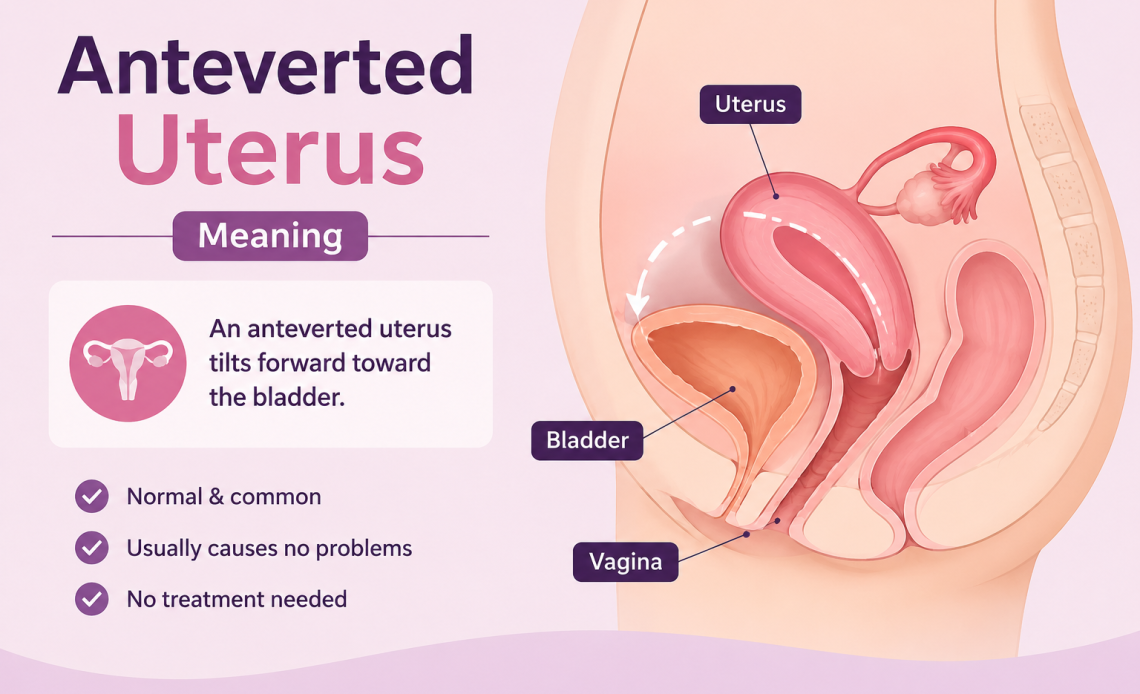
Anteverted uterus meaning is a phrase that usually shows up right after someone hears it for the first time during a pelvic exam or ultrasound, often followed by a moment of “wait, is that normal?” According to Cleveland Clinic’s overview of anteverted uterus, it simply describes a uterus that tilts forward toward the bladder rather than sitting straight up and down, and it’s the most typical position, not a diagnosis or abnormality.
Breaking Down What This Actually Describes
Think of the uterus as a small, pear-shaped organ that can sit at slightly different angles in different people, the same way people naturally vary in height or hand size. When it tilts forward toward the bladder, with the top of the uterus angled toward the pubic bone, that’s called anteverted. When it tilts backward toward the spine instead, that’s called retroverted. Neither position is inherently better or worse; they’re simply two common variations of normal anatomy.
How Common Is This, Really?
Roughly 70% to 75% of women have an anteverted uterus, making it by far the most typical position. Most people are simply born this way, though the position can also shift later in life due to pregnancy, scar tissue, or other pelvic changes. The remaining share of women have either a retroverted uterus or one that sits in a more neutral, straight position, neither of which is considered unusual or problematic on its own.
Does It Cause Any Symptoms?
For the vast majority of women, an anteverted uterus causes no symptoms at all. In cases where the forward tilt is more pronounced than typical, sometimes described as an anteflexed uterus, it can occasionally create a sense of pressure above the pubic area. This is a distinct and less common variation from a standard anteverted position, and it’s still not considered dangerous, just occasionally uncomfortable for some.
Anteverted vs. Retroverted: A Quick Comparison
| Feature | Anteverted Uterus | Retroverted Uterus |
| Direction of tilt | Forward, toward the bladder | Backward, toward the spine |
| How common | About 70–75% of women | A smaller share of women |
| Pain during sex | Not typically associated with this position | Can occasionally cause discomfort in certain positions |
| Effect on fertility | None | None |
| Needs treatment? | No | Usually no, unless symptomatic |
Does It Affect Fertility or Getting Pregnant?
No. Having an anteverted uterus has no bearing on your ability to conceive. If someone is experiencing fertility challenges, the cause is almost always something separate from uterine positioning. According to the National Institute of Child Health and Human Development, more likely contributors to female infertility include ovulation disorders, endometriosis, uterine fibroids or polyps, untreated infections, and autoimmune or endocrine conditions, none of which are related to which way the uterus happens to tilt.
What About During Pregnancy and Delivery?
An anteverted position is actually the default orientation for carrying a pregnancy, so it doesn’t create any additional risk or complication. Interestingly, women who start out with a retroverted uterus typically see it shift into the anteverted position on its own by the second trimester, as the growing uterus rises up out of the pelvis. After delivery, the uterus may stay anteverted or settle back into its original position, and either outcome is considered normal.
How Would You Even Know Your Uterus Is Anteverted?
Most people never find out unless a healthcare provider mentions it during a routine pelvic exam or notes it on an ultrasound report. A physical exam can often identify uterine position, and if confirmation is needed, a pelvic ultrasound can visualize the exact angle, along with checking for anything else that might be contributing to symptoms, like fibroids, cysts, or inflammation. This isn’t something doctors typically go looking for on its own, since it’s rarely relevant unless you’re having symptoms that need explaining.
Does an Anteverted Uterus Ever Need Treatment?
No. Since it’s a normal anatomical variation rather than a condition, an anteverted uterus doesn’t require any treatment. This is different from a retroverted or significantly anteflexed uterus that’s causing real pain or pressure, where a doctor might discuss options if symptoms are significant enough to interfere with daily life. Even then, treatment is only considered when the position is actually causing problems, not simply because it differs from the “straight up” textbook diagram.
What This Means for Pelvic Pain Specifically
If you’re dealing with pelvic pain or pressure and you’ve just learned you have an anteverted uterus, it’s worth knowing that these two things are probably unrelated. Because an anteverted position is both extremely common and rarely symptomatic, persistent pain is far more likely to have a different underlying cause, such as ovarian cysts, endometriosis, fibroids, or a pelvic floor issue, that deserves its own evaluation rather than being attributed to uterine tilt.
Why Uterine Position Varies From Person to Person
It’s easy to assume anatomy textbooks show the one correct way organs are supposed to sit, but pelvic anatomy has always had natural variation built into it, the same way people vary in the exact shape and size of other organs. Uterine position is influenced by the strength and tension of the ligaments that hold it in place, the shape of the pelvis itself, and sometimes by physical changes like pregnancy or prior surgery. None of this variation is considered a flaw in the design; it’s simply part of the normal range that exists across different bodies.
Why This Term Comes Up So Often in Search Results
Part of why so many people end up searching this exact phrase is that hearing an unfamiliar clinical term used casually during an appointment, often without much explanation, naturally triggers some worry. A provider might mention it in passing while reading an ultrasound report, or note it in an after-visit summary without additional context, leaving the patient to look it up later wondering if it’s something to be concerned about. In the vast majority of cases, the answer is simply that this is a routine anatomical descriptor, not a red flag buried in your chart.
What About Anteverted vs. a ‘Neutral’ or Straight Uterus?
Beyond anteverted and retroverted, some women have a uterus that sits in a more midline or neutral position, neither tilted forward nor backward. This is simply a third variation along the same spectrum and, like the other two positions, isn’t associated with any particular health risk on its own. If your provider has ever described your uterus as “midposition” or “neutral,” that falls into this same category of normal anatomical variation.
Talking to Your Provider About It
If a mention of your uterine position left you with questions, it’s completely reasonable to bring it up at your next appointment. A good starting point is simply asking whether your specific position, anteverted or otherwise, is contributing to any symptoms you’re experiencing, or whether it was mentioned purely as a descriptive note in your chart. Most of the time, providers mention it in passing precisely because it’s unremarkable, not because it needs monitoring or follow-up.
Quick Answers
Is an anteverted uterus normal?
Yes, it’s the most common uterine position, found in about 70–75% of women, and it’s considered a normal anatomical variation rather than a medical condition.
Can an anteverted uterus change position over time?
Yes. Pregnancy, scar tissue from pelvic surgery or endometriosis, and other pelvic changes can all shift uterine position over the course of a lifetime.
Does an anteverted uterus affect pregnancy or delivery?
No. It’s actually the default position for carrying a pregnancy and doesn’t increase any risks or affect labor and delivery.
What’s the difference between anteverted and anteflexed?
Anteverted describes the typical forward tilt of the uterus, while anteflexed describes a more pronounced, exaggerated forward tilt that can occasionally cause pressure on the bladder or abdomen.
Can you feel your uterus if it’s anteverted?
Most people don’t notice any physical sensation from having an anteverted uterus, since it doesn’t typically cause symptoms.
Should I be concerned if I have an anteverted uterus and pelvic pain?
The pain is unlikely to be caused by the anteverted position itself, so it’s worth discussing with a doctor to identify the actual underlying cause.
