
Introduction
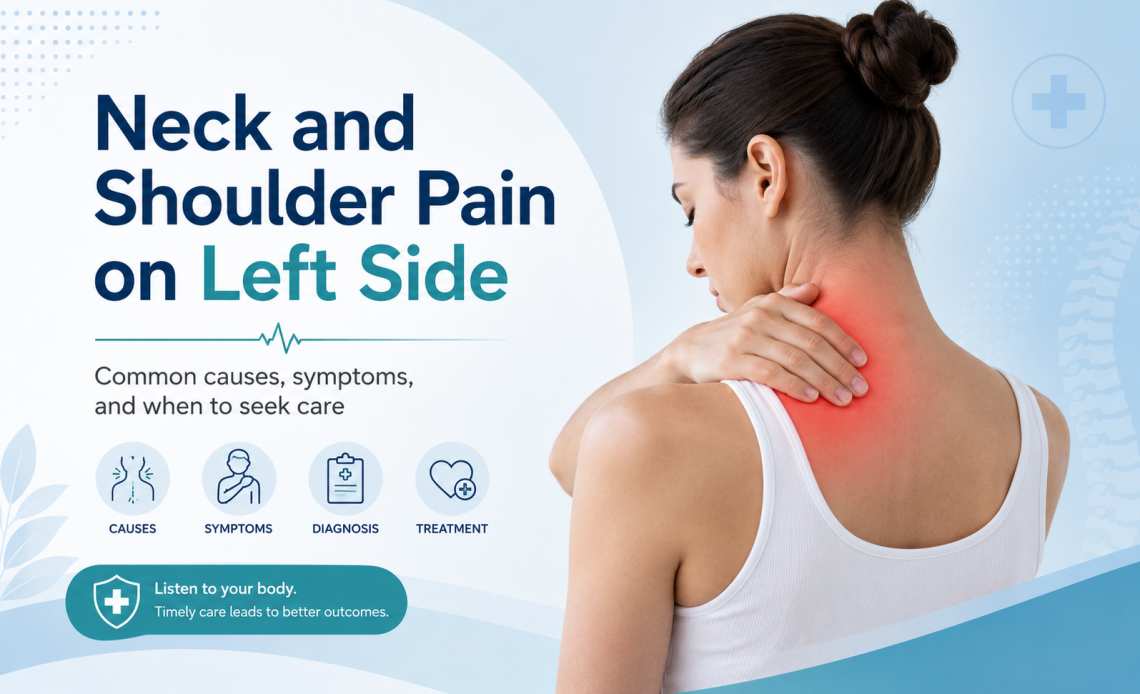
Neck and Shoulder Pain on Left Side is a common health topic that many people search for because it can affect sleep, work, posture, and daily comfort. The cause can range from simple muscle strain to nerve irritation, and in some cases, it can be linked to more serious conditions that need prompt medical attention.
Most cases of left-sided neck and shoulder pain come from muscle tension, poor posture, or minor injury, and these usually improve with rest, gentle stretching, and time. However, because the left side of the body is also where certain heart-related symptoms can appear, it is important to understand when this pain is minor and when it could be a sign of something more serious.
In this article, you will learn the common causes of neck and shoulder pain on the left side, associated symptoms, when it may signal a medical emergency, ways to manage mild cases at home, and when to see a doctor.
Quick Answer: Neck and Shoulder Pain on Left Side
Neck and shoulder pain on the left side is most often caused by muscle strain, poor posture, stress, or sleeping in an awkward position, and it usually improves with rest, stretching, and over-the-counter pain relief. In rare cases, this pain can be linked to a heart problem, especially if it comes on suddenly and is paired with chest pain, shortness of breath, sweating, or nausea. If those symptoms appear together, it is a medical emergency and requires immediate care.
| Question | Short Answer |
| Is left-side neck and shoulder pain normal? | Often yes, usually from muscle strain or posture |
| Is it always dangerous? | No, but sudden pain with chest symptoms needs emergency care |
| Can it improve naturally? | Yes, mild cases often improve with rest and stretching |
| When to see a doctor? | If pain is severe, sudden, worsening, or paired with other symptoms |
Key Takeaways
- Most left-side neck and shoulder pain comes from muscle strain, posture, or stress.
- Mild cases often improve with rest, gentle movement, and simple home care.
- Sudden pain with chest tightness, shortness of breath, or sweating needs emergency medical attention.
- Nerve-related causes, like a pinched nerve, may cause pain that spreads down the arm.
- A doctor can help identify the exact cause if pain is severe, frequent, or does not improve.
What Is Neck and Shoulder Pain on the Left Side?
Simple Meaning
Left-side neck and shoulder pain refers to discomfort, tightness, or aching felt specifically on the left side of the neck, the top of the left shoulder, or the area where the neck and shoulder meet. It can be a dull ache, a sharp pain, or a burning or tingling sensation.
How It Affects the Body
This type of pain can limit how far you can turn your head, make it harder to lift your arm, and sometimes cause headaches or pain that radiates down into the arm or upper back.
Who Is More Likely to Experience It
People who sit for long periods, work at a desk or computer, sleep in awkward positions, carry heavy bags on one shoulder, or experience high stress are more likely to develop left-side neck and shoulder pain.
Why This Pain Matters
Neck and shoulder pain can interfere with sleep, work, exercise, and everyday movement, and ongoing pain can affect mood and quality of life. Because the left side of the upper body is near the heart, this specific location can sometimes cause confusion or worry about whether the pain is muscular or related to something more serious.
Understanding the difference between common causes and warning signs helps you respond appropriately, whether that means simple home care or urgent medical attention.
Common Causes of Neck and Shoulder Pain on the Left Side
1. Muscle Strain or Tension
Overuse, awkward movements, heavy lifting, or sleeping in an unusual position can strain the muscles in the neck and left shoulder.
2. Poor Posture
Slouching, looking down at a phone, or sitting at a computer for long periods can place extra strain on the left side of the neck and shoulder.
3. Stress and Tension
Emotional stress often causes people to unconsciously tighten the neck and shoulder muscles, leading to tension and soreness.
4. Nerve Compression or Pinched Nerve
A herniated disc or pinched nerve in the neck can cause pain that radiates from the neck into the left shoulder and sometimes down the arm.
5. Injury
Falls, sports injuries, or whiplash from a car accident can cause pain localized to the left side of the neck and shoulder.
6. Joint or Degenerative Conditions
Conditions such as osteoarthritis or cervical spondylosis can cause chronic neck and shoulder discomfort, often worse on one side.
7. Heart-Related Causes
In rare but important cases, left-side neck and shoulder pain can be a referred symptom of a heart problem, particularly when it appears suddenly along with chest pain, shortness of breath, sweating, or nausea. This requires immediate medical attention.
Symptoms Related to Neck and Shoulder Pain on the Left Side
Common Symptoms
- Dull ache or stiffness in the neck and left shoulder
- Reduced range of motion when turning the head
- Muscle tightness or knots that feel tender to touch
Mild Symptoms
Soreness that improves with rest, stretching, or changing position is usually a sign of muscle strain rather than a serious problem.
Serious Symptoms
Pain that spreads down the arm, causes numbness or tingling, or is paired with weakness in the hand may point to nerve involvement and should be evaluated by a doctor.
Symptoms That Need Immediate Medical Attention
Seek emergency care right away if left-side neck or shoulder pain occurs suddenly along with chest pain or pressure, shortness of breath, sweating, nausea, lightheadedness, or pain spreading to the jaw or left arm, as these can be signs of a heart attack.
Effects of Ongoing Neck and Shoulder Pain on the Body
Short-Term Effects
In the short term, this pain can cause stiffness, headaches, and difficulty concentrating or sleeping comfortably.
Long-Term Effects
If left untreated, chronic muscle tension or an untreated pinched nerve can lead to ongoing pain, reduced mobility, and compensatory posture problems elsewhere in the body.
Effects on Daily Life
Persistent pain can affect work productivity, exercise routines, sleep quality, and overall mood, making early management important.
Benefits of Addressing Neck and Shoulder Pain Early
May Prevent the Pain From Becoming Chronic
Treating muscle strain or poor posture early can prevent short-term discomfort from turning into a long-lasting problem.
May Improve Sleep and Daily Comfort
Reducing tension in the neck and shoulder can lead to better sleep quality and less daytime discomfort.
May Support Better Posture and Mobility
Stretching and strengthening exercises can improve posture and range of motion over time.
May Help Identify Serious Causes Sooner
Paying attention to this pain and seeking care when needed allows serious causes, including heart-related issues, to be identified and treated more quickly.
Risks and Warning Signs to Watch For
While most neck and shoulder pain is not dangerous, ignoring certain warning signs can be harmful. Pain that is sudden, severe, or paired with chest tightness, shortness of breath, sweating, nausea, or pain spreading to the jaw or arm should never be ignored, as these can indicate a heart attack. Numbness, weakness, or loss of coordination in the arm or hand can also point to a more serious nerve problem that needs medical evaluation.
Who Should Be Extra Careful With Neck and Shoulder Pain
- People with a history of heart disease or risk factors such as high blood pressure or diabetes
- Older adults, especially those with new or sudden onset pain
- People with a history of neck injury or spinal conditions
- Anyone experiencing numbness, tingling, or weakness in the arm or hand
- Pregnant women, who should check with a doctor before taking pain medication
- People with pain that does not improve after a week of home care
Best Ways to Manage Mild Neck and Shoulder Pain at Home
- Rest the area and avoid activities that worsen the pain for a day or two.
- Apply a cold pack for the first 24 to 48 hours, then switch to heat to relax tight muscles.
- Gently stretch the neck and shoulder once acute pain has eased.
- Improve posture while sitting, working, and using your phone or computer.
- Use over-the-counter pain relievers as directed if needed.
- Avoid carrying heavy bags or backpacks on one shoulder.
- Practice stress-reduction techniques, since tension often settles in the neck and shoulders.
- See a doctor if pain is severe, spreads down the arm, or does not improve within a week or two.
Habits That Help vs Habits That Make It Worse
| Helpful Habits | Habits to Limit or Avoid |
| Regular gentle stretching | Sitting for long periods without breaks |
| Good posture while sitting and standing | Looking down at your phone for long periods |
| Supportive pillow while sleeping | Sleeping on your stomach with your neck twisted |
| Taking breaks from screens | Carrying a heavy bag on one shoulder |
| Stress management techniques | Ignoring pain that keeps getting worse |
Muscle Strain vs Pinched Nerve in the Neck and Shoulder
| Feature | Muscle Strain | Pinched Nerve |
| Meaning | Overstretched or overworked muscle tissue | Nerve compressed by a disc, bone, or tight tissue |
| Typical feeling | Dull ache, tightness, or soreness | Sharp, burning, or shooting pain, often with numbness or tingling |
| Common trigger | Overuse, poor posture, or awkward sleeping position | Disc problems, spinal changes, or prolonged poor posture |
| Best for | Home care, rest, and gentle stretching | Medical evaluation if symptoms spread or persist |
Myths and Facts About Neck and Shoulder Pain on the Left Side
| Myth | Fact |
| Left-side neck and shoulder pain always means a heart problem. | Most cases are caused by muscle strain, posture, or stress, not the heart. |
| You should stay completely still until pain is fully gone. | Gentle movement and stretching, once acute pain eases, usually helps recovery. |
| Only older adults get this type of pain. | People of all ages can develop neck and shoulder pain, especially with heavy phone or computer use. |
| If pain is mild, it can never be serious. | Even mild pain paired with chest symptoms, shortness of breath, or sweating should be checked immediately. |
What Health Experts Say
Health organizations generally note that musculoskeletal causes, such as strain and poor posture, are the most common reasons for neck and shoulder pain, while emphasizing that sudden pain accompanied by chest symptoms should always be treated as a possible cardiac emergency. Guidance consistently recommends seeking urgent care for sudden, severe, or symptom-associated pain rather than waiting to see if it improves.
If you are unsure whether your symptoms are muscular or something more serious, it is safest to seek prompt medical evaluation.
When Should You See a Doctor?
Seek emergency medical care immediately if left-side neck or shoulder pain comes on suddenly and is accompanied by chest pain or pressure, shortness of breath, sweating, nausea, dizziness, or pain spreading to the jaw or arm. See a doctor for a non-emergency evaluation if pain is severe, lasts longer than one to two weeks, keeps returning, spreads down the arm, or comes with numbness, tingling, or weakness.
Prevention Tips for Neck and Shoulder Pain
- Maintain good posture while sitting, standing, and using devices
- Take regular breaks from screens and desk work to stretch
- Use a supportive pillow and mattress for sleeping
- Avoid carrying heavy bags on one shoulder repeatedly
- Manage stress through relaxation techniques or light exercise
- Stay active with regular movement and gentle strengthening exercises
- Keep up with regular checkups, especially if you have heart disease risk factors
Final Takeaway
Neck and shoulder pain on the left side is usually caused by muscle strain, poor posture, or stress, and it often improves with rest, gentle stretching, and simple home care. However, because this area is close to the heart, sudden pain paired with chest tightness, shortness of breath, sweating, or nausea should always be treated as a medical emergency. Paying attention to your symptoms and seeking medical advice when needed is the safest approach.
Frequently Asked Questions
Is neck and shoulder pain on the left side serious?
Most cases are not serious and are caused by muscle strain or posture, but sudden pain with chest symptoms should be treated as an emergency.
What causes neck and shoulder pain on the left side?
Common causes include muscle strain, poor posture, stress, pinched nerves, injury, and, less commonly, heart-related issues.
Can neck and shoulder pain go away on its own?
Mild pain from muscle strain often improves within a few days to two weeks with rest and simple home care.
How can I relieve left-side neck and shoulder pain at home?
Rest, cold then heat therapy, gentle stretching, posture correction, and over-the-counter pain relief can help mild cases.
What should I avoid if I have this type of pain?
Avoid heavy lifting, carrying bags on the affected shoulder, poor posture, and ignoring pain that keeps getting worse.
When should I worry about neck and shoulder pain on the left side?
Worry if pain is sudden and severe, spreads to the jaw or arm, or comes with chest pain, shortness of breath, sweating, or nausea.
Should I see a doctor for neck and shoulder pain?
Yes, if pain is severe, lasts more than one to two weeks, keeps returning, or is paired with numbness, weakness, or the warning signs above.
What is the best treatment for neck and shoulder pain on the left side?
For mild muscular pain, rest, stretching, and posture changes are usually enough. For pain linked to nerve issues or possible heart involvement, prompt medical evaluation is essential.