
The Short Answer
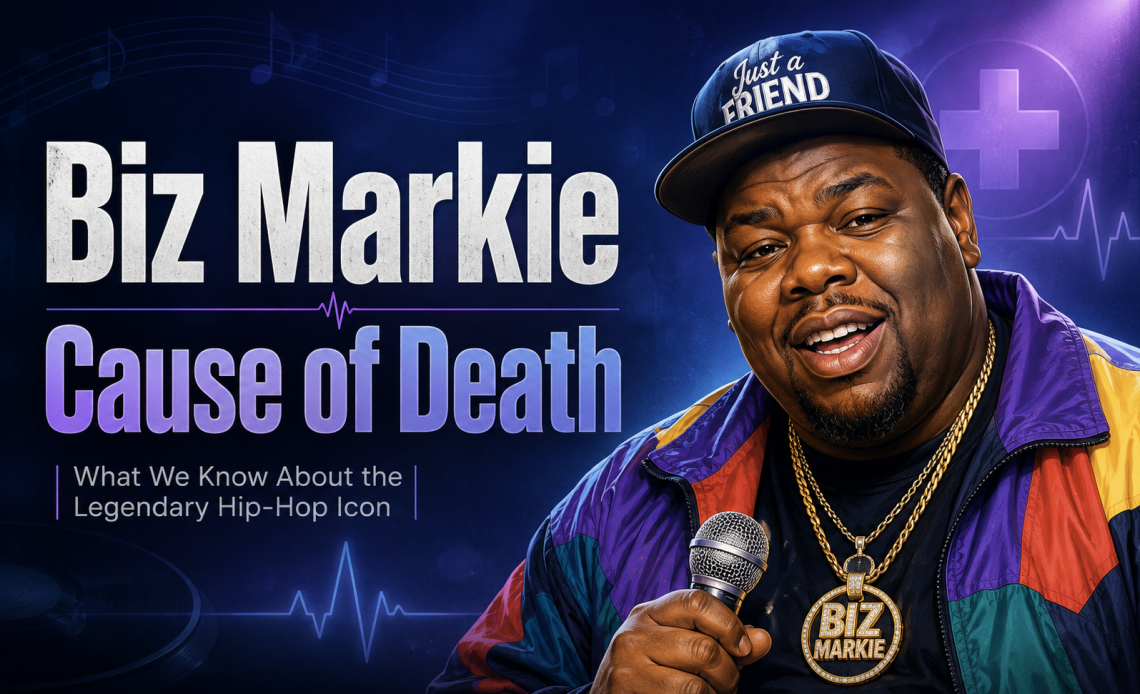
Biz Markie, born Marcel Theo Hall, died on July 16, 2021, at age 57 from complications of type 2 diabetes. His final year of life included a diabetic coma, a stroke, and a prolonged decline that had been building for over a decade since his diagnosis in 2010. He passed away at a Baltimore hospital with his wife, Tara Hall, by his side. His death drew widespread attention to how aggressively uncontrolled type 2 diabetes can progress, even in patients who make genuine efforts to manage it through weight loss and lifestyle change.
Who Was Biz Markie and What Happened to Him
Biz Markie cause of death was officially confirmed as complications arising from type 2 diabetes, a disease he had battled publicly for more than a decade. Born Marcel Theo Hall on April 8, 1964, in Harlem, New York, and raised on Long Island, Biz Markie became one of hip hop’s most beloved figures, earning the nickname the Clown Prince of Hip Hop for his comedic, warm, and self-deprecating style. He rose to mainstream fame with his 1989 single Just a Friend, which reached number 9 on the US Billboard Hot 100 and went platinum. Beyond music, he was a beatboxer, DJ, actor, comedian, and voice artist, appearing in Men in Black II, SpongeBob SquarePants, Yo Gabba Gabba, Empire, and Black-ish. His death at 57 shocked the hip hop community and sparked an important conversation about diabetes management and the silent, escalating damage the disease can cause. The Boston Health Journal covers this case in full medical detail because understanding what happened to Biz Markie can be genuinely life-saving for the millions of Americans currently managing type 2 diabetes, and readers can find further evidence-based health guidance at bostonhealthjournal.com.
This article covers the full medical timeline of his illness, what specifically killed him, and what the progression of his disease reveals about the serious long-term complications that type 2 diabetes can produce when blood sugar remains inadequately controlled over years.
Biz Markie: Key Facts at a Glance
| Detail | Information |
| Full name | Marcel Theo Hall |
| Known as | Biz Markie, the Clown Prince of Hip Hop |
| Born | April 8, 1964, Harlem, New York City |
| Died | July 16, 2021, Baltimore, Maryland |
| Age at death | 57 years old |
| Cause of death | Complications of type 2 diabetes (including diabetic coma and stroke) |
| Diabetes diagnosis year | 2010 (publicly disclosed in 2014) |
| Weight lost after diagnosis | Approximately 140 pounds by 2014 through diet and exercise |
| Final hospitalization | April 2020 (severe diabetes complications); remained under care until death |
| Survived by | Wife Tara Hall, family members |
The Medical Timeline: How His Illness Progressed
2010: Diagnosis
Biz Markie was diagnosed with type 2 diabetes in 2010, though he did not publicly disclose the diagnosis until 2014. His doctors were direct about the stakes. In his own words in an ABC News interview, they told him he could lose his feet, that he could lose body parts, and that a lot of things could happen if he did not change course.
2014: The Weight Loss Effort
In 2014, Markie disclosed his diagnosis publicly alongside a remarkable effort to reverse the damage. He had lost approximately 140 pounds through what he described as old-fashioned weight loss, meaning dietary changes and increased physical activity rather than bariatric surgery. He had reduced his diabetes medications by half and was working toward getting off the remaining prescriptions entirely. It was a genuine, significant health effort, and for a period, it appeared to be working.
April 2020: First Major Hospitalization
In April 2020, Markie was hospitalized due to severe complications from his type 2 diabetes. At that point his representative confirmed the hospitalization was diabetes-related but provided no further clinical details. He was discharged and entered a rehabilitation facility.
Late 2020: Diabetic Coma and Stroke
The most serious event in his final period occurred in late 2020. Markie suffered a diabetic coma, a state of unconsciousness caused by severely abnormal blood glucose levels, either dangerously high (hyperosmolar hyperglycemic state) or dangerously low (severe hypoglycemia). Following the coma, he suffered a stroke. In April 2021, his longtime friend and hip hop legend Big Daddy Kane appeared on The Breakfast Club radio program and confirmed that Markie had experienced a stroke but was in rehabilitation and improving.
July 2021: Death
Biz Markie died on July 16, 2021, at a hospital in Baltimore, Maryland. His wife Tara Hall held his hand as he passed. He was 57 years old. His representative Jenni Izumi confirmed the death, calling him a hip hop pioneer whose legacy of artistry would forever be celebrated. He was buried at Pinelawn Memorial Park and Arboretum in Farmingdale, New York. Condolences were received from, among others, former President Barack Obama and Michelle Obama.
What Medically Killed Biz Markie: Understanding the Complications
Type 2 Diabetes: The Root Cause
Type 2 diabetes is a chronic metabolic condition in which the body’s cells become resistant to insulin, the hormone that allows glucose to enter cells for energy. As insulin resistance worsens, blood glucose levels remain chronically elevated. Over time, elevated glucose damages blood vessels and nerves throughout the body in a process called glycation, where glucose molecules bind to proteins and disrupt their normal function.
The damage is cumulative and systemic. It does not announce itself with dramatic symptoms in its early stages, which is part of what makes the disease dangerous. A person can have type 2 diabetes for years while significant damage accumulates in the cardiovascular system, kidneys, nervous system, and eyes before any obvious crisis occurs.
Diabetic Coma: What It Is and Why It Happens
A diabetic coma can result from two distinct emergencies. The first is hyperosmolar hyperglycemic state (HHS), where blood glucose rises to extremely high levels (often above 600 mg/dL) in a person with type 2 diabetes, causing severe dehydration and eventually loss of consciousness. The second is severe hypoglycemia, where blood glucose drops dangerously low, depriving the brain of glucose it needs to function. Both states can cause unconsciousness, brain damage, and death if not treated rapidly.
In Biz Markie’s case, the specific type of diabetic coma was not publicly disclosed. Either form represents a failure of blood sugar regulation that goes beyond what can be managed outside a hospital setting.
Stroke as a Complication of Diabetes
Diabetes more than doubles the risk of stroke compared to people without the condition. The mechanisms are well established. Chronically elevated blood glucose damages the walls of blood vessels, accelerating the buildup of atherosclerotic plaques (fatty deposits) that can block cerebral arteries. Diabetes also promotes a hypercoagulable state, meaning the blood tends to clot more readily, further increasing the risk of thromboembolic stroke. High blood pressure, which is a very common comorbidity of type 2 diabetes and was almost certainly present in Markie given his history, is an additional independent risk factor for stroke that compounds the diabetes-related risk.
Adults with type 2 diabetes face a 2 to 4 times higher risk of cardiovascular disease compared to people without diabetes, according to the American Heart Association. Stroke is among the most common and most serious cardiovascular complications of the disease.
Type 2 Diabetes Complications That Can Become Fatal
| Complication | How Diabetes Causes It | Risk Relative to Non-Diabetics |
| Stroke | Vessel damage, atherosclerosis, hypercoagulability, hypertension | 2 to 4 times higher risk |
| Heart attack | Coronary artery disease accelerated by chronic hyperglycemia | 2 to 4 times higher risk |
| Kidney failure | Diabetic nephropathy from glomerular vessel damage | Leading cause of kidney failure in the US |
| Diabetic coma (HHS) | Extreme hyperglycemia causing dehydration and loss of consciousness | Mortality rate 5 to 20 percent even with treatment |
| Lower limb amputation | Neuropathy plus vascular disease causing non-healing wounds | 10 to 20 times higher risk vs non-diabetics |
| Blindness | Diabetic retinopathy from retinal vessel damage | Leading cause of adult blindness in the US |
| Nerve damage (neuropathy) | Glucose damages peripheral nerves; pain, numbness, loss of function | Affects over 50 percent of long-term diabetics |
Why His Disease Progressed Despite Real Efforts to Manage It
Biz Markie’s story is particularly instructive because he was not someone who ignored his diagnosis. He lost 140 pounds. He reduced his medications by half. He spoke publicly about the need to make changes. Yet by 2020, the disease had reached a severity that produced a diabetic coma and a stroke.
This progression reflects several clinical realities about type 2 diabetes that are important to understand. First, weight loss, while valuable and beneficial, does not fully reverse diabetic damage that has already accumulated in blood vessels and nerves over years. The 10-year window between his 2010 diagnosis and his 2020 hospitalization represents a decade during which vascular damage continued even as his weight improved. Second, type 2 diabetes is a progressive disease in many patients even with good management: the pancreatic beta cells that produce insulin tend to decline in function over time, eventually requiring more intensive medical intervention regardless of lifestyle effort. Third, social determinants of health, including access to specialist diabetes care, consistent monitoring, and medication adherence, play a meaningful role in long-term outcomes that is often underappreciated.
His case is not a story of failure. It is a story of how devastating long-term diabetes can be even in the face of genuine effort, and why early diagnosis, consistent specialist management, and aggressive blood sugar control from the beginning of the disease are so critical.
What Biz Markie’s Death Means for Diabetes Awareness
Biz Markie’s death is one of a series of high-profile cases that has drawn public attention to the particular burden of type 2 diabetes in the African American community. Black Americans are 60 percent more likely to be diagnosed with diabetes than non-Hispanic white Americans, according to the CDC, and face higher rates of serious complications including amputation, kidney failure, and stroke. Factors including higher rates of hypertension, reduced access to consistent specialist care, historical mistrust of the medical system, and systemic barriers to healthy food access all contribute to this disparity. According to the American Diabetes Association, approximately 38.4 million Americans have diabetes as of the most recent data, and an estimated 97.6 million have prediabetes, most of whom are unaware of their status. Deaths like Biz Markie’s, while individually tragic, function as public health moments that prompt testing, screening conversations, and in some cases, the lifestyle changes that can genuinely alter the course of the disease.
The Detail Most Tributes to Biz Markie Missed
Most coverage of Biz Markie’s death noted the diabetes connection but did not address the clinical significance of the stroke sequence. The stroke he suffered followed his diabetic coma, which suggests his cerebrovascular disease was at a stage where a single acute metabolic crisis, the coma itself, may have triggered or accelerated the thromboembolic or hemorrhagic event that caused the stroke. This sequence, acute metabolic crisis followed by stroke, is a well-recognized pattern in advanced diabetic cardiovascular disease.
The other underreported element is the decade-long timeline. Biz Markie was diagnosed in 2010 and died in 2021. That 11-year span represents the kind of slow-building damage that type 2 diabetes specializes in. The disease does not take people suddenly. It erodes the structural integrity of blood vessels, nerves, and organs over years, and by the time a crisis appears, the underlying damage has often been accumulating for the entire duration of the illness.
This is why diabetologists emphasize that blood sugar control from the moment of diagnosis, not only after complications appear, is the only reliable strategy for preventing the end-stage outcomes that took Biz Markie’s life at 57.
The Bottom Line
Biz Markie died at 57 from complications of type 2 diabetes, a disease he had lived with for over a decade and fought genuinely hard to manage. His final months were defined by a diabetic coma, a stroke, and a prolonged physical decline that his remarkable weight loss effort years earlier could not fully prevent. His death is a reminder of how seriously type 2 diabetes must be managed from the point of diagnosis, not merely when complications begin to appear.
If you have been diagnosed with type 2 diabetes, have a family history of the disease, or have not had a blood glucose test recently, the most important step you can take is getting evaluated. Early and consistent management of blood sugar, blood pressure, and cholesterol in diabetic patients prevents the cardiovascular and neurological complications that led to Biz Markie’s death.
For evidence-based guidance on diabetes prevention, management, and the full range of complications the disease can produce, the Boston Health Journal provides ongoing health education resources at bostonhealthjournal.com. If you are managing diabetes or at risk of developing it, connecting with a primary care provider or endocrinologist is the most important action this article can point you toward.