
IF YOU ARE EXPERIENCING CHEST PAIN, SHORTNESS OF BREATH, OR SUDDEN SEVERE SYMPTOMS RIGHT NOW: Call 911 immediately. Do not drive yourself. Do not wait to see if symptoms improve. Every minute of delay causes additional heart muscle damage.
The Short Answer
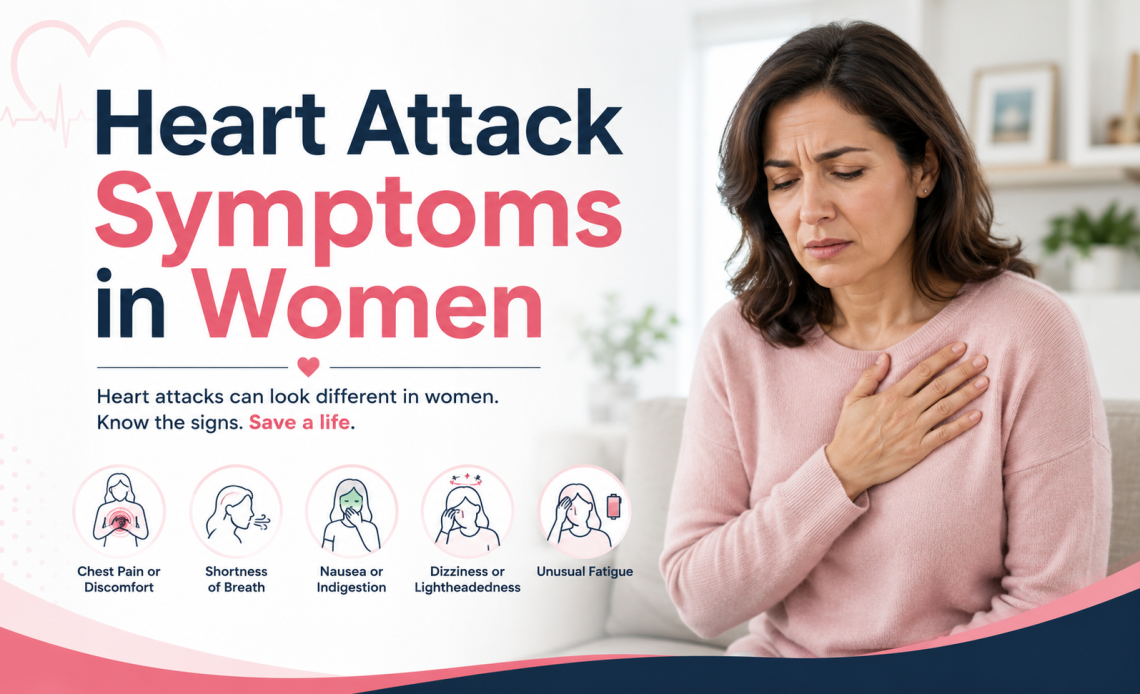
Heart attack symptoms in women are frequently different from the classic chest-clutching presentation most people associate with cardiac emergencies. While chest pain or pressure is still the most common symptom in women, approximately half of all women having a heart attack also experience symptoms that have nothing to do with the chest: unusual fatigue, nausea, jaw pain, back pain between the shoulder blades, dizziness, or a vague sense that something is deeply wrong. Heart disease is the leading cause of death in women in the United States, killing approximately one in every five women, yet women are significantly more likely than men to delay seeking help because their symptoms do not match what they expect a heart attack to feel like.
Why Female Heart Attack Symptoms Are So Often Missed
Decades of cardiac research focused primarily on male subjects, which is why the public image of a heart attack, sudden crushing chest pain radiating down the left arm, reflects male symptom patterns. Women’s cardiac symptoms are frequently subtler, broader, and easier to attribute to something less serious. Understanding heart attack symptoms in women is not a secondary concern. It is literally a matter of life and death. Studies show that women wait longer than men to call for emergency help, and that they are more likely to be sent home from emergency departments without a cardiac diagnosis when they do seek care. The Boston Health Journal has compiled this symptom guide using data from the American Heart Association, Mayo Clinic, and Kaiser Permanente to help women recognize when their body may be sending a cardiac warning signal.
Work through the checklist below. If you are checking multiple boxes right now, particularly from the emergency column, stop reading and call 911.
Female Heart Attack Symptom Checklist
Check any symptom you are currently experiencing or have experienced in the last hour. Note whether it came on suddenly or has been building.
CALL 911 IMMEDIATELY IF YOU HAVE ANY OF THESE:
[ ] Chest pain, pressure, squeezing, fullness, or tightness, even if mild
[ ] Chest discomfort that comes and goes or lasts more than a few minutes
[ ] Sudden shortness of breath, with or without chest pain
[ ] Pain spreading to your arm (either arm), jaw, neck, or upper back
[ ] Sudden severe dizziness or lightheadedness
[ ] Sudden cold sweat with no obvious cause
[ ] Fainting or near-fainting
[ ] Sudden extreme fatigue that feels unlike normal tiredness
SEEK URGENT CARE TODAY IF YOU HAVE ANY OF THESE (especially in combination):
[ ] Nausea or vomiting that started without a clear cause
[ ] Pain or discomfort between your shoulder blades
[ ] Jaw ache or pain that feels different from dental pain
[ ] Upper abdominal discomfort that feels like indigestion but is not relieved by antacids
[ ] Heart palpitations, fluttering, or feeling that your heart is racing
[ ] Unusual anxiety or a sense that something is very wrong
[ ] Fatigue so severe you cannot complete normal activities
[ ] Any combination of two or more of the above appearing together suddenly
If you checked any item in the first group, call 911 now. If you checked two or more items in the second group at the same time, do not wait. Go to an emergency department or call 911. Heart attacks in women are frequently misdiagnosed as anxiety, acid reflux, or exhaustion, including by medical staff. Advocate loudly for a cardiac evaluation.
Why Heart Attack Symptoms Are Different in Women
The Biology Behind the Difference
Women are more likely than men to experience a heart attack through a mechanism called nonobstructive coronary artery disease, where blockages occur in smaller vessels rather than only in the main coronary arteries. This is also called coronary microvascular disease. Because the smaller vessels are affected, the pattern of blood flow disruption and the resulting symptoms differ from the classic large-artery blockage presentation seen more commonly in men.
Hormonal factors also play a significant role. Estrogen has a protective effect on the cardiovascular system, influencing blood vessel flexibility and cholesterol metabolism. After menopause, when estrogen levels drop sharply, women’s cardiovascular risk rises steeply. A cardiologist at Kaiser Permanente’s Los Angeles Medical Center noted that approximately 90 percent of women and men have chest pain during a heart attack, but the character of that pain in women is more often described as pressure or tightness rather than the crushing pain more commonly reported by men.
The Diagnostic Gap
Research has consistently shown that women are more likely to be sent home from emergency departments without a cardiac diagnosis when they present with heart attack symptoms. A 2025 analysis published in CJC Open reviewing symptom trends from 1985 to 2019 confirmed that atypical presentations remain more common in women across four decades of data. Dr. Jin Kyung Kim, a cardiologist specializing in women’s heart health at UCI Health, has noted that half of women having heart attacks experience symptoms different from the chest pain or pressure that men typically feel, including heart palpitations and heightened anxiety that can easily be misattributed to a panic attack.
How Heart Attack Symptoms Differ Between Women and Men
| Symptom | Women | Men |
| Chest pain or pressure | Most common; often described as pressure or tightness rather than crushing pain | Most common; classic crushing or squeezing pain in center or left of chest |
| Arm pain | Either arm; less consistent than in men | Typically left arm radiating from chest |
| Back pain | Common; often between shoulder blades | Less commonly reported |
| Jaw or neck pain | Reported more often than in men | Less common |
| Nausea or vomiting | Significantly more common | Less common |
| Unusual fatigue | Common, sometimes days before the event | Less commonly a prodromal symptom |
| Shortness of breath | Common, sometimes without chest pain | Common, usually with chest pain |
| Dizziness | More commonly reported | Less commonly the presenting symptom |
| Cold sweat | Common | Common |
Warning Signs That Can Appear Days Before a Heart Attack in Women
One of the most important and least publicized findings in women’s cardiac research is that many women experience warning symptoms in the days or weeks before a heart attack occurs. These prodromal symptoms are easy to dismiss but are clinically significant.
- Unusual fatigue: feeling exhausted after minimal exertion or waking up tired despite adequate sleep, in the days leading up to a cardiac event
- Sleep disturbance: difficulty falling or staying asleep without an obvious cause
- Shortness of breath with activities that previously caused no difficulty
- Indigestion or heartburn that is new, persistent, or does not respond to antacids
- Anxiety or a sense of impending doom that feels unusual and out of proportion to your circumstances
A landmark study of women who had survived heart attacks found that 95 percent reported experiencing prodromal symptoms in the weeks before their event. The most common was unusual fatigue, reported by 70 percent of participants. The second most common was sleep disturbance at 48 percent. Chest discomfort was reported by only 30 percent as a prodromal symptom, reinforcing how different the female heart attack warning pattern can be from the classic presentation.
Heart Attack Risk Factors That Are Stronger in Women Than in Men
| Risk Factor | Why It Hits Women Harder |
| Diabetes | Women with diabetes face a greater increased heart disease risk than men with diabetes; diabetes also increases likelihood of a silent heart attack |
| Menopause | Loss of estrogen’s protective cardiovascular effects accelerates arterial stiffening and raises LDL cholesterol |
| Pregnancy complications | History of preeclampsia, gestational diabetes, or preterm birth increases lifetime cardiovascular risk |
| Depression and anxiety | More prevalent in women; both independently increase cardiovascular risk through inflammatory and hormonal pathways |
| Autoimmune conditions | Lupus, rheumatoid arthritis, and scleroderma, more common in women, increase cardiovascular inflammation |
| Smoking | Smoking raises cardiovascular risk more steeply in women than in men at equivalent levels of use |
| Family history | Early-onset heart disease in a first-degree female relative (before age 60) is a stronger risk signal than is recognized |
What to Do If You Think You Are Having a Heart Attack
According to the American Heart Association, a heart attack strikes someone in the United States approximately every 40 seconds. The steps below are not suggestions. They are the medically recommended actions for anyone experiencing potential cardiac symptoms:
- Call 911 immediately. Do not drive yourself to the hospital. Emergency medical personnel can begin treatment in the ambulance and alert the hospital to prepare, reducing the time to treatment that determines how much heart muscle is saved.
- Chew one adult aspirin (325 mg) or four low-dose aspirins (81 mg each) while waiting for the ambulance, unless you are allergic to aspirin or have been told by a doctor not to take it. Aspirin reduces platelet aggregation and can slow the progression of a clot.
- Unlock your door so emergency responders can enter if you lose consciousness.
- Do not eat or drink anything else while waiting.
- If you lose consciousness before help arrives, a bystander should begin CPR immediately.
- At the hospital, clearly state that you are concerned about a heart attack. Do not minimize your symptoms. Request an ECG and blood tests for cardiac enzymes (troponin). If you feel dismissed, ask again. Women are statistically more likely to be sent home without a cardiac workup. Advocating for yourself in this moment is critical.
The Most Important Thing Women Get Wrong About Heart Attacks
The single most dangerous misconception among women about heart attacks is that if they were having one, they would know. Multiple cardiologists interviewed in peer-reviewed cardiac literature have noted that women often describe their heart attack experience as something that crept up on them: a feeling of not being right, unusual tiredness, nausea, or back pain that they attributed to stress, the flu, overwork, or digestive problems. By the time the symptom picture became undeniable, significant heart muscle damage had already occurred.
Dr. Tansel Turgut, a cardiologist with Franciscan Physician Network, has noted from clinical experience: over the years I have seen heart attacks present with ear pain, throat pain, toothaches, back pain, abdominal pain, and patients simply not feeling right and coming to the emergency room. The range is that broad. The instruction to women is the same across virtually every major cardiac authority: if something feels off, particularly if it is new, sudden, or combined with other unusual symptoms, seek evaluation immediately. You cannot wait for chest pain to appear before taking it seriously.
The Bottom Line
Heart disease is the leading killer of women in the United States, and the gap between when women first notice symptoms and when they receive treatment is one of the most preventable factors in cardiac mortality. The symptom checklist above is not a diagnostic tool. No quiz or article can tell you whether you are having a heart attack. Only a clinical evaluation with an ECG and blood tests can do that.
What this guide can do is help you recognize that your symptoms deserve evaluation, even if they do not match the textbook description you may have in your head. If you checked multiple items on the checklist above, please stop reading and call 911 or go to an emergency department now. For women in the Boston area managing cardiac risk factors or seeking preventive cardiovascular care, the Boston Health Journal recommends establishing care with a cardiologist or internist who specializes in women’s heart health. Early risk assessment and regular monitoring of blood pressure, cholesterol, and blood sugar are the most evidence-supported tools available for preventing the event from happening in the first place. For further information on heart attack symptoms and risk in women, the American Heart Association’s women’s heart health resources provide medically reviewed, regularly updated guidance.