
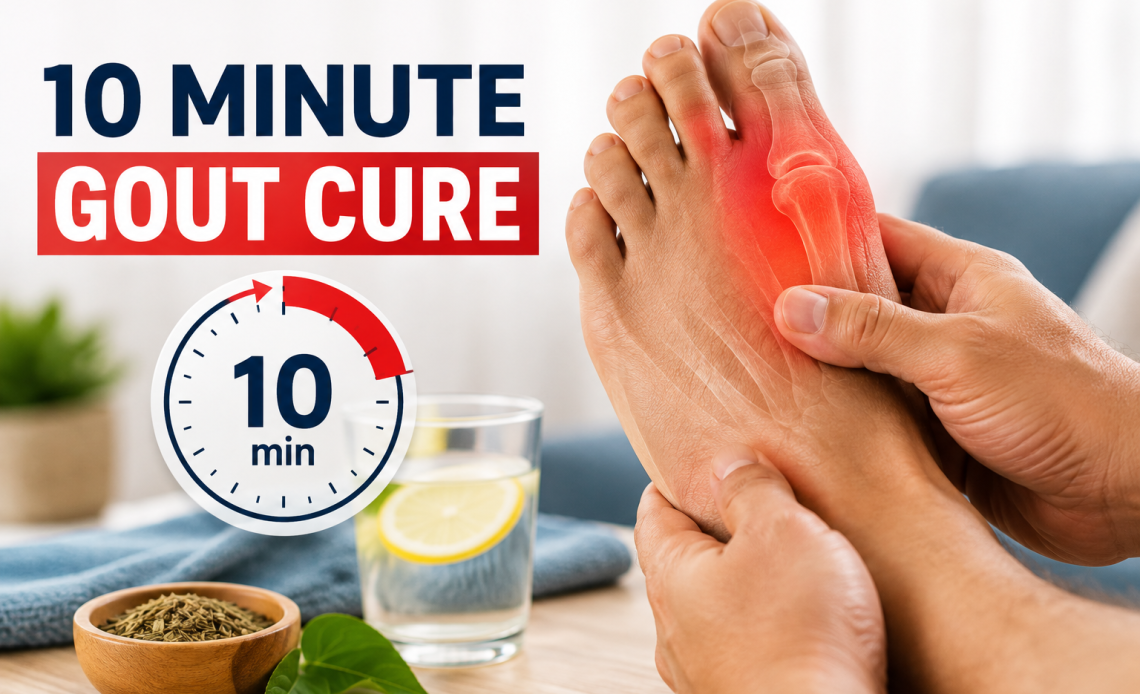
If you are searching for a 10 minute gout cure, the most important fact is that no proven treatment can dissolve urate crystals or permanently cure gout in 10 minutes. What you can do in the first few minutes is reduce pressure on the joint, cool the area, and start an appropriate anti-inflammatory treatment early if your clinician has already given you a gout flare plan.
Gout pain can become intense very quickly, often overnight, because urate crystals trigger a strong inflammatory reaction inside the joint. Medicines such as colchicine, NSAIDs, or corticosteroids can shorten and calm a flare, but they work over hours to days, not instantly. Preventing future attacks requires controlling uric acid over time.
| Do not assume every hot, swollen joint is gout. A joint infection can look very similar and can become dangerous quickly. A first-ever attack, fever, chills, rapidly worsening illness, a wound near the joint, or severe symptoms in someone who is immunocompromised needs prompt medical evaluation. |
Key Takeaways
- There is no medically proven 10-minute cure for gout.
- The first 10 minutes are still useful: stop putting weight on the joint, elevate it when practical, apply a cold pack, and follow your prescribed flare plan.
- American College of Rheumatology guidance recommends colchicine, NSAIDs, or glucocorticoids as first-line treatments for gout flares, chosen according to the patient’s health and medications.
- Starting flare treatment early generally works better than waiting until pain is severe.
- Ice and hydration can support comfort, but neither removes urate crystals in minutes.
- Long-term gout control focuses on lowering serum urate, commonly to below 6 mg/dL, so existing crystal deposits can gradually shrink and future attacks become less likely.
- Allopurinol is the preferred first-line urate-lowering medicine for many people who need long-term therapy, including many patients with chronic kidney disease.
What Can You Do in the First 10 Minutes of a Gout Flare?
A gout flare often feels too painful to wait for anything to work. These first steps will not cure the disease, but they can reduce additional irritation while your anti-inflammatory treatment starts working.
| First step | What to do | What it can realistically do |
| Rest the joint | Stop walking on or repeatedly moving the painful joint. | Reduces mechanical irritation. |
| Elevate | Raise the foot, ankle, or other affected limb when comfortable. | May help with swelling. |
| Apply cold | Use a cloth-wrapped cold pack for about 10 to 20 minutes. | Can numb pain and calm swelling. |
| Start your flare medicine | Use colchicine, an NSAID, or prescribed steroid only as directed for you. | Targets the inflammation causing the attack. |
| Drink water | Hydrate normally unless you have a fluid restriction. | Supports hydration but does not instantly remove crystals. |
Which Gout Medicines Work Fastest?
There is no single fastest medicine for everyone. The right choice depends on kidney function, stomach-ulcer risk, blood thinners, heart disease, diabetes, other medicines, and how early in the flare treatment begins.
The American College of Rheumatology recommends colchicine, nonsteroidal anti-inflammatory drugs such as naproxen or ibuprofen, or glucocorticoids as first-line options for a gout flare. A steroid may be taken by mouth or injected when appropriate. People should use the regimen their clinician has selected rather than combining several drugs on their own.
The American College of Rheumatology gout guide explains both flare treatment and long-term urate-lowering therapy.
How Quickly Can Colchicine Work?
Colchicine interrupts the inflammatory response caused by urate crystals. It is most useful when taken early in a flare and according to the prescribed dosing plan.
It is not a general painkiller, and taking extra colchicine can be dangerous. Overdosing can cause severe diarrhea, vomiting, blood-cell problems, organ injury, and other serious toxicity. Kidney disease and several common medicines can also increase the risk of harmful colchicine levels.
Can Ibuprofen or Naproxen Stop a Flare?
NSAIDs can reduce both pain and inflammation and are commonly used for gout attacks. They are not safe for everyone, especially people with certain kidney problems, stomach ulcers, bleeding risk, heart disease, or some blood-pressure conditions.
If you already take prescription medicines, do not stack several NSAID products together. For example, taking ibuprofen and naproxen at the same time usually increases side effects without providing a sensible advantage.
NSAIDs can also affect blood pressure and kidney function in susceptible people. For context on when a high reading needs attention, Boston Health Journal’s guide on how to lower blood pressure quickly at home explains why home measures should not replace medical care when blood pressure is severely elevated.
Does Ice Help Gout?
Yes, ice can help the pain, but it is a comfort measure rather than a cure. Wrap a cold pack in a thin cloth and use it for short periods. Direct prolonged ice contact can injure the skin.
If cold makes the pain worse, stop. The goal is simple symptom relief while the joint inflammation is being treated.
Does Drinking Water Flush Out Gout in 10 Minutes?
No. Normal hydration is useful for general kidney function and may help reduce dehydration-related triggers, but one or two glasses of water cannot dissolve a joint full of urate crystals in minutes.
If you have heart failure, advanced kidney disease, or another reason to restrict fluids, do not deliberately increase your water intake without medical guidance.
What About Cherry Juice, Apple Cider Vinegar, or Baking Soda?
Tart cherries have been studied for gout risk and uric acid, but they are not an instant treatment for an active attack. Evidence is not strong enough to replace proven anti-inflammatory medicines or urate-lowering therapy.
Apple cider vinegar has not been shown to cure gout. Baking soda is also a poor do-it-yourself treatment because taking large amounts of sodium bicarbonate can cause dangerous electrolyte or acid-base problems, especially in people with kidney, heart, or blood-pressure conditions.
How Long Does a Gout Flare Actually Last?
Without effective treatment, gout flares can last several days to one or two weeks. MedlinePlus notes that pain often improves substantially after treatment begins and may resolve over the next day or two in many cases.
For a patient-friendly overview of symptoms, diagnosis, medicines, and prevention, see MedlinePlus on gout.
What Is the Closest Thing to a Real Gout Cure?
The closest thing to long-term disease control is lowering uric acid enough that urate crystals stop accumulating and gradually dissolve. This is not a 10-minute process. It takes sustained treatment and periodic blood tests.
For people who meet criteria for urate-lowering therapy, the usual strategy is to start a medicine such as allopurinol at a low dose and adjust it toward a serum urate target, commonly below 6 mg/dL. As crystal burden falls, attacks become less frequent and tophi can shrink.
Should You Stop Allopurinol During a Flare?
If you already take allopurinol or another urate-lowering medicine every day, do not stop it just because a flare begins unless your prescriber tells you to. Stopping and restarting urate-lowering treatment can create unnecessary swings in uric acid.
A flare is treated with anti-inflammatory medicine, while the urate-lowering medicine continues the longer-term job of preventing crystal buildup.
Can Food End a Gout Attack Quickly?
No specific food can shut down a flare within minutes. Diet matters more for reducing future uric-acid burden and avoiding triggers than for immediately treating an inflamed joint.
- Limit heavy alcohol intake, particularly during a flare.
- Reduce frequent servings of organ meats and large amounts of red meat.
- Limit sugar-sweetened beverages and foods high in fructose.
- Choose a balanced pattern with vegetables, whole grains, nuts, legumes, fruit, and low-fat dairy when tolerated.
- Work toward a healthy body weight gradually rather than crash dieting, which can temporarily raise uric acid.
Could the Pain Be Something Other Than Gout?
Yes. A hot swollen joint can come from infection, pseudogout, injury, inflammatory arthritis, osteoarthritis, tendon problems, or other conditions. Even in someone who has had gout before, a new pattern deserves attention if it feels unusually severe or comes with fever or systemic illness.
Pain location can also help separate joint disease from nearby muscle or tendon problems. Boston Health Journal’s guide to gluteus medius pain shows how a musculoskeletal pain pattern can point away from the joint itself.
When Should You Get Medical Help?
- This is your first possible gout attack.
- You have fever, chills, or feel seriously unwell with a hot swollen joint.
- Pain is extreme and the joint cannot be moved or touched.
- There is a wound, recent surgery, injection, or skin infection near the joint.
- Symptoms keep worsening despite your usual flare treatment.
- You have kidney disease, take blood thinners, or are unsure which anti-inflammatory medicine is safe.
- Flares are becoming more frequent or you have visible tophi.
Common Questions About a 10 Minute Gout Cure
Can gout really disappear in 10 minutes?
No. Cooling and resting the joint may make it feel a little better quickly, but the inflammatory process does not disappear in 10 minutes.
What is the quickest home remedy for gout?
The safest quick home steps are rest, elevation, and a wrapped cold pack. If you already have a prescribed flare medicine, taking it promptly as directed is more important than unproven remedies.
What drink gets rid of gout?
No drink cures gout. Water supports hydration, but urate crystals are removed gradually by controlling uric acid, often with medication.
Is lemon water a gout cure?
No. Lemon water can be part of normal hydration, but it does not rapidly dissolve urate crystals or replace gout medication.
Should I walk on a gouty foot?
During an intensely painful flare, reducing pressure on the joint is usually more comfortable. Resume normal movement gradually as inflammation settles.
Can gout be permanently controlled?
Yes, many people achieve excellent long-term control by maintaining serum urate below the target set by their clinician and treating flares promptly when they occur.
The Bottom Line
There is no genuine 10 minute gout cure. In the first 10 minutes, the best moves are to stop stressing the joint, elevate it, apply cold, and use the anti-inflammatory flare medicine your clinician has recommended. That can start the recovery process quickly, but meaningful relief usually takes hours rather than minutes.
The long-term solution is different: keep uric acid low enough that crystals stop building up and gradually dissolve. If attacks are recurring, talk with a clinician about a treat-to-target urate-lowering plan instead of relying on emergency home remedies every time pain returns.