
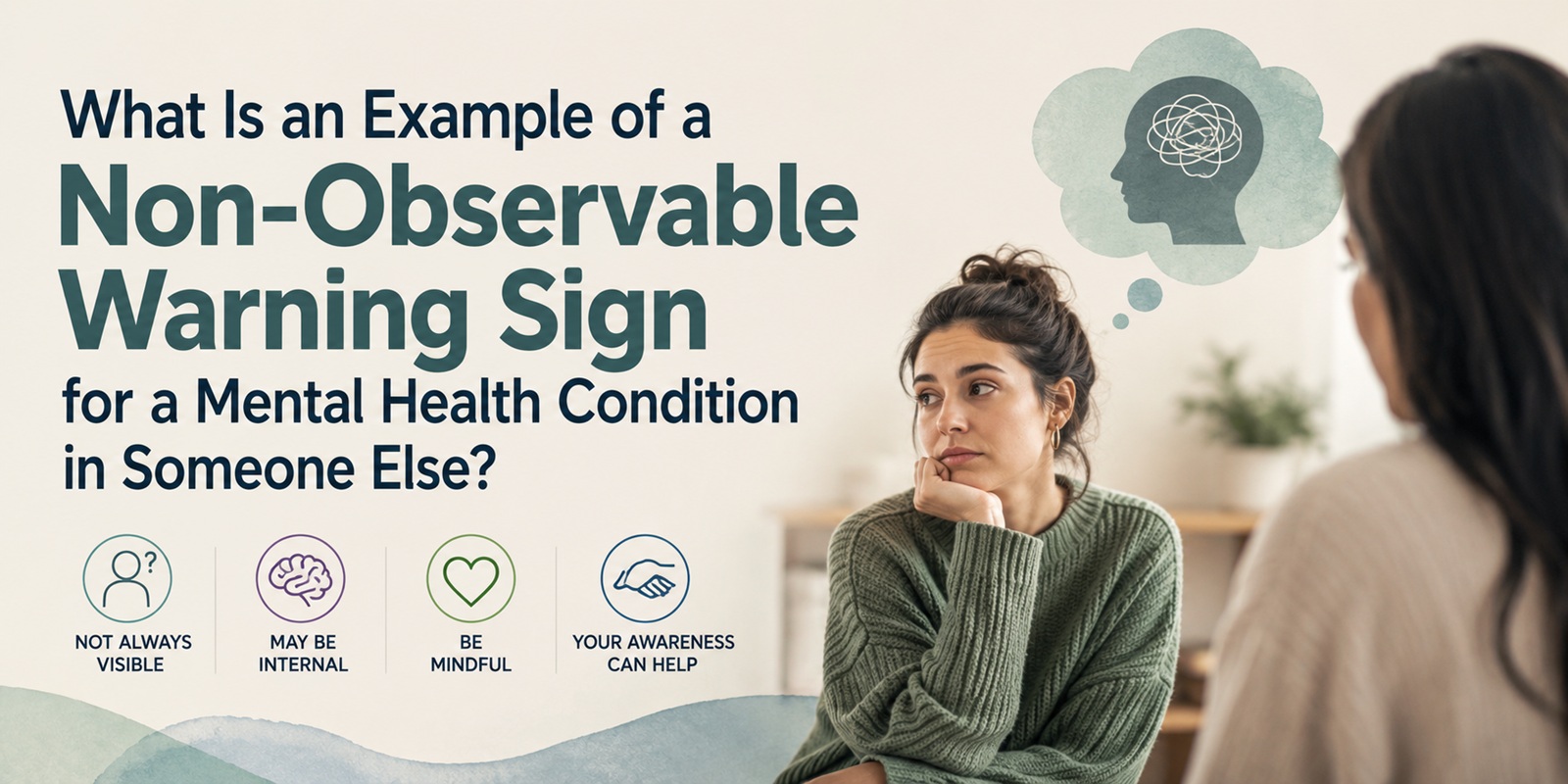
A non-observable warning sign is an internal experience that you cannot see from the outside. The clearest example is a persistent, private sense of worthlessness or hopelessness. Because that feeling lives inside a person’s thoughts, no one around them can directly witness it, even when it is severe.
Other common examples include intrusive thoughts, emotional numbness hidden behind a normal smile, and quiet, passive thoughts that life may not be worth living. These signs leave no visible trace, which is exactly what makes them easy to miss and important to understand.
| Quick Answer | Key Facts at a Glance |
| Concept | Non-observable warning sign of a mental health condition |
| Definition | An internal thought or feeling that others cannot see from the outside |
| Clearest example | A persistent, private sense of worthlessness or hopelessness |
| Other examples | Intrusive thoughts, emotional numbness, passive thoughts that life is not worth living |
| Opposite type | Observable signs such as crying, social withdrawal, or changes in sleep |
| How to recognize it | By listening to how a person talks about themselves and gently asking |
| When it matters most | When the feeling lasts for weeks and starts affecting daily life |
What a Non-Observable Warning Sign Actually Means
When most people picture the warning signs of a mental health condition, they imagine things they can watch happen. Someone cries more often. A friend stops answering messages. A coworker looks exhausted. These are observable signs, because another person can see them with their own eyes.
Non-observable signs work differently. They are the thoughts and feelings that happen inside a person’s mind, where no one else has access. A person can carry deep distress for months while looking completely fine to everyone around them. That gap between what is felt and what is shown is the heart of this topic.
The Clearest Example: A Private Sense of Worthlessness or Hopelessness
If you want a single, textbook example, it is this: a person privately feeling worthless or hopeless. This is frequently used as the model answer because it captures everything that defines a non-observable sign.
The feeling is internal, so it cannot be seen. It is often hidden on purpose, because the person may feel ashamed of it. And it is clinically significant, since persistent hopelessness is closely linked to depression and other serious conditions. Someone can hold a steady job, keep up with friends, and still believe, quietly, that they have no value.
More Examples You Cannot See
Worthlessness and hopelessness are not the only hidden signs. Several internal experiences fall into the same category, and each one can signal that a person is struggling even when their behavior looks ordinary.
| Non-Observable Sign | What Is Happening Internally |
| Persistent worthlessness | The person privately believes they are a burden or that they have no value, even when nothing in their life supports that belief. |
| Hopelessness about the future | A quiet certainty that things will never improve, which others rarely hear spoken aloud. |
| Intrusive thoughts | Unwanted, repetitive thoughts that arrive without permission and are hard to push away. |
| Emotional numbness | Feeling flat or empty behind a normal, functioning exterior. |
| Racing or looping thoughts | A mind that will not slow down, often tied to anxiety, that leaves no outward trace. |
| Passive thoughts about not being alive | Thinking that life may not be worth continuing, without any visible signal to others. |
Observable vs Non-Observable: A Side-by-Side Look
The difference becomes clearer when you place the two types next to each other. Observable signs are the surface. Non-observable signs are what may be happening underneath.
| Observable Signs (You Can See) | Non-Observable Signs (You Cannot See) |
| Crying or visible sadness | A private belief of being worthless |
| Withdrawing from friends | Feeling empty while still showing up |
| Changes in sleep or appetite | Intrusive thoughts no one hears |
| Self-harm marks | Passive thoughts that life has no point |
| Irritability others notice | A silent loss of meaning or purpose |
Why These Signs Stay Hidden
Non-observable signs are easy to miss for reasons that have nothing to do with how attentive you are.
- Masking: Many people keep up routines and wear a calm expression precisely so their distress is not seen.
- High function: Someone can perform well at work or school while struggling internally, which makes their pain hard to believe.
- Gradual onset: Feelings of hopelessness often build slowly over weeks, so there is no single dramatic moment that draws attention.
- Shame and fear: A person may worry about being judged, so they hide the very thoughts that most need support.
How to Notice What You Cannot See
You cannot read minds, but you can pay attention to the clues that internal struggles leave behind. The goal is not to diagnose anyone. It is to notice when something seems off and to make space for an honest conversation.
- Listen to language: Phrases like “I’m just a burden” or “what’s the point” can reveal hidden hopelessness.
- Watch for subtle shifts: Dropping a favorite hobby, replying less often, or canceling plans can be quiet echoes of an internal change.
- Ask directly and kindly: A simple “How are you really doing?” gives someone permission to say what they have been hiding.
- Trust your sense that something changed: If a person feels different to you, that instinct is worth following up on.
How to Respond If You Suspect Something
If you believe someone you care about is carrying a hidden struggle, you do not need the perfect words. Showing up matters more than getting it right.
Start by listening without rushing to fix anything. Let the person know the door is open, not only during a crisis but at any time. Avoid minimizing what they share, and resist the urge to label them with a diagnosis. If the conversation points to thoughts of not wanting to be alive, take it seriously and help them connect with professional support.
When to Reach Out for Help
Warning signs become a reason to act when they last for weeks and begin to interfere with daily life, relationships, or a person’s sense of safety. Help is available, and you can reach out on behalf of someone you are worried about.
- 988 Suicide and Crisis Lifeline: Call or text 988, free and confidential, available 24 hours a day across the United States.
- Massachusetts Behavioral Health Help Line: Call or text 833-773-2445, available 24 hours a day to all Massachusetts residents, with no insurance required.
- In an immediate emergency: Call 911 or go to the nearest emergency room.
The most important takeaway is simple. You cannot always see what someone is carrying, but you can ask, you can listen, and you can remind the people in your life that support is there whenever they need it.
This article covers a sensitive topic. If you or someone you know is struggling, the resources above can help you find the right support.