
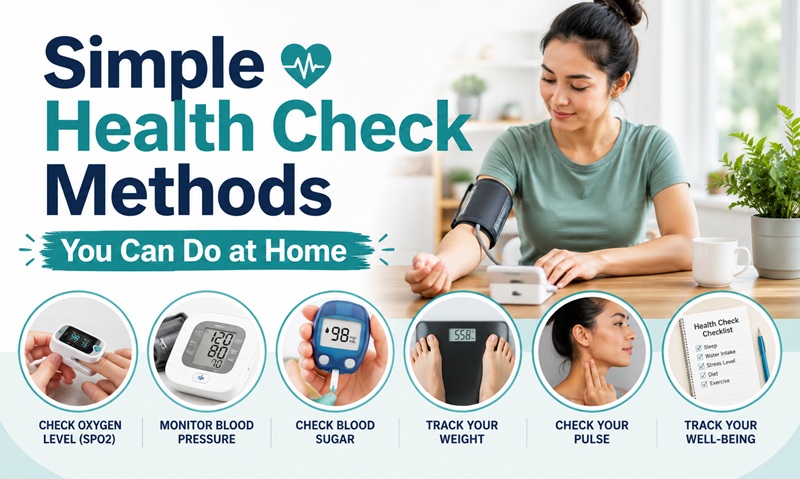
Most serious health conditions do not announce themselves with dramatic symptoms. High blood pressure, elevated blood sugar, early-stage cancer, and high cholesterol typically develop silently over months or years before producing any pain or obvious change. By the time symptoms appear, the condition is often significantly more advanced than it would have been had it been caught earlier.
This is why health checks — both the simple ones you can do at home and the professional screenings recommended by major health bodies — are among the most valuable things a person can invest time in. They are not complicated. They do not require medical training. And in many cases, they cost nothing.
This guide covers the most practical and evidence-supported health check methods available today, beginning with things you can do at home and concluding with the professional screenings that current guidelines recommend at different stages of life.
Important note: The checks described in this article are for monitoring and general awareness purposes. They are not diagnostic tools and do not replace professional medical evaluation. If any reading, result, or self-exam finding concerns you, consult a licensed healthcare provider promptly.
Part 1: Simple Health Checks You Can Do at Home
1. Blood Pressure Check
Blood pressure is one of the most important indicators of cardiovascular health and one of the most commonly ignored. It is often called the “silent killer” because elevated blood pressure produces no symptoms while quietly damaging arteries, the heart, the brain, and the kidneys over time.
Checking your blood pressure at home is straightforward with an automated upper-arm cuff monitor, which is widely available at pharmacies for a modest cost. Wrist monitors are also available but are generally considered less accurate than upper-arm devices.
How to check: Sit quietly for five minutes before taking a reading. Rest your arm on a flat surface at heart level. Do not smoke, exercise, or consume caffeine in the 30 minutes before. Take two or three readings, one minute apart, and average the results.
What the numbers mean (2025 AHA/ACC Guidelines):
| Category | Systolic (top number) | Diastolic (bottom number) |
|---|---|---|
| Normal | Less than 120 mmHg | Less than 80 mmHg |
| Elevated | 120 to 129 mmHg | Less than 80 mmHg |
| High Blood Pressure Stage 1 | 130 to 139 mmHg | 80 to 89 mmHg |
| High Blood Pressure Stage 2 | 140 mmHg or higher | 90 mmHg or higher |
| Hypertensive Crisis | Higher than 180 mmHg | Higher than 120 mmHg |
[Source: AHA/ACC Multisociety High Blood Pressure Guideline, published August 2025 — the current guideline as of 2026]
A single elevated reading does not confirm high blood pressure. Readings fluctuate with stress, activity, and time of day. Consistent elevation across multiple readings over several days is what warrants a conversation with a doctor. A hypertensive crisis reading — above 180/120 — requires immediate medical attention.
Adults with normal blood pressure should check every two years at minimum. Those with elevated or Stage 1 readings should check more frequently and discuss findings with their doctor.
2. Resting Heart Rate Check
Your resting heart rate is a simple and free indicator of cardiovascular fitness and general health. It requires nothing more than two fingers and a watch or phone timer.
How to check: Place your index and middle fingers on the inside of your wrist below the base of your thumb, or gently on the side of your neck next to your windpipe. Count the beats for 30 seconds and multiply by two to get beats per minute.
What the numbers mean: A normal resting heart rate for adults is 60 to 100 beats per minute. Athletes and highly fit individuals can have resting rates in the 40s or 50s, which is normal for them. A consistently elevated rate above 100 beats per minute at rest — a condition called tachycardia — or a rate below 60 in a non-athlete — called bradycardia — should be discussed with a doctor, particularly if accompanied by dizziness, shortness of breath, or fatigue.
Check your resting heart rate first thing in the morning before getting out of bed for the most accurate baseline reading. Tracking it over time is more informative than any single measurement.
3. Body Temperature Check
A standard digital thermometer gives you immediate information about whether your body is fighting an infection or illness.
Normal body temperature for adults is generally considered to be around 98.6°F (37°C), though a range of 97°F to 99°F (36.1°C to 37.2°C) is normal across different individuals and times of day. Body temperature is slightly lower in the morning and slightly higher in the late afternoon.
A temperature at or above 100.4°F (38°C) is considered a fever and indicates the immune system is actively responding to something. A temperature above 103°F (39.4°C) in adults, or any fever in an infant under three months, warrants prompt medical attention.
Keeping a thermometer at home and using it when you feel unwell gives you useful, objective information to share with a healthcare provider.
4. Waist Circumference Measurement
Where your body stores fat matters as much as how much fat you carry. Fat concentrated around the abdomen — known as visceral fat — is more metabolically active and more strongly associated with cardiovascular disease, type 2 diabetes, and metabolic syndrome than fat stored elsewhere on the body.
Measuring your waist circumference takes 30 seconds with a cloth measuring tape and gives you clinically relevant information.
How to measure: Stand upright, breathe out normally, and place the tape measure around your bare waist at the level of your hip bones (the iliac crest), keeping it horizontal. Do not pull the tape tight or suck in your stomach.
What the numbers mean: According to the National Heart, Lung, and Blood Institute and the American Heart Association, a waist circumference above 40 inches (102 cm) in men and above 35 inches (88 cm) in women is associated with increased risk of heart disease, type 2 diabetes, and high blood pressure. [Source: NHLBI; American Heart Association]
This measurement is particularly useful for people whose Body Mass Index falls in the normal or overweight range but who carry significant abdominal fat — a pattern that standard weight-based measurements can miss.
5. BMI Calculation
Body Mass Index (BMI) is a widely used screening tool that uses your height and weight to estimate whether your weight is in a range associated with health risk. It is not a diagnostic measure and does not directly measure body fat — but it provides a useful and accessible data point.
How to calculate: BMI = weight (kg) ÷ height (m)²
Or in imperial: BMI = (weight in pounds × 703) ÷ height in inches²
Many free online BMI calculators are available that do the math for you.
Standard adult BMI categories (CDC):
| BMI | Category |
|---|---|
| Below 18.5 | Underweight |
| 18.5 to 24.9 | Healthy weight |
| 25.0 to 29.9 | Overweight |
| 30.0 and above | Obese |
BMI has well-documented limitations. It does not distinguish between muscle and fat, which means highly muscular individuals can register in the overweight category without elevated health risk. It also does not account for where fat is distributed on the body. For people in the 25 to 35 BMI range, waist circumference should be used alongside BMI for a more complete picture. [Source: American Heart Association]
Despite its limitations, BMI remains a useful initial screening tool, particularly when used consistently over time to track trends.
6. Skin Self-Examination
Skin cancer is the most common cancer in the United States, and early detection is strongly associated with better outcomes. Melanoma — the most dangerous form of skin cancer — is highly treatable when found early and significantly more difficult to treat once it has spread.
A monthly full-body skin self-exam takes less than 10 minutes and requires only a full-length mirror, a hand mirror, and good lighting.
How to check: Examine your skin systematically from head to toe, including the scalp (use a comb or hair dryer to part the hair), behind the ears, the back of the neck, between fingers and toes, the soles of the feet, and the genital area. Use the hand mirror to examine your back and the backs of your legs.
What to look for — the ABCDE rule:
- A — Asymmetry: One half of a mole or spot does not match the other
- B — Border: Edges are irregular, ragged, notched, or blurred
- C — Color: The color is not uniform, with varying shades of brown, black, red, white, or blue
- D — Diameter: The spot is larger than 6 millimeters across (about the size of a pencil eraser), though melanomas can be smaller
- E — Evolving: The mole or spot is changing in size, shape, or color
Any spot that is new, changing, or itching and bleeding should be evaluated by a dermatologist or primary care physician promptly.
7. Breast Self-Examination
Breast self-examination allows individuals to become familiar with how their breast tissue normally looks and feels, making it easier to notice changes. While major clinical organizations including the U.S. Preventive Services Task Force do not currently recommend formal monthly breast self-exams as a screening strategy — because the evidence for reducing mortality specifically from self-exam is mixed — they do support breast self-awareness: being familiar with your own breast tissue and noticing changes.
What to look for: Any new lump, thickening, or hardness in the breast or underarm. Changes in the size, shape, or appearance of the breast. Dimpling, puckering, or redness of the skin. Nipple discharge that is not breast milk, or any inversion of the nipple that is new.
Any new or concerning change should be reported to a healthcare provider without delay, regardless of when your last mammogram was.
[Source: American Cancer Society, CDC]
8. Sleep Quality Assessment
Sleep is not just rest — it is a period of physiological repair, memory consolidation, immune function, and hormonal regulation. Poor sleep quality is linked to increased risk of obesity, cardiovascular disease, type 2 diabetes, depression, and impaired immune function.
You do not need a device to assess your sleep quality, though wearable trackers can provide useful additional data. A simple self-assessment involves asking:
- Do I feel rested after a full night’s sleep?
- Do I fall asleep within 20 to 30 minutes of lying down?
- Do I wake multiple times during the night?
- Do I feel excessively sleepy during the day?
- Have I been told I snore loudly, or do I wake gasping?
Adults need between 7 and 9 hours of sleep per night, according to the National Sleep Foundation. Consistently sleeping fewer than 6 hours or more than 9 hours is associated with increased health risk.
Persistent daytime sleepiness, loud snoring, or waking with headaches can be signs of obstructive sleep apnea — a condition that significantly raises cardiovascular risk and is treatable. These symptoms warrant a conversation with a doctor.
9. Urine Color Check
Urine color is a simple, free, and immediate indicator of hydration status and, in some cases, of kidney or liver health.
General guide to urine color:
- Pale yellow to light straw: Healthy and well hydrated
- Dark yellow or amber: Likely dehydrated — increase fluid intake
- Orange: Could indicate dehydration, a dietary cause (such as beets or carrots), or in some cases liver or bile duct issues
- Pink or red: Could be blood in the urine — requires medical evaluation
- Brown or cola-colored: Can indicate severe dehydration, liver disease, or a muscle breakdown condition — requires prompt medical attention
- Cloudy or foamy: Can indicate a urinary tract infection or excess protein — warrants a doctor visit
Most adults should aim for pale yellow urine throughout the day. Dark urine first thing in the morning is normal after a night without fluids.
10. Mental Health Self-Check
Physical health and mental health are inseparable. Including a regular honest self-assessment of your mental and emotional state is as important as monitoring blood pressure or weight.
Simple questions to ask yourself weekly:
- Have I been feeling persistently sad, empty, or hopeless for more than two weeks?
- Have I lost interest in activities I normally enjoy?
- Am I sleeping significantly more or less than usual?
- Am I experiencing persistent anxiety that interferes with daily functioning?
- Have I been withdrawing from family, friends, or social activities?
- Have I had any thoughts of self-harm?
Two weeks or more of persistent symptoms across multiple areas above is a signal to speak with a healthcare provider or mental health professional. The sooner these conversations happen, the better the outcomes tend to be.
Part 2: Professional Health Screenings You Should Not Skip
Home checks are valuable, but they do not replace the clinical screenings that medical professionals recommend based on age, sex, and risk factors. The following are current recommendations from the U.S. Preventive Services Task Force (USPSTF), the CDC, and other major health bodies.
Blood Pressure Screening (Professional)
Adults with normal blood pressure should have it checked professionally at least every two years. Those with elevated readings at home or during previous visits should be screened annually. Blood pressure readings vary between settings; a clinical measurement confirms or contextualizes home readings.
Cholesterol and Lipid Panel
High cholesterol produces no symptoms. A blood lipid panel measures total cholesterol, LDL (low-density lipoprotein), HDL (high-density lipoprotein), and triglycerides. Adults should begin cholesterol screening in their 20s, with frequency determined by results and cardiovascular risk factors. Anyone with a family history of early heart disease, diabetes, or high blood pressure should discuss earlier and more frequent screening with their doctor.
Blood Sugar and Diabetes Screening
The USPSTF recommends blood glucose screening for adults aged 35 to 70 who are overweight or have obesity. People with risk factors — family history of diabetes, gestational diabetes history, prediabetes, or belonging to a higher-risk ethnic group — should discuss earlier screening with their provider. Fasting plasma glucose and HbA1c tests are the standard diagnostic tools. [Source: USPSTF; American Diabetes Association Standards of Care 2025 — the current standard as of 2026]
Colorectal Cancer Screening
Colorectal cancer screening is recommended beginning at age 45 for all average-risk adults, a threshold lowered from age 50 by the USPSTF in 2021 and maintained in subsequent guidance. Screening options include annual fecal immunochemical testing, FIT-DNA testing every one to three years, or colonoscopy every 10 years. [Source: USPSTF; CDC]
Breast Cancer Screening (Mammography)
The USPSTF updated its mammography recommendation in 2024, advising that women aged 40 to 74 receive a mammogram every two years. From January 2026, health plans are also required to cover any additional imaging or pathology needed to complete the screening process at no cost, following an HRSA update that expanded on the USPSTF guidance. Women at higher than average risk — due to family history, genetic mutations such as BRCA1 or BRCA2, or prior chest radiation — should discuss individualized screening schedules with their doctor, which may include MRI in addition to mammography. [Source: USPSTF 2024; HRSA 2026 expansion]
Cervical Cancer Screening
The USPSTF recommends that women aged 21 to 65 receive a cervical cancer screening (Pap smear) every three years, or a high-risk HPV test every five years, or a combination of both every five years, beginning at age 30. [Source: USPSTF]
Lung Cancer Screening
Adults aged 50 to 80 who have a 20 pack-year smoking history (one pack per day for 20 years, or equivalent) and currently smoke or have quit within the past 15 years are recommended to undergo annual low-dose CT scanning for lung cancer. [Source: USPSTF; CDC]
Osteoporosis Screening
The USPSTF recommends bone density screening for women aged 65 and older, and for younger women whose fracture risk is equal to or greater than that of a 65-year-old white woman with no additional risk factors, as determined by a risk assessment tool. Men at high risk, particularly those with a history of fractures or on long-term corticosteroids, should discuss screening with their doctor. [Source: USPSTF 2025]
HIV Screening
The USPSTF recommends that all adults aged 15 to 65 be screened for HIV at least once, and that people at higher risk be screened more frequently. [Source: USPSTF; CDC]
Skin Cancer Professional Screening
While the USPSTF does not recommend for or against routine skin cancer screening by clinicians for the general population due to insufficient evidence, people at higher risk — those with a personal or family history of melanoma, a large number of moles, significant sun exposure history, or fair skin — should discuss regular professional skin examinations with their dermatologist. [Source: MedlinePlus / USPSTF]
How Often Should You Do Home Health Checks?
The following is a practical frequency guide for the home checks covered above:
| Check | Suggested Frequency |
|---|---|
| Blood pressure | Weekly if elevated; monthly if normal |
| Resting heart rate | Weekly |
| Body temperature | When feeling unwell |
| Waist circumference | Monthly |
| BMI calculation | Monthly |
| Skin self-exam | Monthly |
| Breast self-awareness | Monthly |
| Sleep quality self-assessment | Weekly |
| Urine color | Daily awareness |
| Mental health self-check | Weekly |
When to See a Doctor Immediately
The following findings from any home health check warrant prompt or immediate medical attention:
- Blood pressure above 180/120 mmHg, especially with headache, chest pain, or vision changes
- Resting heart rate consistently above 100 or below 60 (in a non-athlete), or irregular rhythm
- A fever above 103°F (39.4°C) in adults
- Any new skin lesion that fits the ABCDE criteria, or any spot that bleeds or does not heal
- Pink, red, brown, or cloudy urine without an obvious dietary explanation
- Persistent sadness, hopelessness, or anxiety lasting more than two weeks
- Any new breast lump, nipple discharge, or breast skin change
- Snoring accompanied by gasping, choking, or excessive daytime sleepiness
The Bigger Picture
Simple health checks are not about anxiety or obsessing over numbers. They are about building a baseline understanding of your own body that allows you to notice changes, have more informed conversations with your doctor, and catch problems early when they are most treatable.
The combination of regular home monitoring and adherence to professionally recommended screening schedules is among the most evidence-supported strategies for living a longer, healthier life. Nearly 60 percent of Americans skipped a recommended preventive screening in the past year. The people who do not skip them consistently have better early detection rates and better outcomes across virtually every major disease category. [Source: Top Doctor Magazine, citing 2026 preventive health screening data]
The checks in this article take, collectively, less than 30 minutes per month. That is a small investment relative to the information they provide.
This article draws on the most current available guidelines and data as of 2026, including: the AHA/ACC Multisociety High Blood Pressure Guideline (August 2025), the American Heart Association, the American College of Cardiology, the Centers for Disease Control and Prevention (CDC), the National Heart, Lung, and Blood Institute (NHLBI), the American Diabetes Association Standards of Care 2025, the U.S. Preventive Services Task Force (USPSTF), the Health Resources and Services Administration (HRSA) 2026 breast screening expansion, MedlinePlus / National Library of Medicine, and the American Cancer Society.
All health information in this article is for general informational and educational purposes. It does not constitute medical advice. Consult a licensed healthcare provider for any personal health concerns, diagnoses, or treatment decisions.
